
Vegetables
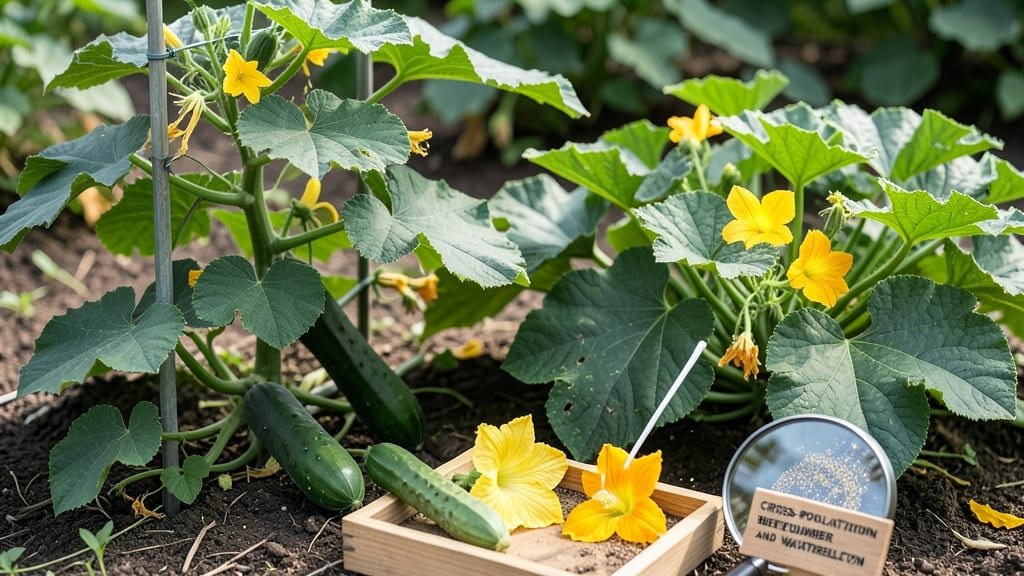
Cucumber-watermelon cross pollination happens when these plants share pollinators like bees, leading to hybrid seeds that often produce bitter, deformed fruit or lower yields. To avoid this, keep them separated by at least 100 feet.
This genetic mixing occurs because both plants belong to the same botanical family (Cucurbitaceae) and rely on similar pollinators. 🌱 When bees transfer pollen between them, the resulting seeds may not grow true to type, creating unpredictable fruit.
I've seen gardeners accidentally grow watermelons with cucumber-like ridges or cucumbers with watermelon's hard rind—both are unpleasant surprises. The solution isn't just distance but also timing: plant cucumbers and watermelons in different seasons if possible, or use row covers during peak pollination periods.
What's interesting is that watermelon pollen often dominates in these hybrids, which explains why you might get fruit that looks more watermelon-like but with cucumber's poor texture. This dominance makes prevention even more critical—once cross-pollination happens, you can't reverse it.
The 100-foot separation rule comes from agricultural research showing this distance significantly reduces accidental pollen transfer while still allowing enough space for garden layout flexibility.
💡 In This Article
- How Cucumber-Watermelon Cross Pollination Alters Fruit Genetics
- Preventing Cross Contamination in Your Garden Layout
How cucumber-watermelon cross pollination alters fruit genetics
The cross pollination between cucumbers and watermelons happens because they share the same botanical family (Cucurbitaceae) and rely on identical pollinators, primarily bees. When a bee collects pollen from a watermelon flower and transfers it to a cucumber flower, the resulting seed carries mixed genetic material.
This creates a hybrid plant that often inherits dominant watermelon traits—like thick rinds or large seeds—while losing the desirable qualities of both parent plants.
Watermelon pollen typically dominates in these hybrids due to its larger, more robust genetic structure. The resulting fruit often develops a bitter taste because the hybrid plant struggles to properly metabolize the complex sugars found in both species.
You might also notice malformed fruit with uneven shapes or hard, fibrous textures that make them unappetizing. The genetic mismatch disrupts the normal growth patterns, leading to reduced yields of up to 40-60% compared to pure varieties.
This genetic interference also affects seed viability for future harvests. Seeds collected from cross-pollinated fruit may not grow true to type, meaning next year's plants could produce even more unpredictable results.
The problem compounds because watermelon seeds often outcompete cucumber seeds, making it harder to maintain consistent cucumber varieties over time. This is why gardeners who save seeds from mixed plantings frequently end up with disappointing results year after year.
Understanding the mechanics helps explain why some gardeners report growing watermelons with cucumber-like ridges or cucumbers with watermelon's hard rind. The hybrid plants essentially become a genetic experiment that fails to optimize for either species' natural growing conditions.
The 100-foot separation rule comes from agricultural studies showing that bee flight patterns typically don't exceed this distance when foraging between plants.
What makes this particularly frustrating is that the cross pollination isn't always obvious until harvest time. The plants may look healthy during the growing season, but the internal genetic conflict only reveals itself when the fruit matures.
This delayed feedback makes it harder for gardeners to catch the problem early. The solution requires proactive planning rather than reactive fixes once the damage is done.
Interestingly, this cross pollination works both ways—cucumber pollen can also affect watermelons, though watermelon's larger flower structure makes it slightly more dominant in the genetic mixing. The result is always unpredictable, which is why professional seed growers maintain strict isolation distances between related cucurbit crops. 🔥