
Light Requirements
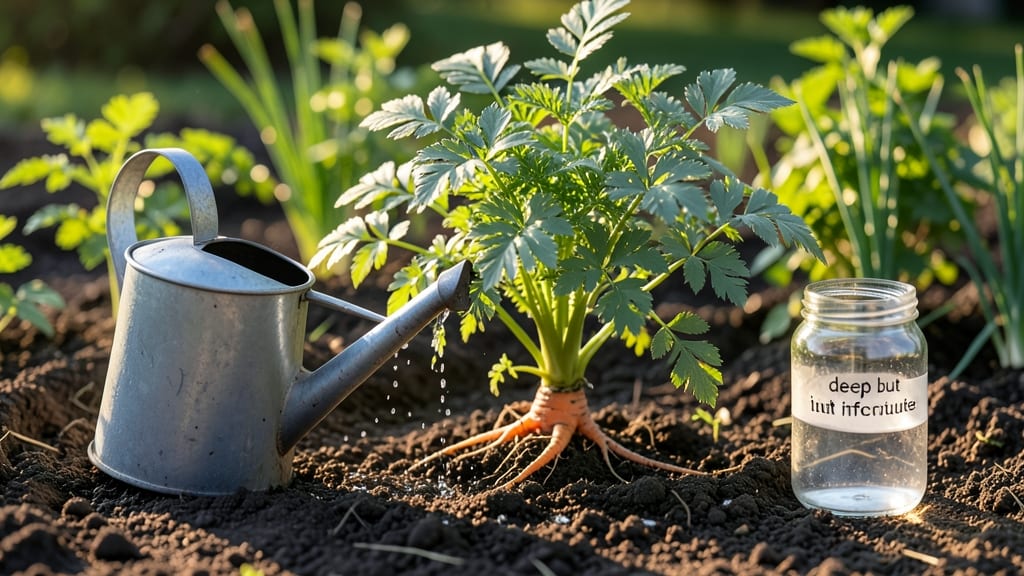
Carrots need consistent moisture—not a lot of water—to grow sweet, straight roots 🥕, and getting the balance right is the difference between harvests you’ll brag about and ones that end up cracked or forked.
Picture this: you’ve spent weeks nurturing your carrot patch, only to pull up a few lumpy, split roots at harvest time. That’s not a soil problem—it’s a watering mistake most gardeners make without realizing it.
Too little water and roots turn woody and bitter; too much, and they split or rot before they’re even ready to pick. The key is keeping the soil evenly moist, about an inch deep, without letting it dry out or turn soggy.
Below, I’ll break down exactly how much water carrots need at each growth stage, how to spot the signs of over- or underwatering, and the simple tricks to keep your soil perfectly moist—no guesswork required.


How much water carrots actually need (and when it’s too much)
Carrots might seem low-maintenance, but their water needs are far more precise than you’d think. Too little water leads to woody, bitter roots, while too much causes cracking and forking.
The key is maintaining consistent moisture—especially during their delicate growth stages. Unlike drought-tolerant plants, carrots need predictable hydration to develop the sweet, crisp texture we all love.
Most gardeners assume carrots thrive on occasional deep watering, but the truth is more nuanced. Their taproot system requires steady moisture to grow straight and uniform. Skipping watering sessions can cause roots to split or develop hairy textures, while soggy soil invites rot.
Let’s break down exactly how much water carrots need at each stage—and how to spot when you’re overdoing (or underdoing) it.
The germination stage is the most critical—carrot seeds need constant moisture to sprout, but avoid soaking the soil. Use a spray bottle to mist seeds daily until you see tiny green shoots (usually 5-7 days).
Once sprouted, shift to shallow watering—just enough to keep the top inch of soil damp. Overwatering now can cause seed rot, while too little leads to uneven germination.
During the leaf growth phase (when those feathery greens emerge), carrots need about 1 inch of water per week. This is where many gardeners go wrong—watering too deeply can disrupt root development.
Instead, use a drip irrigation system or water early in the morning to let soil absorb moisture gradually. Yellowing leaves or drooping foliage are red flags you’re underwatering.
When roots start bulking up (around 30 days), increase water to 1.5 inches per week. This is when carrots need the most hydration to develop their signature sweetness. Cracked roots or forked shapes often signal inconsistent moisture—either too much (causing pressure cracks) or too little (stressing the plant).
Mulching with straw helps maintain even moisture and prevents soil from drying out too quickly.
In the final maturation stage, reduce water slightly to 1 inch per week to harden off the roots before harvest. Overwatering now can dilute flavor and make storage more difficult. If your carrots taste woody or bitter, it’s likely due to fluctuating moisture levels during this phase.
Always water at the base of plants to avoid wetting the leaves, which reduces fungal risks.
One of the biggest mistakes I see is watering on a schedule without checking soil moisture. Carrots need consistent, not constant, water. Stick your finger 1 inch into the soil—if it’s dry, it’s time to water.
If it’s still damp, wait another day. A simple moisture meter can save you from over- or underwatering headaches. Remember, carrots are root crops, so their health depends on what’s happening below the soil surface.
For container-grown carrots, the rules change slightly. Smaller pots dry out faster, so you’ll need to water every 2-3 days instead of every 4-5. Always use pots with drainage holes to prevent root rot, and choose varieties like ‘Paris Market’ that tolerate tighter spaces.
If your container carrots start splitting or forking, it’s a sign they’re either too crowded or not getting enough consistent water.
Seasonal adjustments are key too. In summer heat, you may need to water daily to prevent soil from drying out. In cool spring or fall, every 4-5 days suffices. Always water early in the morning to reduce evaporation and fungal diseases.
If rain is forecasted, skip your watering session—carrots can handle natural rainfall as long as the soil drains well. Poor drainage is the #1 cause of overwatering issues in carrot patches.
Pro tip: If you’re growing carrots in sandy soil, they’ll need more frequent watering since sand drains quickly. For clay soil
5 Common watering mistakes that ruin carrot harvests (and how to fix them)
Carrots might seem low-maintenance, but inconsistent watering can turn your crisp, sweet roots into tough, forked disappointments. I’ve learned the hard way that uneven moisture leads to cracked roots and hollow centers—problems that ruin flavor and texture.
The key is consistent soil moisture, not drowning your plants. Let’s fix these mistakes before your next harvest!
First, many gardeners assume carrots need deep, frequent watering like leafy greens. But their roots grow best with steady, moderate moisture. Overwatering causes rot, while underwatering leads to woody, bitter roots.
The goal is 1 inch of water per week, adjusted for your climate. Too much or too little throws off the delicate balance carrots need to develop properly.
⚠️ callout warning ⚠️
Carrots hate soggy soil. Overwatering causes root rot and forking, while uneven moisture leads to cracked roots. The fix? Water deeply 2-3 times per week (not daily) and mulch heavily to retain moisture. Always check soil 1 inch down—it should feel damp, not wet.
Mistake #1: Skipping water during germination. New seeds need consistent moisture to sprout—even a day of dry soil can kill them. I’ve seen entire rows fail because I assumed rain would do the trick.
Always keep soil evenly moist (not soggy) until seedlings emerge. A light misting or seedling mat helps maintain humidity without drowning roots.
Mistake #2: Watering at the wrong time. Drizzling in the evening promotes fungal diseases like leaf blight, while midday watering wastes moisture to evaporation. Stick to early morning watering (before 10 AM) to give roots time to absorb water and foliage to dry.
Pro tip: Use a soaker hose to deliver water directly to the soil, not the leaves.
Mistake #3: Inconsistent watering patterns. Alternating between drought and downpours stresses carrots, leading to uneven growth and cracked roots. I once grew carrots that split open like overripe fruit—turns out, my sprinkler’s erratic schedule was to blame.
Use a drip irrigation system or set reminders to water at the same time daily for predictable moisture.
Mistake #4: Ignoring soil type. Sandy soil drains too fast, while clay holds too much water—both ruin carrots. Amend your bed with compost or peat moss to improve drainage and moisture retention.
A quick test: Grab a handful of soil—if it crumbles easily, it’s too dry; if it sticks, it’s too wet. Aim for a loamy texture that holds moisture without pooling.
Mistake #5: Overlooking mulch. Without mulch, soil dries out faster and crusts over, blocking young roots. Spread 2-3 inches of straw or shredded leaves around plants to lock in moisture, suppress weeds, and keep roots cool.
Replenish mulch every few weeks, especially in hot climates. This simple step can double your success rate with minimal effort!