
Watering
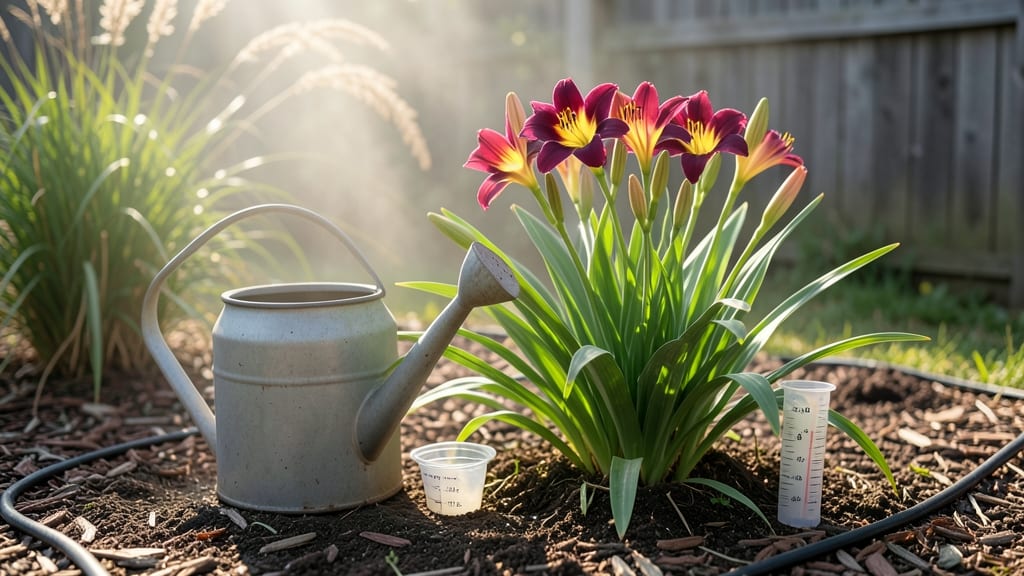
Daylilies don’t need a lot of water once they’re established—just the right balance to keep their roots happy and blooms popping 🌸.
You’ve probably heard they’re drought-tolerant, but that doesn’t mean you can ignore them entirely. Overwatering or letting them dry out too much can turn those vibrant blooms into sad, wilted messes. The trick? Deep, infrequent watering that mimics natural rainfall.
In hot, dry climates, they’ll need a drink every 5-7 days, while cooler or humid regions can stretch that to 10-14 days. Below, I’ll break down exactly how much to water, when to adjust, and how to spot when you’re doing it wrong.
Whether you’re battling a heatwave or just trying to cut back on watering, these tips will keep your daylilies thriving with minimal effort—and no guesswork.


How much water daylilies actually need (and when to adjust)
Daylilies earn their reputation as low-maintenance plants, but their watering needs shift dramatically through the seasons. While they thrive on drought tolerance once established, young plants and blooming varieties demand careful attention to avoid root rot or flower scorch.
The key lies in understanding their three distinct growth stages—each with unique moisture requirements.
In their first year, daylilies need consistent soil moisture to develop strong roots, but overwatering can suffocate them. Mature plants, however, can go weeks without rain in USDA zones 5-9, thanks to their deep root systems.
Even in humid climates, proper drainage prevents fungal issues that plague many perennials.
| Growth Stage | Watering Frequency | Depth per Watering | Climate Adjustments |
|---|---|---|---|
| Establishment (First Year) | Every 3-5 days | 1-2 inches deep | Increase frequency in hot/dry zones (e.g., Arizona) |
| Active Growth (Spring) | Weekly (1 inch/week) | 2-3 inches deep | Reduce in rainy climates (e.g., Pacific Northwest) |
| Blooming (Summer) | Every 5-7 days | 2-4 inches deep | Morning watering in humid zones prevents fungal diseases |
| Dormancy (Fall/Winter) | Monthly (if no rain) | 1 inch deep | Avoid watering in freezing zones (e.g., Minnesota) |
During establishment, aim for 1-2 inches of water per week, delivered deeply to encourage root growth. Shallow watering leads to weak roots that can't support the plant's eventual height. Use your finger to check soil moisture—if the top 2 inches feel dry, it's time to water.
When daylilies enter their blooming phase (typically June-August), increase watering to 1 inch per week. This supports flower production and prevents buds from drying out in hot afternoons. In arid climates, like those in California or Texas, mulch with 2-3 inches of organic matter to retain moisture.
As temperatures drop and growth slows in fall, reduce watering to every 2-3 weeks unless your region experiences prolonged drought. Overwatering during dormancy can rot crowns, which is especially critical in cool, wet climates like the Pacific Northwest.
In humid regions, like Florida or Louisiana, focus on morning watering to allow foliage to dry quickly, preventing powdery mildew. Avoid overhead sprinklers that can splash soil onto leaves. Instead, use drip irrigation or soaker hoses to deliver water directly to the soil.
For container-grown daylilies, water more frequently—every 3-5 days in summer—since pots dry out faster. Ensure containers have drainage holes to prevent root rot, a common issue in plastic pots that trap excess moisture.
Adjust your watering schedule based on rainfall patterns. In drought-prone areas, like the Southwest, group daylilies with succulents or lavender to create a low-water zone. In wet climates, prioritize well-draining soil by amending with compost or perlite.
One of the most common mistakes is watering on a schedule rather than checking soil conditions. Instead, use the "finger test": Stick your finger 2 inches deep into the soil. If it feels dry, water thoroughly. If it's moist, wait another day.
Remember, daylilies are resilient but not indestructible. Balancing their water needs ensures vibrant blooms year after year, whether you're in a desert landscape or a rainy garden. With the right approach, these hardy perennials will reward you with months of color with minimal effort. 🌸💧
Signs your daylilies are overwatered or underwatered (and how to fix it)
Daylilies are famously resilient, but even these tough perennials show clear signs when their water needs aren't met. Overwatering and underwatering create distinct symptoms that affect leaves, stems, and blooms.
The key is learning to read your plants' signals before problems become permanent. Let's decode the visual clues and fix them fast.
Start by examining the leaf edges. Crispy, brown edges are classic underwatering signs, while yellowing or mushy leaves indicate overwatered roots. Pay attention to the stems too - floppy, limp growth means thirsty roots, while a soggy base suggests rot.
These visual cues help you adjust your watering routine before stress becomes irreversible.
Daylily Watering: Pros & Cons
✅ DO This
- Water deeply 1-2x/week
- Use morning watering only
- Check soil moisture 2" down
- Apply 2-3 inches mulch
❌ DON'T Do This
- Water shallowly daily
- Use evening watering
- Ignore yellowing leaves
- Plant in clay-heavy soil
For underwatered daylilies, give them a deep drink by watering until moisture reaches 6-8 inches down. In USDA zones 7-9, reduce summer watering to every 5-7 days once established.
Always water at the base to prevent fungal issues on foliage. A 2-3 inch layer of organic mulch helps retain moisture and regulate soil temperature.
When dealing with overwatered daylilies, improve drainage immediately by amending soil with compost or perlite. In wet climates like zones 4-6, plant on mounds or raised beds. Avoid watering until the top 2 inches of soil feel dry.
Prune any mushy or discolored leaves to prevent spread of rot. Consider adding sand or grit to heavy clay soils for better aeration.
Seasonal adjustments are crucial. During spring establishment, keep soil consistently moist but not soggy. In summer blooming, water deeply 1-2 times per week. As fall approaches, reduce watering to prepare plants for dormancy. Always adjust based on rainfall - your local climate dictates the exact schedule.
Remember that daylilies in containers dry out faster than in-ground plants. Check container soil daily during heatwaves and water when the top inch feels dry. Use pots with drainage holes and choose lightweight mixes with perlite or vermiculite. These small adjustments make a big difference in preventing water stress.