
Watering
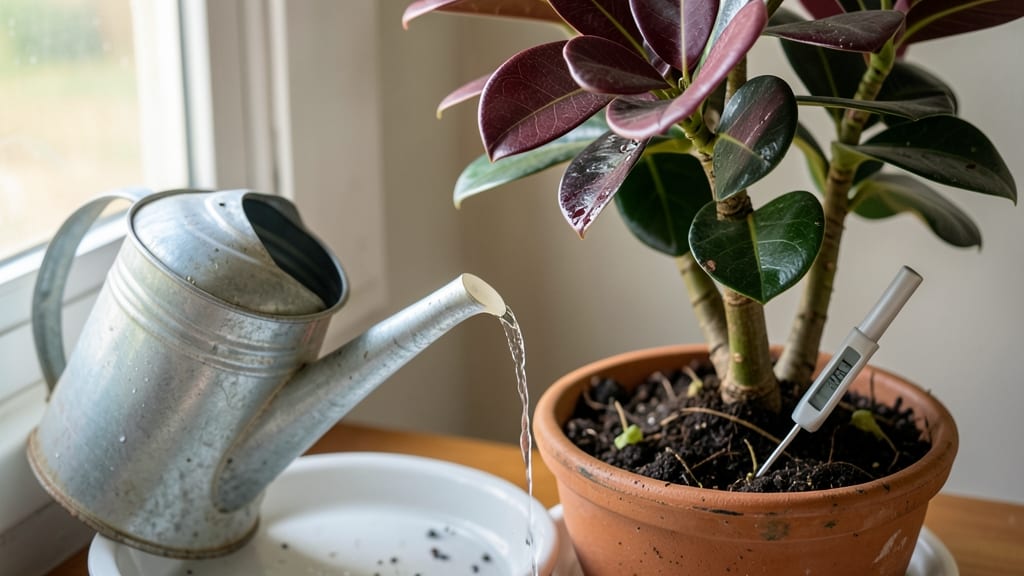
Watering a rubber plant correctly means giving it just enough moisture to thrive without drowning its roots—something most beginners get wrong, leading to yellow leaves or limp stems.
Overwatering kills rubber plants faster than underwatering—yet most gardeners get this balance wrong, leading to yellow leaves or mushy stems. Here’s the science-backed watering schedule your Ficus elastica needs to thrive.
Think of your rubber plant’s roots as a tropical sponge: they need to dry out slightly between waterings, but not so much that the leaves start curling. The key is checking soil moisture with your finger—stick it 1–2 inches deep—and adjusting for humidity, pot size, and seasonal changes.
Below, I’ll break down the exact watering schedule by season, how to spot overwatering vs. underwatering, and pro tips to keep your rubber plant lush without root rot.


Rubber plant watering schedule by season: exact frequency for healthy growth
Your Ficus elastica thrives on consistency, but its water needs shift dramatically with seasonal changes. In spring and summer, growth accelerates and roots drink more aggressively, while fall and winter slowdown triggers dormancy.
The key? Soil moisture tests and adjusting for humidity levels or light exposure. Let’s break it down month-by-month so you never guess again.
Rubber plants hate soggy soil but also wilts under stress. The stick-your-finger test is your best tool: insert it 1–2 inches deep. If it feels dry, water thoroughly. If damp, wait 3–5 more days. Pot size matters too—smaller pots dry faster than 10+ gallon containers.
Pro tip: Terracotta pots dry out quicker than plastic, so adjust accordingly.
Here’s your seasonal watering cheat sheet, tailored for average household humidity (40–50%) and bright indirect light. Adjust 1–2 days earlier or later based on your home’s microclimate.
During summer’s peak heat, your rubber plant’s roots work overtime. If your home feels dry and warm (like a south-facing room), increase frequency to every 5 days. Watch for crispy leaf edges—a classic sign of underwatering.
Conversely, yellowing leaves or mushy stems mean you’re overdoing it. Bottom-watering (placing the pot in a tray of water for 10–15 mins) helps prevent root rot while keeping soil evenly moist.
In winter, your rubber plant mimics its tropical roots by slowing down. Heating vents or dry air from holiday decorations? Boost humidity with a pebble tray or humidifier.
Water only when the top 3–4 inches of soil are bone-dry. Overwatering in winter is the #1 cause of root rot—trust the soil test, not the calendar.
Light exposure tweaks the schedule too. A west-facing window with afternoon sun may dry soil faster, while a north-facing spot could extend time between waterings. Move your plant 1–2 feet closer to light in winter to compensate for weaker rays. Leaf variegation (like Ficus elastica ‘Tineke’) needs slightly more light, so adjust water accordingly.
Pro move: Track your plant’s rhythm in a garden journal. Note when you water, how long soil stays moist, and any leaf changes.
Over 3–4 weeks, you’ll spot patterns—like your 12-gallon pot needing water every 8 days in July but every 14 days in January. Consistency is your rubber plant’s secret to lush, glossy leaves year-round.
Remember: No two rubber plants are identical. Your mature 6-foot specimen in a clay pot will drink differently than a 6-inch cutting in a plastic nursery pot. Start with this guide, then adapt based on your plant’s unique signals.
With this schedule, you’ll avoid the heartbreak of drooping leaves or rotting roots—and enjoy a thriving Ficus elastica for years.
🌿
Signs your rubber plant is overwatered vs. underwatered (with fixes)
Rubber plants (Ficus elastica) are forgiving, but their leaves scream for help when watering goes wrong. Yellowing leaves or mushy stems often mean you’re drowning your plant’s roots, while crispy brown edges signal thirst.
The key? Learn to read your plant’s soil texture and leaf condition—both tell you exactly what’s missing.
I’ve seen rubber plants recover from underwatering in weeks, but overwatered plants can rot in days. That’s why I always check two things: the smell of the soil (sour = too wet) and the weight of the pot (light = needs water).
Let’s break down the red flags and how to fix them—before it’s too late.
Rubber Plant Watering Fixes
| Issue | Signs | Fix |
|---|---|---|
| Overwatered | Yellow leaves, mushy stems, foul soil smell | Stop watering, repot in fresh well-draining mix, trim dead roots |
| Underwatered | Dry, crispy leaf edges, slow growth, soil pulls away from pot | Water deeply until it drains, increase humidity with pebble trays |
| Root Rot | Black stems, wilting despite wet soil | Prune affected areas, use hydrogen peroxide (1 tsp in water) to sterilize roots |
💡 Pro Tip: Always let the top 1–2 inches of soil dry between waterings.
If your rubber plant’s leaves are yellowing and drooping, it’s likely overwatered. The roots suffocate in soggy soil, starving the plant of oxygen. I’ve saved many rubber plants by repotting them in a mix of potting soil, perlite, and orchid bark—this improves drainage instantly.
For underwatered plants, a deep watering (until water runs out the drainage hole) usually revives them within a week.
One trick I swear by? The finger test. Stick your index finger 1–2 inches into the soil. If it feels dry, water your plant. If it’s damp, wait another 2–3 days.
This simple check prevents 90% of watering mistakes I’ve made over the years. And remember: rubber plants store water in their thick stems, so they’re more drought-tolerant than you think.
For chronic overwaterers, I recommend bottom-watering. Place your pot in a tray of water for 10–15 minutes, then drain it completely. This gives roots control over hydration and cuts down on root rot risk.
If your plant’s soil smells like vinegar, it’s a clear sign of bacterial buildup—flush the soil with clean water immediately.
Don’t ignore leaf texture either. Healthy rubber plant leaves should feel firm and slightly waxy. If they’re squishy or translucent, your plant is begging for less water. On the flip side, brown, crispy edges mean it’s time to hydrate.
Adjust your routine based on your home’s humidity levels—dry air means more frequent watering in winter, while high humidity in summer may require you to skip a watering.
When in doubt, observe your plant’s growth. A thriving rubber plant grows 6–12 inches per year and develops glossy, dark green leaves. If growth stalls or leaves turn pale, reassess your watering habits.
With these fixes, your Ficus elastica will bounce back—and you’ll never guess whether it was thirsty or drowning again. 🌿