
Watering
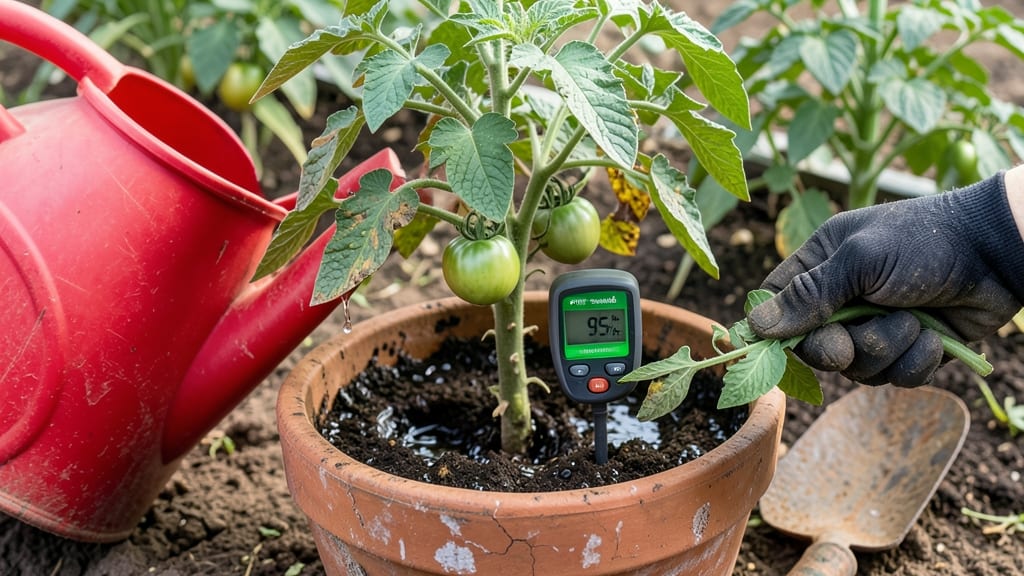
Leaves curl when overwatered because excess moisture suffocates roots, cutting off oxygen and nutrients. You'll often see yellowing, wilting, or a mushy stem base—clear signs of root rot that can be reversed if addressed early.
Overwatering creates a suffocating environment for roots, forcing them to struggle for air in waterlogged soil. 🌱 This oxygen deprivation triggers a stress response that causes leaves to curl inward as a protective measure.
The plant essentially tries to reduce surface area to conserve moisture—a classic survival tactic when roots can't absorb what they need. Many gardeners mistakenly think plants need more water when they see wilting, but the opposite is often true.
What's interesting is how quickly this damage can happen. Within just 24-48 hours of overwatering, roots may start to suffocate, leading to that telltale mushy base you can feel when gently squeezing the stem. The yellowing between leaf veins is another red flag—it's your plant screaming for help.
I've seen even hardy plants like succulents collapse in days when kept too wet, which is why I always check soil moisture with my finger before watering.
💡 In This Article
- How Overwatering Triggers Leaf Curl and Root Stress
- Fixing Overwatered Plants: Step-by-Step Recovery Guide
How overwatering triggers leaf curl and root stress
When soil stays too wet, roots can't breathe properly because water fills the spaces between soil particles where air normally circulates. This creates anaerobic conditions—essentially suffocating the roots by cutting off their oxygen supply.
Roots need oxygen to function, just like we do, and without it, they start to suffocate within 24-48 hours. This oxygen deprivation forces the plant into survival mode, causing leaves to curl inward to reduce water loss through transpiration—a defensive mechanism plants use when roots can't absorb enough moisture.
The real damage happens at the cellular level. Without oxygen, roots switch to anaerobic respiration, producing ethanol (yes, like in alcohol!) as a byproduct. This toxic buildup damages root cells, preventing them from absorbing water and nutrients efficiently.
You'll notice this as yellowing between leaf veins—a classic sign of nutrient starvation. The plant's natural response is to curl leaves, which slows down water evaporation and conserves energy until conditions improve. 🌱 In severe cases, the roots may even rot, turning black and mushy as fungal infections take hold.
Think of it like drowning—roots can't "breathe" underwater. Even plants that love moisture, like ferns or calatheas, have limits. The key difference is their tolerance for wetter soil, but even they'll show stress if kept soggy for too long.
For example, a calathea's leaves might curl and develop brown tips within 3-5 days of overwatering, while a succulent could show signs in just 24 hours. The speed depends on the plant's natural resilience and soil drainage.
Another critical factor is how excess moisture disrupts the soil's microbial balance. Beneficial bacteria and fungi that help roots absorb nutrients thrive in well-aerated soil. When waterlogged, these microbes suffocate too, reducing the plant's ability to access essential elements like nitrogen and phosphorus.
This nutrient starvation forces the plant to prioritize survival over growth, leading to that curled, stunted appearance. It's like trying to run a marathon on an empty stomach—your body (or plant) just can't perform.
What most gardeners don't realize is that the damage often starts at the root tips. These are the youngest, most sensitive parts of the root system, and they're the first to die off when oxygen is scarce.
As they decompose, they release more toxins into the soil, creating a vicious cycle. The curled leaves are essentially the plant's way of saying, "Help! I can't get enough water or nutrients!"—even though the soil looks wet enough. It's a classic case of too much of a good thing.
To put it in perspective, imagine your roots are like straws trying to sip water from a glass. If the glass is full to the brim, the straws can't draw anything up—no matter how hard they try. That's exactly what happens in overwatered soil.
The plant's vascular system gets clogged, and the leaves curl as a last-ditch effort to conserve what little moisture remains.
This is why even a small adjustment in watering can make a world of difference—sometimes just letting the top 1-2 inches of soil dry out is enough to save a struggling plant. 💧