
Pests
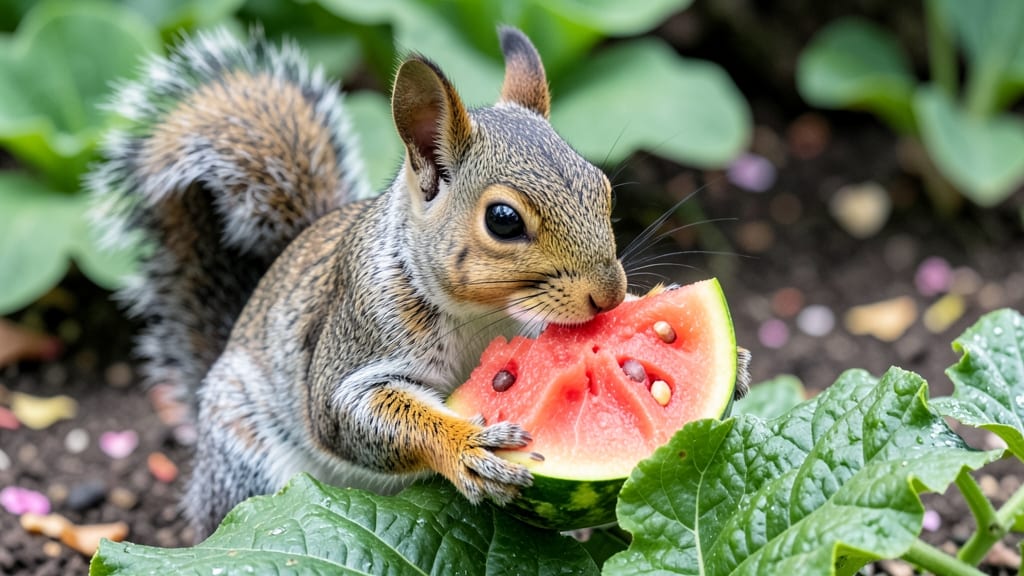
Squirrels rarely eat watermelon fruit but may nibble on rinds and seeds. They prefer protein-rich nuts and seeds, avoiding the high-water, low-nutrient flesh, though they’ll occasionally consume fermented or spoiled watermelon pieces in nature.
Squirrels typically steer clear of watermelon's juicy flesh because it offers little nutritional value compared to their usual diet of nuts, seeds, and protein. 🌱 The rind and seeds, however, can be tempting—the rind provides fiber, while seeds contain small amounts of protein and fat.
If you've ever noticed squirrels pecking at a watermelon patch, they're likely after the tough outer layer or seeds rather than the fruit itself. This behavior aligns with their instinct to seek out calorie-dense foods, especially during fall when they're preparing for winter.
What's interesting is how this preference plays out in different seasons. In late summer, when fresh watermelons are abundant, squirrels might ignore them entirely. But if a watermelon sits too long and begins to ferment or spoil, its sugars and softer texture can make it more appealing.
This is why you might spot squirrels feasting on overripe watermelon pieces in your garden—nature's way of recycling food that's no longer ideal for humans.
💡 In This Article
- Why Squirrels Avoid Watermelon Fruit (Nutrition and Behavior)
- What Parts of Watermelon Do Squirrels Actually Eat?
Why squirrels avoid watermelon fruit (nutrition and behavior)
Squirrels are hardwired to seek foods with high caloric density, particularly those rich in protein and fats. A single walnut (about 14 halves) provides roughly 185 calories and 17g of protein, while a 1-cup serving of watermelon flesh offers only 46 calories and 1g of protein.
This stark nutritional mismatch explains why squirrels ignore watermelon's juicy interior—their bodies are adapted to extract maximum energy with minimal chewing. 🔥
The real issue isn't just calories but also water content. Watermelon is 92% water, which means squirrels would expend more energy processing it than they'd gain. Compare that to acorns (their winter staple), which contain only 10-15% water and pack 3-5 times the calories per gram.
This high-water content makes watermelon a poor investment for a squirrel's energy budget, especially during breeding season when they need concentrated nutrition for survival.
Behaviorally, squirrels are opportunistic foragers that prioritize foods requiring minimal preparation. Watermelon's thick rind and fibrous texture demand significant chewing effort—something squirrels avoid when better options exist.
Their natural diet consists of 80% plant-based foods (nuts, seeds, buds) and 20% animal matter (insects, eggs), all of which are easier to process than watermelon's structure. 🌟
Seasonal availability plays a critical role too. In late summer, when watermelons are abundant, squirrels have no incentive to waste energy on them. However, if a watermelon begins fermenting (releasing sugars and softer textures), its nutritional profile improves slightly—this is why you might see squirrels investigating overripe patches.
The fermentation process breaks down some fibers and increases sugar concentration, making it marginally more appealing.
Squirrels also rely on their keen sense of smell to detect high-value foods. Watermelon's aroma, primarily from its limonene and linalool compounds, doesn't trigger their feeding instincts. Instead, they're drawn to the stronger, more pungent scents of nuts and seeds, which signal higher nutritional rewards.
This sensory preference further explains their avoidance of watermelon's flesh. ⚡