
Watering
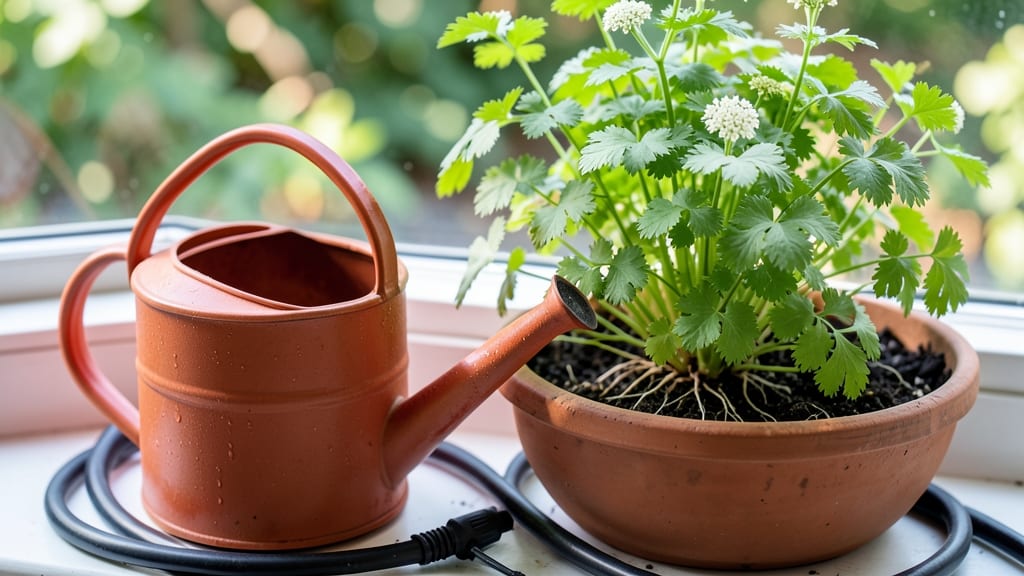
Does cilantro need a lot of water? The answer is a careful balance—moisture without drowning its roots—so the key is deep soaks every 2-3 days rather than daily sprinkles.
Here’s the catch: most gardeners assume cilantro craves constant water like its leafy cousins, only to watch their plants bolt or wilt. The truth? Overwatering is the silent killer of cilantro, while soggy soil sends roots gasping for air.
With the right approach, you can keep your cilantro 🌿 thriving through summer’s heat without a single sad leaf.
In Zone 6a, where spring planting kicks off in March, cilantro’s water needs shift dramatically. Start with moist but not wet soil, then adjust based on rainfall and heat. A simple finger test—stick your index finger an inch deep—tells you if it’s time to water or wait.
Below, I’ll break down the exact watering schedule for your climate, how to spot over/under-watering, and the one trick that keeps cilantro from bolting mid-season. No guesswork, just lush, flavorful growth.


Cilantro watering basics: how much is too much?
Cilantro thrives on a delicate balance of moisture—too little causes wilting, while too much triggers root rot and bolting. Unlike water-loving lettuce, cilantro is surprisingly drought-tolerant once established, but its roots need consistent soil moisture to prevent stress.
The key lies in understanding root health indicators and adjusting your watering schedule to your local climate.
In humid climates, cilantro may need watering every 2-3 days, while arid regions demand daily checks for topsoil dryness. Overwatering is the silent killer—it suffocates roots and triggers fungal diseases like root rot. Always prioritize well-draining soil to prevent waterlogged conditions that stifle growth.
Here’s the science: Cilantro’s fibrous root system spreads 12-18 inches deep but prefers the top 6 inches of soil to stay moist. Use your finger to test—if the soil feels dry 1 inch down, it’s time to water. This method beats guesswork and keeps your plants happy.
Watch for visual cues to avoid overwatering: yellowing leaves signal excess moisture, while crispy leaf edges mean your cilantro is thirsty. Another red flag? Premature bolting—cilantro flowers when stressed, often from inconsistent watering. Keep soil evenly moist to delay flowering and extend your harvest.
Morning watering is non-negotiable. Watering at sunset leaves leaves damp overnight, inviting fungal diseases like downy mildew. Aim for 6-8 AM sessions to let foliage dry before evening humidity sets in. This simple habit can double your cilantro’s lifespan.
Container-grown cilantro dries out faster than in-ground plants. If growing in pots, check soil moisture daily during summer heat. Use self-watering containers or add a moisture meter to avoid the "dry spell" that triggers bolting. Pro tip: Place a pebble tray under pots to maintain humidity.
Mulch is your secret weapon against water stress. Apply 2-3 inches of straw or wood chips around plants to lock in moisture and regulate soil temperature. This reduces evaporation by 30-50%, meaning fewer watering sessions and healthier roots. Just keep mulch 2 inches away from stems to prevent rot.
Don’t fall for the myth that cilantro needs "constant" water. Once established, it can handle 3-4 days between waterings in cooler months. The key is deep watering: soak the soil until water runs out the bottom of the pot or drains 6 inches deep.
This encourages roots to grow downward, making your plants more resilient.
Climate matters more than you think. In hot, dry regions, cilantro may need daily watering but benefits from afternoon shade. In cooler coastal areas, every-other-day watering suffices. Always adjust based on weather forecasts—afternoon thunderstorms can mean skipping a watering session entirely.
Remember: cilantro’s drought tolerance is a double-edged sword. While it can survive brief dry spells, prolonged stress leads to bitter leaves and early bolting. Strike the balance by monitoring soil moisture, mulching consistently, and watering deeply in the morning.
Your cilantro will reward you with lush, flavorful leaves all season long. 🌿
Drought-tolerant tricks to keep cilantro thriving without overwatering
Cilantro might seem like a high-maintenance herb, but with the right water-saving techniques, it can thrive even in dry climates. The key is balancing moisture without drowning its delicate roots.
Start by understanding that cilantro prefers consistent soil dampness—not soggy soil. My secret? Mulching with straw or shredded leaves locks in moisture while blocking weeds that compete for water.
Another game-changer is drip irrigation. Unlike overhead watering, drip systems deliver water directly to the roots, reducing evaporation by up to 30%. Pair this with a moisture meter to check soil conditions before watering.
I use one to avoid the guesswork—cilantro roots need moisture at 2-3 inches deep, but overwatering leads to yellow leaves and root rot.
Does Cilantro Need a Lot of Water?
✅ Yes, It Needs Consistent Moisture
- Soil must stay damp (not soggy)
- 1-1.5 inches of water per week
- Morning watering prevents fungal risks
- Drip irrigation saves 30% water
- Mulch retains moisture for longer
❌ No, It Hates Overwatering
- Yellow leaves signal root rot
- Wilting stems mean drought stress
- Bolting from uneven moisture
- Avoid night watering (fungus risk)
- Poor drainage kills roots quickly
For wilting cilantro, try the revival trick: place the pot in a shallow tray of water for 10 minutes to rehydrate roots. Then, let excess water drain completely.
Pair cilantro with companion plants like bush beans or lettuce—they share water needs and improve soil structure. Avoid planting near dill, which can cross-pollinate and cause bolting.
To prevent stress-induced bolting, harvest leaves frequently (every 2-3 weeks) to encourage new growth. I also trim flower stalks as soon as they appear—they sap energy from your herb. For container gardeners, choose pots with drainage holes and use a well-draining potting mix (like 60% compost, 30% perlite, 10% vermiculite).
Test your watering skills with this finger test: stick your index finger 1-2 inches into the soil. If it feels dry, water deeply. If it’s damp, wait another day.
This method beats relying on a schedule—cilantro’s needs change with temperature and humidity. In summer, I water every other day; in spring, every 3 days suffices.
Pro tip: Use a rain gauge near your garden to track natural rainfall. If you’ve had 0.5 inches of rain, skip watering entirely. Cilantro’s resilience shines when you let it adapt to natural cycles—just don’t let the soil dry out completely.
With these tricks, you’ll enjoy lush cilantro all season long without wasting a drop. 🌱