
How To
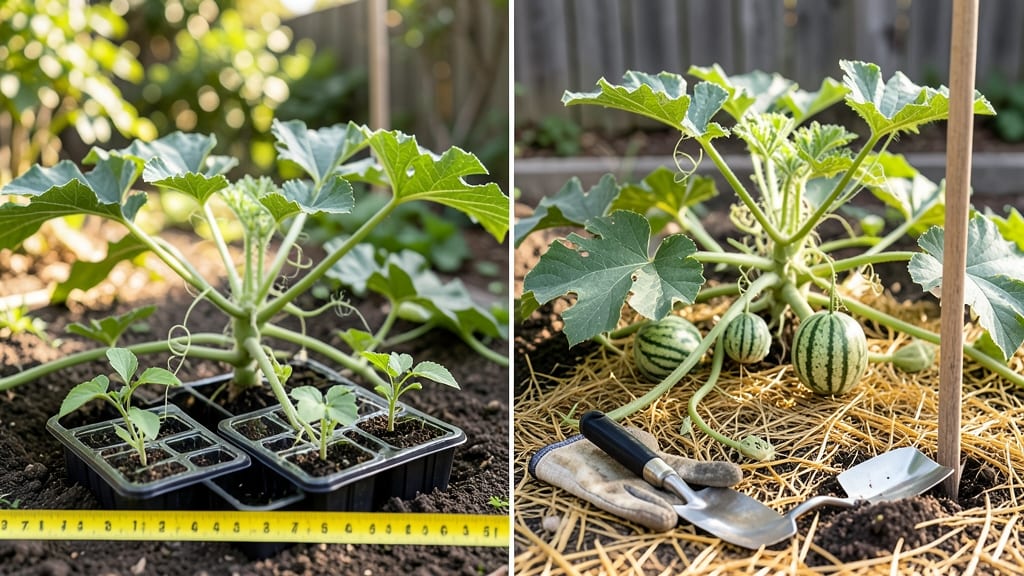
To plant watermelons the right distance apart, how far apart should watermelons be planted for a thriving harvest? Aim for 3 to 6 feet between vines, depending on the variety and your garden’s space 🍉—this is the single biggest factor in whether your harvest thrives or struggles.
Picture this: your watermelon vines sprawling like unruly teenagers, stealing sunlight and nutrients from each other. Too close, and you’ll end up with stunted fruit, powdery mildew, and a jungle of tangled vines that’s more headache than harvest.
But get the spacing right, and you’ll unlock juicy, vine-ripened melons that practically fall into your hands.
Most gardeners overlook how much watermelons really need to stretch out—especially those sprawling vining types that can reach 15 to 20 feet if left unchecked. Even compact bush varieties need room to breathe, or you’ll watch your yield shrink faster than a summer squash in the heat.
The good news? A little planning now means fewer fights over space (and fewer melons) later.
In this guide, I’ll break down the exact spacing you need for bush vs. vining types, how to tweak it for small gardens, and the 3 spacing mistakes that sabotage even the most well-intentioned gardeners. Ready to turn tangled vines into a bountiful patch?
Optimal watermelon spacing by vine type and growing conditions
Watermelon vines spread like wildfire—some varieties can stretch 15-20 feet in a single season! Proper spacing isn’t just about fitting plants into your garden; it’s about giving each vine room to thrive, maximize fruit size, and prevent diseases like powdery mildew.
The right spacing depends on whether you’re growing bush types (compact) or vining varieties (aggressive spreaders), plus your local climate and soil fertility.
In hot, dry climates (USDA Zones 8-10), watermelons need slightly more space to conserve moisture, while cooler, humid zones (Zones 4-7) benefit from tighter spacing to encourage faster vine growth.
Rich, well-drained soil also lets you plant closer together, as nutrients support healthier, more compact vines. Let’s break down the science-backed spacing rules for every scenario.
| Variety Type | Row Spacing (in) | Plant Spacing (in) | Vine Spread | Best For |
|---|---|---|---|---|
| Bush Varieties (e.g., 'Sugar Baby', 'Black Diamond') | 36–48 | 18–24 | 3–5 ft | Small gardens, containers, raised beds |
| Semi-Vining (e.g., 'Crimson Sweet', 'Charleston Gray') | 48–60 | 24–36 | 6–10 ft | Standard gardens, trellised rows |
| Vining (e.g., 'Jubilee', 'Moon and Stars') | 60–72 | 36–48 | 15–20 ft | Large gardens, trellises, fences |
| Trellised Vining (Any variety) | 48–60 | 12–18 | Vertical (10–12 ft height) | Urban gardens, small spaces |
| Hill Planting (Any variety) | N/A | 3–4 plants per hill, 36–48 in apart | Radial (6–10 ft diameter) | Traditional gardens, warm climates |
For bush varieties, like 'Sugar Baby', stick to 18–24 inches between plants in rows spaced 36–48 inches apart. These compact types produce smaller vines but still need room to circulate air and prevent fungal diseases.
If your soil is poor or sandy, increase spacing to 24–36 inches to give roots more room to establish.
Semi-vining types, such as 'Crimson Sweet', require 24–36 inches between plants with rows 48–60 inches apart. These varieties strike a balance—ideal for standard garden beds where you want a mix of yield and manageable vine growth.
In humid climates, widen rows to 60 inches to improve airflow and reduce mildew risks.
Full vining varieties like 'Jubilee' demand the most space: 36–48 inches between plants and 60–72 inches between rows. These sprawlers need room to explore and develop large fruit.
If your garden is tight, consider trellising—this lets you plant vines 12–18 inches apart in rows 48–60 inches apart, saving space while keeping vines off the ground and reducing pests.
Hill planting is a Southern gardening tradition that works well for all types. Plant 3–4 seeds per hill, spacing hills 36–48 inches apart in all directions. This method mimics natural growth patterns, letting vines spread radially.
Hills also warm soil faster in spring, giving watermelons a head start in cooler climates like USDA Zone 7.
Soil fertility
How to adjust spacing for small gardens, containers, OR high-density planting
Small spaces shouldn’t limit your watermelon dreams! With the right adjustments, you can grow compact varieties or use vertical training to maximize yield in tight areas. I’ve grown watermelons in 5-gallon containers and urban gardens—here’s how to make it work without sacrificing fruit size or vine health.
First, choose dwarf or bush varieties like 'Sugar Baby' or 'Tiny Tim,' which mature in just 60-70 days and spread only 3-5 feet. These are perfect for containers or balcony gardens. Even standard vining types can adapt with trellising or hill planting to save space.
🌱 Space-Saving Strategies
- 🪴 Containers: 1 plant per 5-gallon pot, space pots 3-4 feet apart
- 🌿 Vertical Trellis: Train vines up 6-foot trellis, space plants 2 feet apart in rows
- 🏡 Hill Planting: Mound soil 12 inches high, plant 2-3 seeds per hill, space hills 4 feet apart
- 🌱 Companion Pairing: Interplant with bush beans or radishes to fill gaps
- 🌡️ Climate Hack: In hot zones, space 1 foot wider to reduce disease
For high-density planting in ground gardens, try the square-foot method. Divide your space into 1-foot squares and place 1 watermelon plant per square (using dwarf varieties). This works surprisingly well for urban plots or community garden shares.
Don’t forget companion planting to optimize space! Pair watermelons with nasturtiums (which repel pests) or marigolds (which deter nematodes). These plants also add color and fill vertical gaps while protecting your melons.
If you’re using containers, ensure each has at least 5 gallons of soil and drainage holes. Place pots in full sun and rotate them weekly for even growth. I’ve had success with black plastic pots (they absorb heat) in USDA Zone 8 balconies.
Finally, monitor your plants closely. Prune aggressively to remove suckers (side shoots) if space is tight—this redirects energy to fruit production instead of vine sprawl. With these tweaks, even a 10x10-foot patio can yield 10-12 melons per season!