
Watering
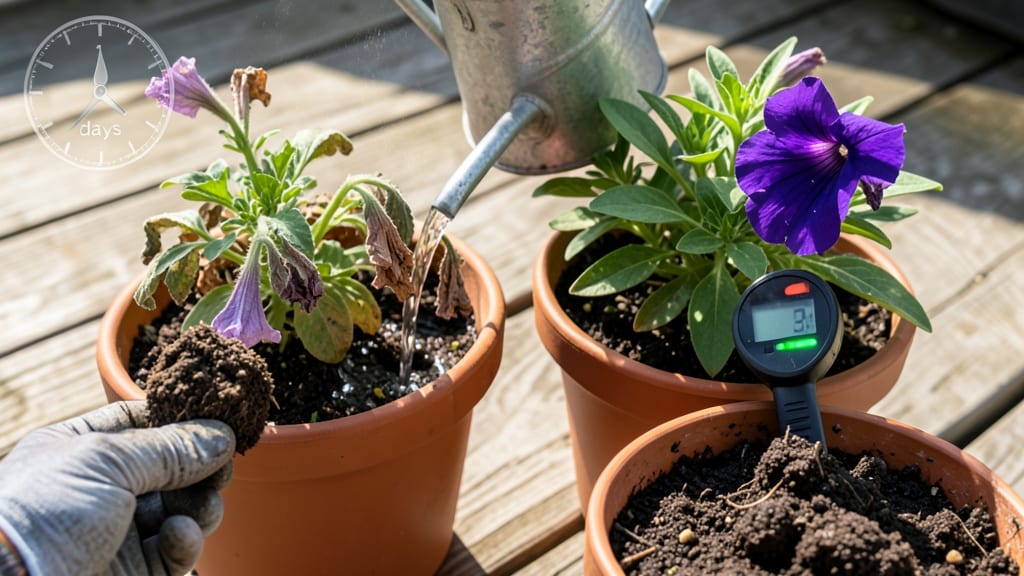
Flowers can survive 12 to 48 hours without water, but the exact time depends on their type—delicate blooms like roses may wilt in under 12 hours, while drought-resistant varieties like succulents can last 3–5 days. The damage from dehydration becomes permanent within 24–72 hours for most flowers.
Understanding why flowers dehydrate so quickly starts with their biology. 🌸 Most blooms draw moisture through their stems, and once cut or uprooted, this system collapses—think of it like a straw breaking when you bend it too far.
Temperature plays a huge role: flowers wilt twice as fast in 80°F+ heat compared to cooler conditions. That's why I always keep my cut flowers in the fridge overnight when I can't arrange them immediately.
For potted plants, the soil type matters too—sandy mixes dry out faster than rich, moisture-retentive blends.
What's interesting is how different flowers handle stress. Roses, for example, show visible wilting within 8–12 hours without water, while snapdragons might last nearly 48 hours. Succulents like jade plants can go weeks without water because their thick leaves store moisture.
The key takeaway? Don't wait until flowers look sad to water them—by then, the damage is often irreversible.
💡 In This Article
- Why Flower Dehydration Happens Faster Than You Think
- Survival Times for Common Flowers (And How to Extend Them)
Why flower dehydration happens faster than you think
Flower dehydration starts at the cellular level when their vascular system—those tiny tubes that transport water—can't keep up with moisture loss. Think of it like a straw: when you bend it too far, the flow stops.
In flowers, this happens when stems are cut or when roots can't access water quickly enough. 🌸 The damage accelerates because flowers continue transpiring (releasing moisture through tiny leaf pores) even when cut or potted.
For tropical blooms like orchids, this process is especially rapid because their large, delicate petals have high surface area for water evaporation.
Temperature and humidity act like a double-edged sword. At 75°F with 50% humidity, most flowers lose moisture at a baseline rate. But crank up the heat to 90°F+, and transpiration speeds up by 30-50%—that's why your bouquet wilts faster in summer.
Humidity works in reverse: keeping air moisture above 60% can extend flower life by 24-48 hours by slowing evaporation. Even a simple bowl of water near your potted plants creates a microclimate that helps.
The real kicker? Once flowers wilt, their cells start breaking down. After 24 hours without water, the damage becomes visible—petals droop, stems soften, and the flower's structure weakens. By 48 hours, most flowers enter irreversible decline unless you act fast.
This is why professional florists use special solutions (like floral preservatives with sugar and acid) to temporarily "revive" the vascular system and slow dehydration. 💧 For home gardeners, trimming stems at an angle and recutting them every 2-3 days can buy you an extra 12-24 hours of life.
Different flower types react dramatically. Succulents like echeveria or jade plants store water in their thick leaves, so they can survive weeks without hydration. Meanwhile, tropical blooms like hibiscus or anthuriums wilt within 12-18 hours because their thin petals lack protective adaptations.
Even within the same family, varieties vary—petunia flowers may last 36 hours while snapdragons can stretch to 48 hours. The lesson? Don't treat all flowers equally when it comes to watering.
Light exposure also plays a sneaky role. Bright, direct sunlight increases transpiration by up to 40% compared to shaded conditions. That's why I always place cut flowers in indirect light and keep potted plants away from south-facing windows during peak afternoon sun.
The combination of heat, light, and low humidity creates a perfect storm for rapid dehydration—something even drought-resistant plants can't always withstand.
Here's what's actually happening inside the flower: as moisture leaves, the cells lose turgor pressure (that's the scientific term for their firmness). Without water, the petals collapse inward like a deflating balloon.
In extreme cases, the flower's DNA even starts degrading after 72 hours of dehydration, making revival nearly impossible. 🌺 That's why timing is everything—catch wilting early, and you might still save your blooms with prompt rehydration.