
Plants
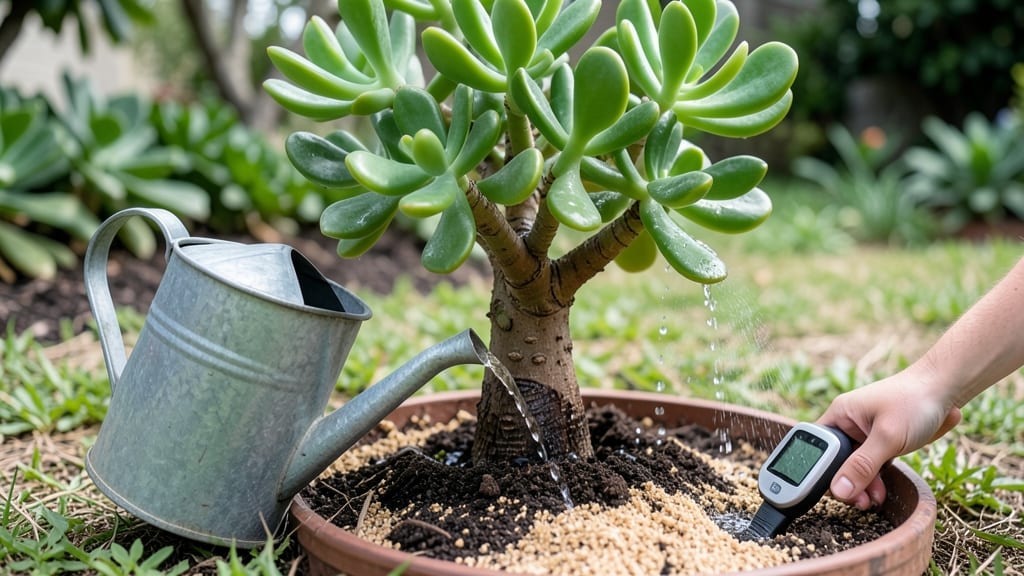
Watering jade plants properly keeps them thriving 🌿—but most people either drown them or leave them parched, both of which lead to the same sad, wrinkled fate.
Here’s the truth: these succulents store water like tiny green batteries, so the real skill isn’t how often you water them—it’s how you tell when they’re ready. Stick your finger in the soil, and if it’s bone-dry, it’s time.
If it’s still damp, wait another week. That’s the secret to avoiding root rot while keeping your jade happy and plump.
Season, pot size, and even your local humidity play a bigger role than you’d think. A jade in a tiny terracotta pot might need water every three weeks in summer, while the same plant in a large ceramic container could stretch that to five weeks.
And winter? That’s when most people overdo it—your jade’s basically hibernating, so cut back to once a month or less.
Below, I’ll walk you through the exact soil-dry test, seasonal tweaks, and the one sign of overwatering that catches even experienced growers off guard. Ready to master the routine?
The perfect jade plant watering schedule: when to water based on soil and season
Jade plants (Crassula ovata) thrive on neglect—but that doesn’t mean they’re completely drought-proof. Their watering needs shift dramatically based on soil type, seasonal growth cycles, and even your local humidity levels.
Unlike moisture-loving plants, jades store water in their plump leaves, so the key is deep, infrequent watering that mimics their desert origins. Let’s break down the science so you never guess again.
First, the soil type you use makes all the difference. Jade plants despise soggy soil, which is why cactus mix (with perlite or pumice) is ideal—it drains 30-50% faster than regular potting soil. If you’re using standard mix, your jade will need water 2-3 days earlier than in cactus soil.
The goal? Let the top 2-3 inches of soil dry completely before watering again. This rule changes slightly with seasonal shifts, though.
During summer months, your jade’s watering needs spike—especially if you’re in a hot, dry climate. If temperatures hit 90°F+, check soil moisture every 5-7 days instead of sticking to the schedule. A quick trick? Stick your finger 2 inches deep into the soil.
If it feels dry, water thoroughly until it drains from the pot’s holes. If it’s still damp, wait 3 more days before testing again. This soil dry test eliminates guesswork.
Winter is when jades enter dormancy, slowing growth to conserve energy. In this phase, reduce watering by 70%. A monthly deep soak is enough—unless your home has low humidity (like 30% or below), where you might water every 6 weeks.
Pro tip: Group jades together in winter to create a microclimate with slightly higher humidity, cutting evaporation loss.
Humidity plays a sneaky role in watering needs. In high-humidity areas (like bathrooms or kitchens), jades lose moisture slower, so stretch watering intervals by <
5 Signs your jade plant is thirsty (or drowning) and how to fix it
Your jade plant might look sturdy, but it’s actually a succulent water barometer. When it’s thirsty, its leaves pucker like a dried apple, while overwatering turns them soggy and translucent.
The key is learning these visual and tactile cues—because neither extreme is good for your Crassula ovata. Let’s decode the signs and fix them fast.
First, check the soil moisture—stick your finger 1-2 inches deep. If it feels bone-dry, your plant is thirsty. But if it’s damp or sticky, you’ve got root rot in the making.
The leaves tell the story too: wrinkled means underwatering, while mushy, yellowing leaves scream overwatering. Don’t panic—these fixes are simple.
Pro tip: Morning watering is your best friend. It gives excess water time to evaporate, preventing fungal diseases like powdery mildew. And always use a pot with drainage holes—no matter how pretty the cachepot looks, roots need to breathe.
Once you’ve corrected the issue, adjust your watering schedule based on the season. In summer, water every 2-3 weeks; in winter, stretch it to monthly. Your jade plant will thank you with plump, glossy leaves and maybe even a few tiny pink flowers—if you’re lucky!
Remember, jade plants store water in their leaves, so they’d rather go thirsty than drown. When in doubt, underwater slightly—your plant’s resilience will surprise you. Now go give that Crassula ovata the care it deserves! 🌱