
How To
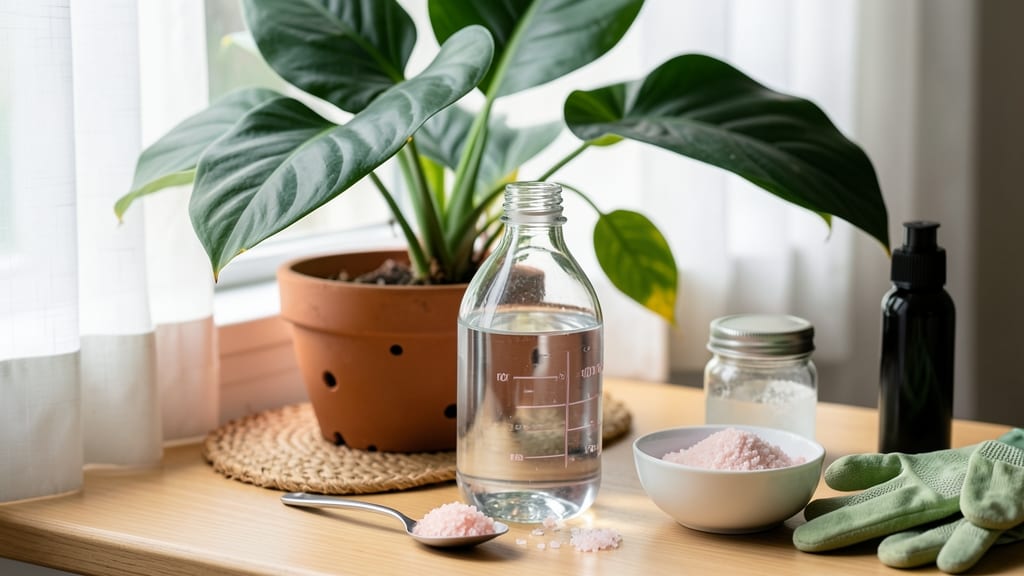
Mixing 1 tablespoon of Epsom salt in 1 litre of water for plants is the goldilocks ratio—just enough magnesium to boost growth without scorching roots.
You’ve probably seen those yellowing leaves or stunted blooms and wondered, Is this really the fix? For tomatoes, peppers, and roses, it absolutely is—but the key is precision. Too little won’t help, and too much can turn your soil into a chemical time bomb.
This guide breaks down the exact dosage by plant type, whether to use it as a soil drench or foliar spray, and how often to apply it without overdoing it. No guesswork, just science-backed ratios that work.
Ready to revive your 🌱 without the risk? Let’s dive into the numbers—and when to skip it entirely.


Epsom salt dosage for 1 litre of water by plant type: expert ratios
Epsom salt—magnesium sulfate—is a gardener's go-to for treating magnesium deficiency and boosting plant vitality. But the right dosage per litre depends entirely on your plant type. Too little won't help; too much can burn roots or disrupt soil chemistry.
Let's break down the science-backed ratios for vegetables, flowers, citrus, and houseplants to keep your garden thriving safely.
Magnesium is crucial for chlorophyll production and energy transfer in plants. When deficient, you'll see yellowing between leaf veins (interveinal chlorosis) or stunted growth. Epsom salt provides quick magnesium absorption, but the concentration varies by plant needs.
For example, citrus trees crave more magnesium than houseplants like ferns. Always use distilled or rainwater to avoid mineral buildup from tap water.
| Plant Type | Epsom Salt per 1L Water | Frequency | Best Use |
|---|---|---|---|
| Vegetables (Tomatoes, Peppers, Potatoes) | 1 tablespoon (15g) | Every 2 weeks (soil) | Root zone or foliar spray |
| Flowers (Roses, Hydrangeas, Petunias) | 1 teaspoon (5g) | Monthly (foliar) | Evening spray (avoid direct sun) |
| Citrus Trees (Lemons, Oranges, Limes) | 2 tablespoons (30g) | Every 4 weeks (soil) | Deep watering |
| Houseplants (Ferns, Calatheas, Snake Plants) | ½ teaspoon (2.5g) | Every 3 months (soil) | Light watering |
| Lawns (Grass Recovery) | 1 tablespoon (15g) per gallon | Seasonal (spring/fall) | Broadcast spray |
For vegetables like tomatoes, the 1 tablespoon per litre ratio mirrors their high magnesium demand during fruiting. These plants show deficiency fast—yellowing lower leaves or blossom-end rot in tomatoes.
Apply the solution directly to the root zone or as a foliar spray during early morning to prevent evaporation. Citrus trees, however, require nearly double the dose (2 tablespoons) because their acidic soils leach magnesium quickly.
When using Epsom salt on flowers like roses, stick to the 1 teaspoon per litre ratio to avoid overloading their delicate systems. Roses benefit from foliar sprays applied in the evening, as direct sunlight can cause leaf burn.
Watch for dark green, healthy foliage—a sign your roses are absorbing magnesium correctly. For houseplants, the ½ teaspoon per litre is gentle enough to avoid salt buildup in potting mix, which can harm roots over time.
Signs of Epsom salt toxicity include brown leaf edges, wilting, or stunted growth. If you notice these, flush the soil with plain water and reduce future applications. Always test soil pH first—Epsom salt works best in slightly acidic to neutral soils (pH 6.0–7.0).
For alkaline soils (pH >7.0), magnesium absorption improves with a chelated magnesium supplement instead.
Pro tip: Mix your Epsom salt solution in a clean spray bottle for foliar applications. Add a few drops of mild liquid soap to help the solution adhere to leaves.
For container plants, dilute the solution further (half the recommended dose) to prevent salt accumulation in the limited soil volume. Always water thoroughly after application to carry excess salt away from roots.
Remember, Epsom salt is a supplement, not a replacement for balanced fertilization. Use it as a corrective measure for deficiency symptoms, not as a regular feeding. For long-term magnesium needs, consider organic amendments like kelp meal or dolomitic lime, which provide magnesium along with other essential nutrients.
Start with the recommended ratios, monitor your plants' response, and adjust as needed. With the right Epsom salt dosage, you'll see greener leaves, stronger stems, and healthier blooms in just a
How to apply Epsom salt solution safely: step-by-step guide
Epsom salt—magnesium sulfate—is a gardener’s go-to for fixing magnesium deficiencies and boosting plant health. But mixing it incorrectly can harm your plants instead of helping. The key is precision: too little won’t help, and too much can burn roots or disrupt soil chemistry.
Let’s break down how to apply it safely, from mixing the perfect 1-litre solution to seasonal timing and application methods.
Before you begin, test your soil’s pH level (ideal range: 6.0–7.0). Epsom salt works best in slightly acidic to neutral soils. If your soil is already high in magnesium or calcium, skip it—overuse can create imbalances.
For most plants, the magic happens in spring and early summer, when new growth is most active. Avoid applying in fall or winter, as plants are dormant and won’t absorb nutrients efficiently.
Step-by-Step Epsom Salt Solution Guide
-
Step 1: Measure the Epsom Salt
For 1 litre of water, use 1 tablespoon (15–20g) for general plant care. For magnesium-deficient plants (e.g., tomatoes, peppers, roses), double it to 2 tablespoons (30–40g). Use a kitchen scale for precision—1g per litre is a safe baseline for sensitive plants like houseplants or seedlings. -
Step 2: Dissolve in Warm Water
Fill a clean spray bottle or watering can with lukewarm water (never boiling). Stir the Epsom salt until fully dissolved—undissolved crystals can clog spray nozzles or irritate foliage. Let the solution cool to room temperature before use. -
Step 3: Apply as a Foliar Spray or Soil Drench
Foliar spray: Mist the solution onto undersides of leaves in the early morning (avoid afternoon heat to prevent leaf burn). Soil drench: Pour the solution directly onto the soil around the plant’s base, ensuring it reaches the root zone. Water thoroughly afterward to distribute nutrients. -
Step 4: Frequency and Timing
Apply every 2–4 weeks during the growing season (spring to early fall). For container plants, use the solution once a month to avoid salt buildup. Stop applications 6 weeks before harvest for edible plants to allow residues to metabolize. -
Step 5: Monitor for Overuse Signs
Watch for yellowing leaves with brown edges (magnesium toxicity) or stunted growth. If you see these signs, flush the soil with plain water and reduce future doses. Never exceed 1g per litre unless treating severe deficiencies in large, robust plants like tomatoes or citrus trees.
Timing your application is just as critical as the dosage. For vegetables like tomatoes and peppers, apply the solution when plants are flowering or fruiting to enhance yield and improve fruit quality. Roses and hydrangeas benefit from early spring applications to promote lush foliage and vibrant blooms.
For houseplants, a diluted solution (half the dosage) every 8–12 weeks keeps their leaves vibrant without risking root damage.
Remember, Epsom salt is a supplement, not a substitute for balanced fertilization. Use it to address deficiencies, not as a regular nutrient source. Combine it with compost or organic matter to improve soil structure and provide a broader range of nutrients.
Always store unused solution in a cool, dark place and label it clearly to avoid accidental misuse.
With these steps, you’ll safely harness Epsom salt’s power to revive struggling plants and boost their growth—without the risks of overapplication. Start with small doses, observe your plants’ responses, and adjust as needed. Happy gardening! 🌿