
How To
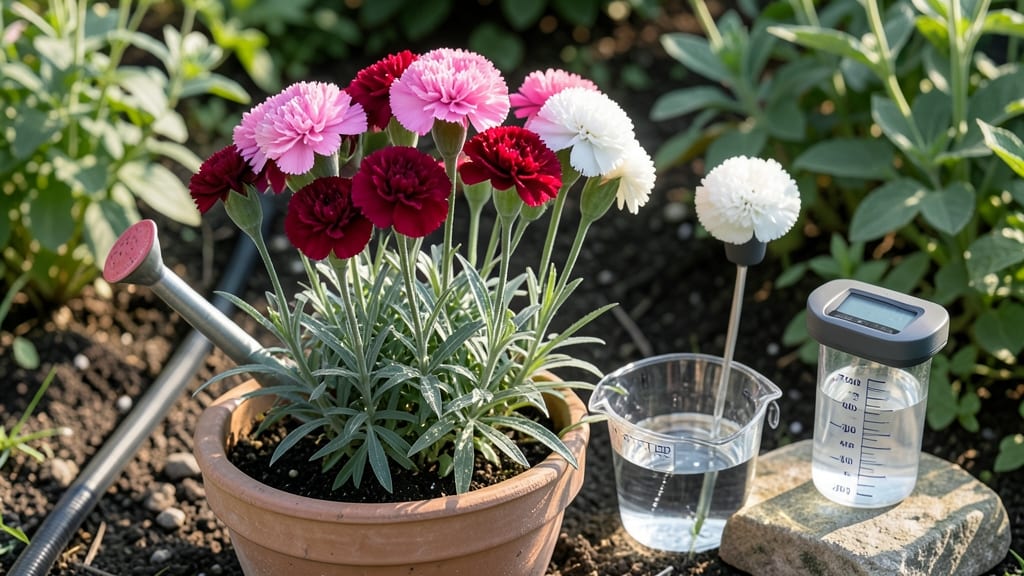
Carnations need about 1 cup of water every 3-5 days to stay vibrant, but getting this right is trickier than it sounds—too much or too little can send your 🌸 plants into a downward spiral.
Picture this: You water your carnations like clockwork, yet the leaves yellow and the blooms refuse to open. Or worse, the stems rot at the base from soggy soil. These are classic signs of watering gone wrong, and they’re far more common than you’d think.
In this guide, I’ll break down the exact watering schedule your carnations crave—from the soil dry test that saves you from guesswork to seasonal adjustments for heatwaves and humidity. No more wilting blooms or wasted water.
You’ll learn how to check moisture levels like a pro, spot overwatering before it’s too late, and keep your carnations thriving whether they’re in pots or planted in the ground.


The perfect watering schedule for carnations: weekly guide by season
Carnations thrive on consistency, but their water needs shift dramatically with the seasons. Too much water causes root rot, while too little makes buds drop like sad confetti. The key is understanding seasonal moisture demands and adjusting your routine like a gardening DJ mixing tracks for your plants.
Let’s break down exactly how often to water carnations in each season—and how to tweak for pots versus garden beds.
First, know that carnations prefer moderate moisture with excellent drainage. Their roots hate soggy shoes, but they’ll also shrivel if left high and dry. The golden rule? Water when the top 1-2 inches of soil feel dry to the touch.
This simple check prevents both overwatering and underwatering—two surefire ways to kill your blooms before they even open.
Rainfall is your wild card. If you’ve had ½ inch of rain in 3 days, skip watering entirely. Use a rain gauge or even a tuna can buried in your garden to track precipitation. For potted carnations, rainfall doesn’t help much—those roots are trapped in a confined space where water evaporates faster. Always check pots daily in summer, even if it rained.
Here’s your season-by-season watering cheat sheet, including adjustments for indoor pots versus outdoor beds:
| Season | Outdoor Garden Beds | Indoor Pots (5" diameter) | Soil Dry Test | Rainfall Adjustment |
|---|---|---|---|---|
| Spring | Every 3-4 days | Every 2-3 days | Top 1" dry | Skip if >0.5" rain |
| Summer | Every 2-3 days | Daily (morning) | Top ½" dry | Skip if >0.3" rain |
| Fall | Every 5-7 days | Every 3-4 days | Top 1.5" dry | Skip if >0.75" rain |
| Winter | Bi-weekly | Every 7-10 days | Top 2" dry | Skip if >1" rain |
Notice how potted carnations need water more often than garden beds? That’s because pots dry out faster, especially in summer heat. If your carnation’s leaves start curling or the soil pulls away from the pot edges, it’s thirsty—water immediately.
For garden beds, dig your finger 1-2 inches deep; if it feels like a dry sponge, it’s time to water.
In summer’s peak heat, carnations in full sun may need water twice daily—morning and late afternoon. Always water at the base of the plant, not overhead, to prevent fungal diseases like powdery mildew.
A 5-minute soak at the roots is better than a quick sprinkle that barely wets the soil. Pro tip: Use a drip irrigation system or soaker hose for garden beds to deliver water slowly and evenly.
Fall is when carnations slow their growth and need less water. Reduce frequency but keep soil moist—think of it like a cozy blanket for their roots. If you’re in a humid climate, cut back even more.
Yellowing leaves? That’s often a sign of overwatering in fall, when cooler temps mean roots absorb moisture slower. Let the top 1.5 inches dry out before watering again.
Winter watering is all about minimal maintenance. Carnations in the ground can go weeks without water, but potted ones need occasional sips. Check soil moisture weekly—if it’s still damp 2 inches down, wait another week.
Overwatering in winter is a silent killer, causing roots to suffocate in cold, waterlogged soil. If your carnation’s leaves turn yellow and mushy, it’s drowning—time to repot in fresh, dry soil.
Watch for these watering red flags: Drooping leaves that don’t perk up after watering? Underwatering. Yellow leaves with crisp edges? Overwatering. Buds falling off before opening?
Often a sign of inconsistent moisture. Adjust your schedule based on these cues—your carnations will thank you with bold, long-lasting blooms that make every season worth the effort.
Soil dry test for carnations: how to check moisture levels like a pro
Guessing when your carnations need water can turn vibrant blooms into sad, wilted stems. Instead of relying on a schedule, learn to read your soil like a pro. The key is checking moisture levels at the root zone, where your carnations actually drink.
This simple test saves you from both overwatering and underwatering, two mistakes that kill carnations faster than you might think.
Start by understanding what "correct moisture" feels like for carnations. Their roots thrive in well-draining soil that stays evenly moist but never soggy. Over time, you'll develop a feel for the perfect texture—like a wrung-out sponge. Until then, follow these foolproof methods to test your soil moisture accurately.
First, try the finger test, the simplest way to check soil moisture. Stick your index finger 1-2 inches deep into the soil near your carnation's stem. If it feels dry and crumbly, it's time to water.
If it's still cool and damp, wait another day. Pro tip: Do this test in the morning—soil is driest then, giving you the most accurate reading.
For a more precise reading, invest in a moisture meter (they cost under $15!). These digital tools give you an exact percentage of moisture in the soil. Aim for 40-60% moisture in the root zone—any higher risks root rot, while below 30% means your carnations are thirsty.
Stick the probe 2 inches deep for accurate results, especially in container-grown carnations, where soil dries out faster.
Don't ignore visual cues from your carnations themselves. Wilting leaves that don't perk up after watering? That's a cry for help. Check the soil immediately—it's likely bone-dry. Conversely, yellowing leaves or mushy stems signal overwatering.
Combine these signs with your soil test to avoid misdiagnosing the problem. Remember, carnations prefer thirst over drowning—better slightly dry than soggy!
Adjust your watering based on what you learn. In containers, soil dries out 2x faster than garden beds, so check daily in summer. For garden-planted carnations, mulch with 2-3 inches of straw to retain moisture and reduce how often you need to test.
Over time, you'll train your eye to spot when your carnations need a drink—no guesswork required.