
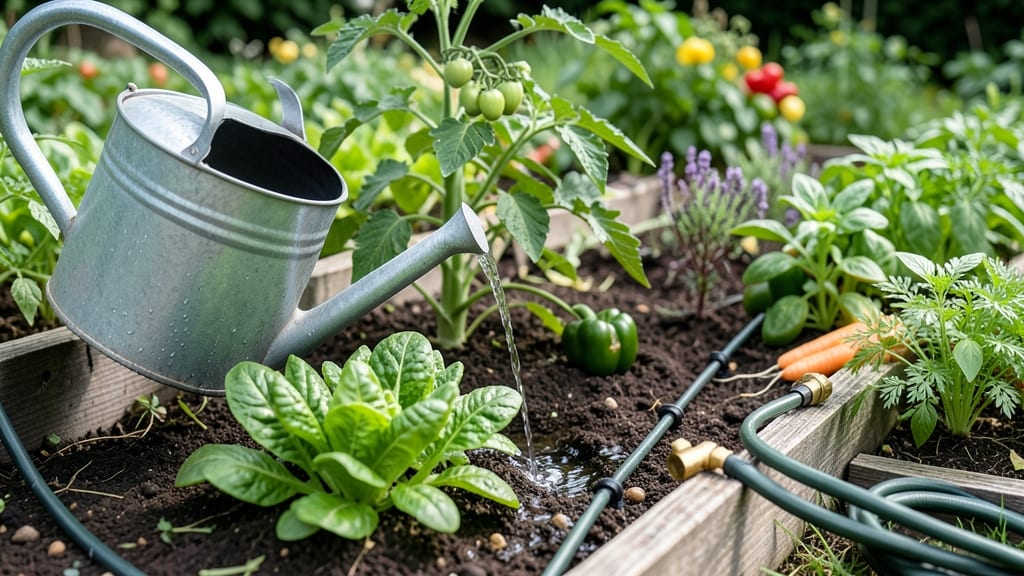
Watering Vegetable Plants: Soil Moisture Tricks for Root Health Without Waste

Watering

Watering Vegetable Plants: Soil Moisture Tricks for Root Health Without Waste

Watering your vegetable plants 🥬 the right way is the difference between a bumper crop and a sad, wilted garden.

Overwatering or underwatering your vegetable plants wastes precious resources—and can kill your harvest before it even begins. The secret lies in mastering soil moisture techniques that keep roots thriving without a single drop of waste.

Most gardeners guess how much water their plants need, but that’s a recipe for stress—whether it’s stunted growth from too little or root rot from too much. Instead, we’ll focus on smart, efficient methods that save time, water, and frustration.

By the end, you’ll know exactly when to water, how deep to go, and which tools make the job easier—so your garden stays lush, productive, and low-maintenance all season long.

In Pot
Every 2-3 days (small pots dry faster)
In Ground
Every 5-7 days (depends on soil type)

How to check soil moisture like a pro for vegetable plant health

Mastering soil moisture is the difference between a thriving vegetable garden and one that struggles. Too much water drowns roots, while too little stunts growth—both lead to wasted effort. The key is understanding how your plants drink and adapting your watering habits to their needs.

Whether you're growing leafy greens or root vegetables, precise moisture checks ensure healthy roots and bountiful harvests.

Most gardeners rely on a schedule-based approach, but soil moisture varies by plant type, weather conditions, and soil composition. For example, tomatoes need deep, consistent watering, while radishes prefer evenly moist but not soggy soil.

Without accurate checks, you risk overwatering (which causes rot) or underwatering (which leads to wilting). Let’s dive into the best methods to test soil moisture like a pro.

Visual cues are your first line of defense. Healthy vegetable plants have vibrant foliage and firm stems. Drooping leaves or yellowing edges signal stress, but these signs often appear after the damage is done. That’s why direct soil checks are non-negotiable. Start by observing the surface layer—if it’s dry, it’s time to water. But don’t stop there; dig deeper to understand what’s happening below the surface.

Finger test is the simplest and most reliable method for most gardeners. Stick your index finger 1-2 inches into the soil near your plants. If it feels dry, water is needed. If it’s damp but not soggy, hold off for another day. For root crops like carrots or beets, aim for consistently moist soil at 2-3 inches deep, while leafy greens like lettuce or spinach prefer slightly drier conditions at the surface but still moist below.

For a more precise approach, invest in a moisture meter. These handheld tools provide real-time data and eliminate guesswork. Analog meters use a probe to measure resistance, while digital meters offer percentage readings for exact moisture levels.

I recommend a capacitance-based meter for accuracy, especially in sandy soils where moisture drains quickly. Place the probe near the plant’s root zone—usually 2-4 inches deep—for the most relevant data.

Visual cues from the soil can also guide your watering. Healthy soil crumbles easily when dry and holds its shape when moist. If it sticks together like clay or feels slimy, it’s overwatered. For container gardens, lift the pot—if it’s lightweight, it’s time to water. Weighing pots before and after watering can help you track moisture loss over time, especially for herbs or small vegetables like peppers.

Smart watering techniques to save water and boost root growth

Watering your vegetable garden isn't just about keeping plants alive—it's about encouraging deep root growth while conserving resources. I’ve learned that shallow watering only encourages surface roots, making plants vulnerable to drought. Instead, focus on deep, infrequent watering to train roots downward where they’ll find nutrients and stability.

The key is understanding your plants’ unique needs. Tomatoes and peppers thrive with 1-2 inches of water per week, delivered deeply at the base, while leafy greens like lettuce prefer shallow, frequent moisture to stay crisp.

Mulching with straw or wood chips locks in moisture and reduces evaporation, cutting water use by up to 30%.

💧 5 Pro Tips for Watering Like a Pro
  1. Water deeply 1-2x/week instead of daily shallow sessions to build stronger roots.
  2. Use drip irrigation or soaker hoses to deliver water directly to soil, reducing waste by 50%.
  3. Apply 2-3 inches of mulch to retain moisture and suppress weeds, cutting water needs by 30%.
  4. Water in the early morning (before 10 AM) to prevent fungal diseases like powdery mildew.
  5. Check for yellowing leaves or moldy soil—signs of overwatering—before adjusting your schedule.

Automating your watering routine saves time and ensures consistency. A smart irrigation timer or self-watering planters can handle the work while you’re away, preventing both drought stress and waterlogging. For container gardens, I swear by self-watering pots with built-in reservoirs—they keep soil evenly moist without the guesswork.

Watch for overwatering red flags like yellowing leaves, mushy stems, or white mold on soil. These signs mean roots are drowning in oxygen-deprived conditions.

If you spot them, pause watering and let the top inch of soil dry out before resuming. Underwatering shows up as wilting even after watering or crispy leaf edges—both indicate it’s time to hydrate.

Adjust your watering schedule seasonally. In summer heat, vegetables may need daily watering, while fall rains might reduce your efforts to twice a week. Always water at the base of plants to avoid wetting foliage, which attracts pests and diseases.

With these techniques, you’ll see healthier roots, bigger yields, and a lower water bill—win-win!

Start with one or two of these strategies this week, and track how your plants respond. You’ll be amazed at how much a few simple adjustments can transform your garden’s health—and your harvest! 🌱

★★★★★4.7(1 review)
Categories Watering
Vegetable Type Ideal Moisture Level Check Depth Watering Frequency Signs of Stress
Leafy Greens (Lettuce, Spinach) Evenly moist, not soggy 1-2 inches Every 1-2 days Wilting, yellowing leaves
Root Crops (Carrots, Beets) Consistently moist 2-3 inches Every 2-3 days Cracked soil, stunted growth
Fruiting Plants (Tomatoes, Peppers) Deeply moist, dry surface 3-4 inches Every 2-3 days Blossom end rot, wilting
Herbs (Basil, Parsley) Moderately moist 1-2 inches Every 2-4 days Drooping, crispy edges
Cucumbers, Zucchini Deeply moist, dry topsoil 3 inches Daily in heat Yellowing leaves, bitter fruit