
How To
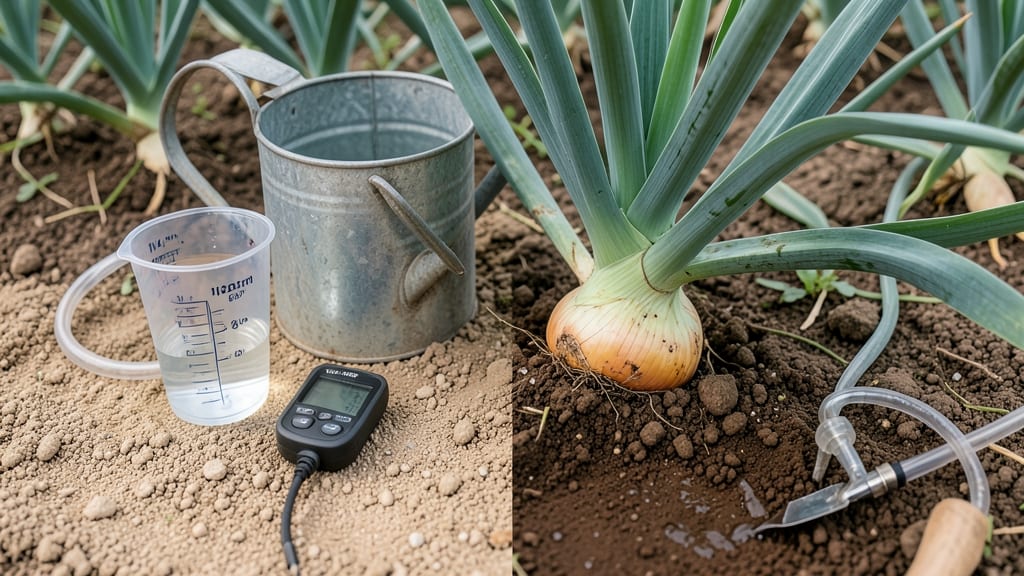
Onions need about 1 inch of water per week to grow plump, sweet bulbs 🧅 — but that’s just the starting point.
Struggling to grow onions that actually store well? You’re not alone. Too little water and they’ll bolt or stay small and bitter; too much, and you’ll end up with mushy necks and rot.
The trick isn’t just how much you water, but when and how—especially as your onions go from seedlings to harvest-ready bulbs.
Here’s the game-changer: soil moisture matters more than a calendar. Learn how to read your onions’ thirst cues, adjust for heatwaves or drought, and even tailor your watering to whether you’re growing green onions or storage varieties.
By the end, you’ll have onions that outshine the grocery store—and none of that sad, shriveled disappointment.
We’ll break down the exact watering schedule by stage, plus pro tips like mulching and drainage to keep your soil just right. No more guesswork, just perfect onions every time.


Onion watering requirements by growth stage: from seed to harvest
Onions are surprisingly fussy about water—too little and they’ll bolt or stay puny, too much and they’ll rot before harvest. The key is consistent moisture without waterlogging, but the exact needs change as your onions grow.
From delicate seedlings to bulbing giants, each stage demands a different approach. Let’s break down the watering rules by growth phase so you can grow onions that rival store-bought (or even surpass them!).
First, test your soil moisture before watering: Stick your finger 1-2 inches deep. If it feels dry, it’s time to water. For onions, uniform moisture is critical—never let the soil dry out completely, but avoid soggy conditions that invite disease.
Mulching with straw helps maintain steady moisture while suppressing weeds. Remember, onions are shallow-rooted, so water penetrates quickly—don’t assume a quick sprinkle will do the job.
| Growth Stage | Water Frequency | Depth | Soil Moisture Goal | Key Tips |
|---|---|---|---|---|
| Seedlings (0-4 weeks) | Every 2-3 days | ½ inch | Evenly moist | Use a spray bottle to avoid disturbing soil; shallow roots need gentle hydration. |
| Bulb Development (4-10 weeks) | 1 inch per week | 1-2 inches | Consistently moist | Reduce water slightly as bulbs form to prevent splitting; mulch to retain moisture. |
| Maturity (10-16 weeks) | Every 7-10 days | 1 inch | Slightly drier | Stop watering 1-2 weeks before harvest to toughen skins and improve storage life. |
| Heatwave/Drought | Daily (early morning) | 1-2 inches | Deeply moist | Increase frequency but avoid evening watering to prevent fungal diseases like downy mildew. |
During the seedling stage (first 4 weeks), onions are tiny and fragile. Overhead watering can wash away seeds or disturb sprouts, so aim for gentle, frequent hydration. Use a spray bottle or drip irrigation to keep the soil evenly moist—never soggy.
If your seedlings look wilting or yellowing, they’re thirsty, but if they’re mushy or blackened, you’ve overdone it. This is the most critical phase for establishing strong roots.
Once bulbs begin forming (around 4-6 weeks), increase water depth to 1-2 inches per week. This is when onions really need consistency—too little water leads to small, bitter bulbs, while too much causes splitting or rot.
Watch for visual cues: If the outer leaves yellow or the neck softens, you’re overwatering. If the tops wilt by midday, it’s time to water. Mulch with straw or grass clippings to lock in moisture and keep roots cool.
In the final 2-3 weeks before harvest, reduce watering to let the skins toughen. This is especially important for storage onions—if you harvest with wet skins, they’ll rot faster.
Aim for slightly drier soil (about ½ inch of water per week) and stop watering 10-14 days before harvest. For green onions, keep the soil moist but not soggy—they don’t need this drying-out phase.
Harvest them when the greens reach 8-12 inches tall for the best flavor.
Seasonal adjustments are a must. In spring and fall, onions need 1 inch of water per week, but in summer heat, they may need daily watering (early in the day). If your area experiences drought, water deeply every morning and use mulch to prevent moisture loss. Avoid watering in the evening, as wet foliage invites fungal diseases like onion rust or downy mildew. Always water at the base of the plant to keep leaves dry.
One common mistake is assuming all onions have the same water needs. Green onions (scallions) stay tender with more frequent, lighter watering, while bulb onions need deep, infrequent watering once established. Another pitfall? Uneven watering—this causes lopsided bulbs or cracked skins.
Use a soaker hose or drip irrigation for precision, especially in sandy soils that dry out quickly. If your soil is clay-heavy, amend it with compost to improve drainage and moisture retention.
To test soil moisture like a pro, use the "squeeze test": Grab a handful of soil near the roots. If it crumbles easily, water is needed. If it stays clumped, you’ve overwatered. For container-grown onions, check moisture every 2-3 days—pots dry out faster.
If the top inch feels dry, it’s time to water. Avoid letting onions sit in waterlogged soil, especially after heavy rains, or you’ll risk root rot and lost harvests.
Pro tip: Group onions with other shallow-rooted veggies like lettuce or radishes to create a microclimate that retains moisture. Avoid planting near deep-rooted crops like tomatoes, which compete for water. And if you’re growing onions in raised beds, they’ll need slightly more frequent watering because the soil drains faster.
Always water deeply to encourage roots to grow downward, not just surface roots that dry out quickly.
By mastering these stage-specific watering rules, you’ll grow onions that are plump, sweet, and disease-free. Keep an eye on your plants, adjust for your climate, and soon you’ll be harvesting homegrown onions that put grocery store varieties to shame. Happy growing!
How to adjust watering for different onion types (green vs. bulb)
Not all onions need the same watering approach—green onions (scallions) and bulb onions (yellow, red, white) have completely different moisture requirements. Green onions thrive with consistent, shallow watering, while bulb onions demand deep but controlled watering to prevent rot.
Let’s break down the key differences so you can tailor your watering schedule for each type.
For green onions, shallow roots mean they prefer frequent, light watering—think of them like thirsty houseplants. They grow best in moist but never soggy soil, especially when you’re harvesting the leafy greens rather than the bulbs.
Overwatering here leads to mushy necks and disease, while underwatering causes bitter, tough leaves. Aim for 1/4 inch of water every 2-3 days during active growth.
Bulb onions, on the other hand, need deep watering less often to encourage even bulb development. Too much water at the wrong time (especially when bulbs are forming) causes them to split or rot. The goal is 1 inch of water per week, delivered deeply to encourage root growth but tapered off as bulbs mature. During heatwaves, increase to 1.5 inches weekly but never let water pool around the necks of the bulbs.
Green Onions (Scallions) vs. Bulb Onions: Watering Showdown
Green Onions
- ✅ Pros: Thrives with frequent, shallow watering
- ✅ Pros: Handles consistent moisture without rot risk
- ✅ Pros: Ideal for container growing
- ⚠️ Cons: Overwatering causes mushy necks
- ⚠️ Cons: Underwatering makes leaves bitter
Bulb Onions
- ✅ Pros: Needs deep, infrequent watering for even bulbs
- ✅ Pros: Reduces rot risk with proper drainage
- ✅ Pros: Heatwave tolerance with adjusted watering
- ⚠️ Cons: Overwatering splits bulbs
- ⚠️ Cons: Underwatering stunts bulb growth
Environmental factors like heatwaves or drought change the game for both types. During hot spells, increase watering for green onions to every 1-2 days and for bulb onions to every 3-4 days, but always water early in the morning to prevent evaporation and fungal issues.
Mulching with straw or grass clippings helps retain moisture while keeping bulbs dry.
For green onions, you can even harvest and regrow them multiple times by cutting just above the soil line and keeping the soil consistently moist.
Bulb onions, however, need reduced watering as they near maturity—cut back to every 10-14 days to harden the skins and improve storage life. This final dry-down phase is critical for long-term storage onions like yellow or white varieties.
Pro tip: Use a soil moisture meter to check depth—green onions need moisture in the top 1-2 inches, while bulb onions benefit from moisture reaching 4-6 inches deep.
Adjust based on your soil type; sandy soil drains faster and may need more frequent watering, while clay soil holds moisture longer and requires less.