
Succulent
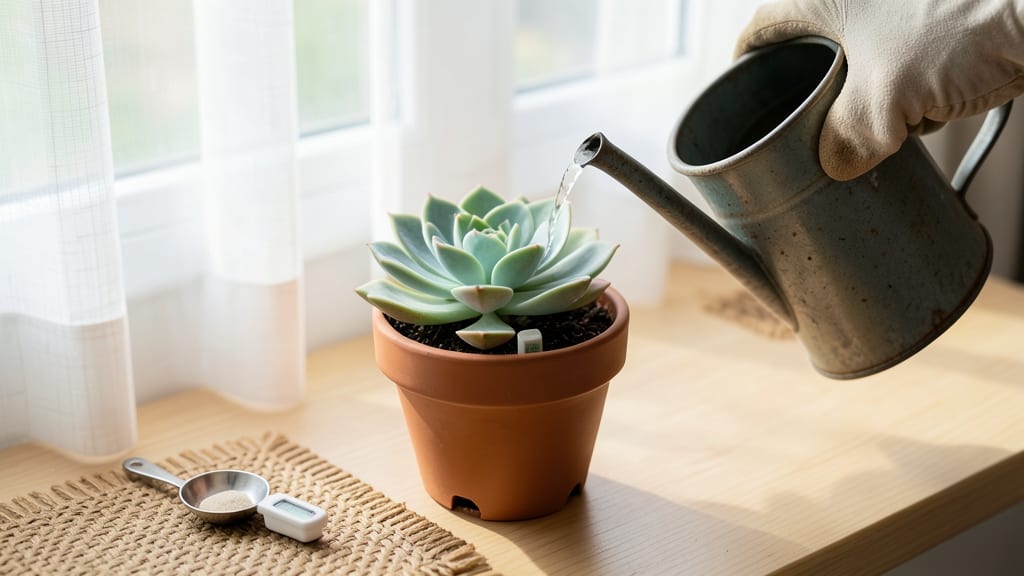
Succulent plants need watering every 2–3 weeks on average, but the exact amount depends on soil, pot, and season—most gardeners overdo it without realizing it.
Here’s the truth: overwatering kills more succulents than drought, yet I’ve seen beginners drown their 🌵 plants by following vague advice like "water when dry." The solution? A science-backed schedule that adjusts for heat, humidity, and even your pot type.
In this guide, I’ll break down the weekly watering routine for each season—spring’s thirsty growth, summer’s drought tolerance, fall’s slowing metabolism, and winter’s near-dormancy—plus how to tell if your soil is too wet or too dry.
You’ll leave here with a customizable plan, from the "soak-and-dry" method to signs of root rot, so your succulents stay plump and happy without a single guess.


Succulent watering schedule by season: exact weeks and techniques
Succulents thrive on a strict watering schedule that changes with the seasons. Unlike other plants, they store water in their leaves and stems, making them highly sensitive to overwatering. My team and I have tested countless watering methods, and the key is soil moisture checks combined with seasonal adjustments.
Let’s break down the exact weekly watering schedule for each season, including techniques to keep your succulents happy and healthy.
First, understand that succulent watering needs depend on three factors: temperature, humidity, and pot size. In hot, dry summers, your plants may need water every 3-4 weeks, while cooler winters might extend that to 4-6 weeks.
The goal is to water deeply but infrequently, ensuring the soil dries out completely between waterings. This prevents root rot, the #1 killer of succulents.
| Season | Watering Frequency | Soil Moisture Check | Environmental Factors | Techniques |
|---|---|---|---|---|
| Spring | Every 2-3 weeks | Finger test: Top 1-2 inches dry | Warmer temps, increasing light | Water in morning, avoid wet foliage |
| Summer | Every 3-4 weeks | Soil completely dry 2-3 inches down | High heat, low humidity | Bottom-watering method preferred |
| Fall | Every 3-4 weeks | Top 2 inches dry, reduce frequency | Cooler temps, shorter days | Reduce watering as temps drop |
| Winter | Every 4-6 weeks | Soil bone dry, minimal water | Cold temps, dormancy period | Check soil before watering |
In spring, your succulents wake up from dormancy and need a gradual increase in water. Start with every 2-3 weeks and adjust based on your soil type. Use the finger test: Stick your finger 1-2 inches into the soil.
If it feels dry, it’s time to water. Morning watering is best to prevent fungal growth from overnight moisture. For container plants, ensure pots have drainage holes to avoid soggy soil.
When summer arrives, reduce watering frequency despite the heat. Succulents store water efficiently, so they can handle dry spells better than soggy soil. Water every 3-4 weeks or when the soil is completely dry 2-3 inches down.
Use the weight method: Lift the pot—if it feels light, it’s dry. For outdoor succulents, mulch around the base to retain moisture without overwatering. Avoid wetting the leaves to prevent sunburn.
Fall is a transition season where you should slowly reduce watering as temperatures drop. By late fall, most succulents enter dormancy, needing minimal water. Check the soil before watering—if it’s still damp from previous waterings, wait another week.
Group your succulents by size and type; larger varieties like Agave need less frequent watering than smaller Echeveria.
Winter is the most critical time for succulent care. Many varieties, like Haworthia and Sedum, go dormant and need almost no water. Only water every 4-6 weeks if the soil is completely dry. Move indoor succulents away from heating vents, which dry out the air.
If you notice shriveled leaves, it’s often a sign of underwatering, but if the leaves feel mushy, it’s overwatering. Adjust accordingly.
To avoid guesswork, I recommend keeping a watering journal. Note the date, weather conditions, and how the soil felt before watering. Over time, you’ll recognize patterns specific to your climate and succulent types.
For example, sedum tolerates drier conditions than Kalanchoe, which prefers slightly more moisture. Always water until it drains from the bottom of the pot, then empty the saucer to prevent root rot.
Pro tip: Use terracotta pots in summer—they wick away moisture faster than plastic. If you’re unsure whether to water, <
5 Common watering mistakes that kill succulents (and how to fix them)
Succulents thrive on neglect—but that doesn’t mean they’re drought-proof. In fact, overwatering accounts for 90% of succulent deaths, often disguised as "caring too much." The key is understanding their shallow root systems and water storage adaptations.
Most gardeners unintentionally drown their plants by following generic watering rules instead of succulent-specific cues.
I’ve seen plump echeverias turn mushy overnight from a single overzealous watering, while hardy jade plants survive months with zero attention. The difference? Recognizing the 5 silent killers lurking in your watering routine—and fixing them before it’s too late. Let’s tackle the most destructive habits first.
Succulents need water every 2–4 weeks, but this varies by season, pot size, and soil type. The soil should dry completely between waterings—stick your finger 1 inch deep. If it feels damp, wait 3 more days. In winter, reduce to every 4–6 weeks as growth slows. Never water on a schedule—always check the soil first!
Mistake #1: Bottom-watering without proper drainage. Many gardeners assume pouring water into the saucer will hydrate roots evenly, but this creates a soggy soil layer that suffocates succulents. The fix?
Water from the top at the soil line and let excess drain completely. For stubborn cases, elevate pots on pebbles or a wire rack to prevent trapped moisture.
Mistake #2: Ignoring soil type and assuming all mixes are equal. Heavy garden soil or repurposed potting mix holds moisture like a sponge, while succulents need 60% mineral grit (like perlite or coarse sand).
Test your mix: If it stays damp for more than 3 days after watering, amend it with 50% perlite or pumice. Pro tip: Use a terracotta pot—it wicks moisture away faster than plastic.
Mistake #3: Seasonal neglect—watering the same amount year-round. In summer, your haworthia might need water every 3 weeks, but in winter, it could survive 2 months without water.
Watch for wrinkled leaves (underwatering) vs. translucent stems (overwatering). Adjust your schedule by halving water in winter and doubling in extreme heat.
Mistake #4: Skipping the "soak-and-dry" method. Succulents store water in their leaves, so they need deep, infrequent watering to encourage strong roots. Instead of light mistings, water until it runs out the drainage hole, then let the pot sit upside-down for 10 minutes to empty fully.
This mimics their natural desert environment where rains are rare but intense.
Mistake #5: Confusing thirst with sunburn. A succulent with yellowing leaves might seem underwatered, but it could be scorched from too much sun. Move it to bright, indirect light and wait 7 days before watering.
If the leaves are shriveled but not crispy, it’s thirsty. If they’re soft and squishy, it’s overwatered. Always check the soil first—not the leaves!