
Watering
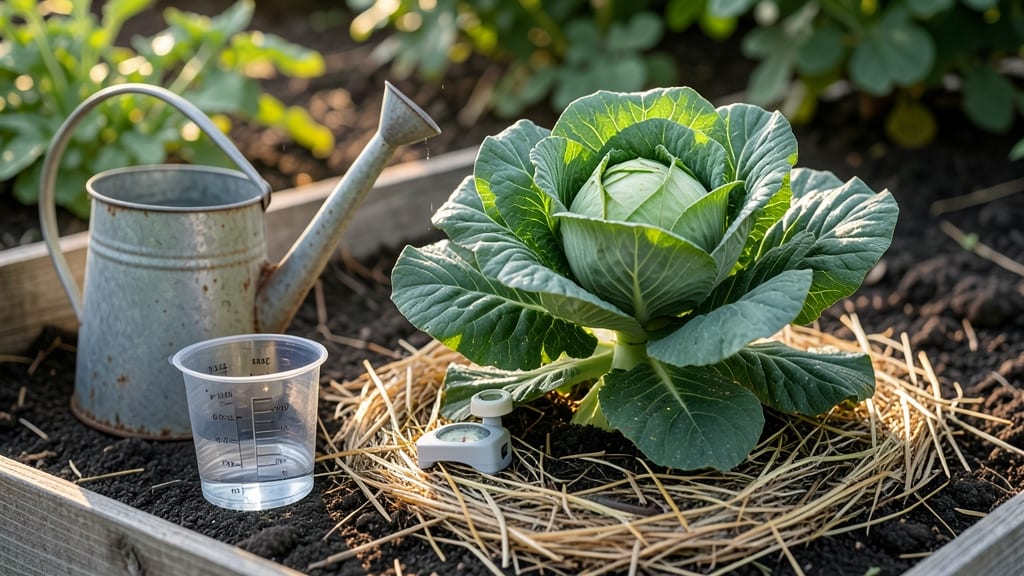
Cabbage needs about 1 to 1.5 inches of water per week to grow strong, crisp heads—more than you might think, especially during hot summer months when the soil dries out fast.
Here’s the catch: most gardeners either drown their 🥬 or let them wilt, both of which ruin the harvest. The secret isn’t just how much you water—it’s when and how you check the soil.
A quick finger test can save you from overwatering or underwatering, and I’ll show you exactly how to do it.
Young seedlings need moisture daily, but mature plants can handle a few dry days—if the soil isn’t bone-dry. Sandy soil drains faster, while clay holds water longer, so your watering schedule shifts depending on what you’re working with. Plus, morning watering keeps pests away and prevents fungal diseases.
In this guide, you’ll learn the exact watering schedule for each growth stage, how to spot the signs of thirsty or soggy soil, and the one trick that keeps your cabbage thriving from seedling to harvest—no guesswork required.


Cabbage watering schedule by growth stage: from seedlings to harvest
Cabbage plants need consistent moisture to develop those crisp, dense heads we all love. But watering too much or too little at the wrong stage can ruin your crop. The key is adjusting your watering schedule as your cabbage matures—from delicate seedlings to heavy-headed giants.
Let’s break down exactly how much water cabbage needs at each growth phase, so you can keep your plants thriving from start to harvest.
Young seedlings have tiny roots that can’t reach deep for water, while mature cabbage plants need deep, infrequent watering to encourage strong root systems. Even the soil type matters—sandy soil dries out faster than clay, meaning you’ll need to water more frequently in the former.
I’ll share my go-to watering schedule, plus how to spot when your cabbage is thirsty or drowning.
| Growth Stage | Water Frequency | Depth per Watering | Soil Moisture Target | Signs of Stress |
|---|---|---|---|---|
| Seedlings (0-3 weeks) | Every 1-2 days | ½ inch (1.25 cm) | Keep soil evenly moist | Wilted leaves, yellowing |
| Vegetative Growth (3-6 weeks) | Every 2-3 days | 1 inch (2.5 cm) | Top 1-2 inches slightly dry | Stunted growth, curled leaves |
| Head Formation (6-10 weeks) | Every 2-4 days | 1.5 inches (3.8 cm) | Top 2-3 inches moist | Soft heads, splitting |
| Maturity (10+ weeks) | Every 3-5 days | 2 inches (5 cm) | Top 3 inches damp | Bitter taste, loose leaves |
During the seedling stage, your cabbage plants are most vulnerable to drying out. I water mine every 1-2 days, keeping the soil consistently moist but never soggy. A quick finger test—stick your index finger ½ inch into the soil—tells me if it’s time to water.
If it feels dry, it’s time. Overwatering here can cause damping-off disease, so I always use a spray bottle for delicate seedlings instead of a hose.
When your cabbage enters the vegetative growth phase (around 3-6 weeks), you can space out waterings slightly to every 2-3 days. This is when the plants start forming their iconic leaves, and they need 1 inch of water per session.
I aim to water deeply in the morning so the soil has time to dry slightly before nightfall, reducing fungal risks. Watch for yellowing leaves or stunted growth—these are red flags your plants aren’t getting enough moisture.
The head formation stage (6-10 weeks) is critical for flavor and texture. This is when cabbage needs the most water—1.5 inches per session every 2-4 days. I increase frequency during hot spells or if the soil feels dry 1-2 inches down.
Splitting heads? That’s a sure sign of inconsistent watering. To prevent it, I mulch with straw to retain moisture and keep roots cool. A deep watering schedule here ensures your cabbage stays crisp and sweet.
Once your cabbage reaches maturity (10+ weeks), you can ease up slightly to every 3-5 days, but always water deeply—2 inches per session. Mature plants have deeper roots, so they can handle slightly drier soil between waterings.
However, if your cabbage tastes bitter or the leaves loosen, it’s a sign of underwatering stress. I also avoid watering the leaves directly to prevent diseases like downy mildew, which thrives in damp foliage.
Seasonal adjustments are key. In summer heat, I water daily for young plants and every other day for mature ones. In cooler spring or fall, every 2-3 days suffices. Container-grown cabbage dries out faster, so I check pots daily and water every 1-2 days regardless of the season.
Pro tip: Use a soaker hose or drip irrigation to deliver water directly to the roots without wetting the leaves.
One mistake I see often is watering at night, which promotes fungal growth. Always water in the early morning so leaves dry quickly. Another trick? Let the top inch of soil dry between waterings—this encourages deeper root growth.
If your cabbage starts wilting midday, it’s likely thirsty. A quick check with your finger (or a moisture meter) will confirm. With this schedule, you’ll grow cabbage heads that are crisp, sweet, and disease-free.
Remember, consistency is key. Cabbage hates moisture swings—too much one day, too little the next. Stick to this schedule, adjust for your climate, and you’ll harvest plump, flavorful heads every time. Happy growing!
The soil dry test method: how to check cabbage water needs without a moisture meter
Cabbage thrives on consistent moisture, but guessing water needs can lead to underwatered plants or waterlogged roots. The soil dry test is my go-to method—no fancy tools required.
Simply stick your finger into the soil to check moisture levels at the root zone, where cabbage plants drink most deeply.
For container-grown cabbage, the soil dries faster than in-ground plants. Test the top 1-2 inches daily during hot weather, while in-ground cabbage may only need checking 2-3 inches deep. Adjust based on your soil type—sandy soil drains quickly, while clay soil holds moisture longer.
Start by pushing your finger 1-2 inches into the soil near your cabbage plants. If the soil feels dry and crumbly, it's time to water. For clay soil, press deeper—up to 3 inches—since it retains moisture longer.
In sandy soil, the top inch may dry out faster, requiring more frequent watering.
Visual clues also help: Darker, moist soil at the root zone means your cabbage is happy, while light, dry soil signals thirst. Pay attention to leaf color—wilting or yellowing edges often mean inconsistent watering.
Container cabbage may need watering every 1-2 days in summer, while in-ground plants can go 2-3 days between waterings.
Seasonal adjustments are key. In summer heat, water cabbage early in the morning to reduce evaporation. During spring or fall, watering every 2-3 days usually suffices. Always water at the base of the plant to avoid wetting leaves, which can promote fungal diseases like downy mildew.
Pro tip: Mulch around your cabbage with straw or grass clippings to retain moisture and reduce evaporation. This simple step cuts down on daily watering needs while keeping roots cool. With the soil dry test and these adjustments, your cabbage will stay plump and healthy all season long. 🥬