
Watering
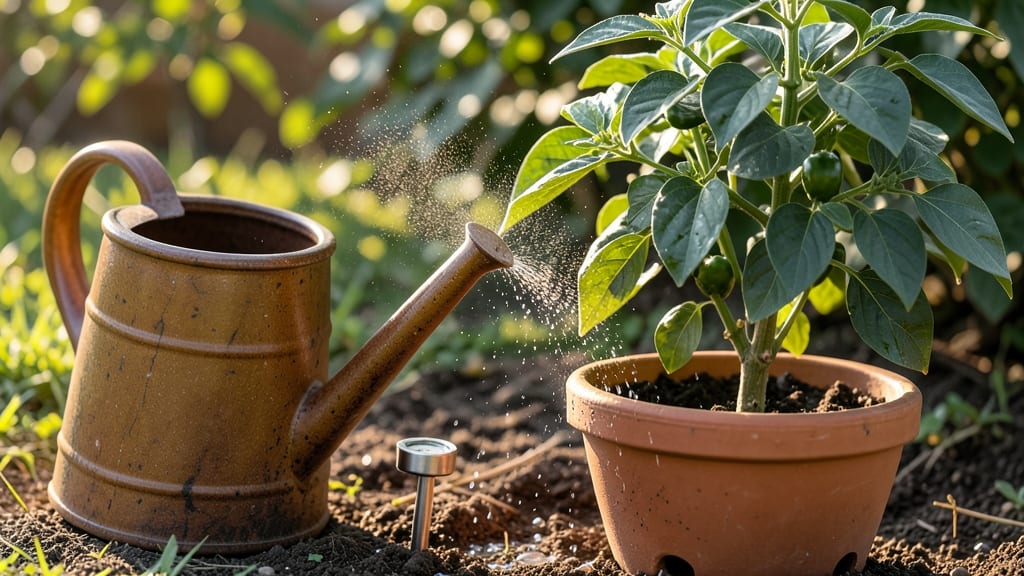
Watering pepper plants in pots too often or too little can turn your 🌶️ harvest into a sad, wilted mess—but the right schedule keeps them thriving.
Picture this: you’ve just transplanted your peppers, the soil feels damp, and you’re not sure if they need water yet. That hesitation is why so many container gardeners end up with root rot or stunted growth.
The key? Checking moisture at the right depth and adjusting for heat, humidity, and pot size.
In this guide, I’ll break down exactly how often to water your potted peppers—whether it’s every 1-2 days in summer or every 3-5 days in cooler months—plus the simple finger test to avoid overdoing it.
You’ll also learn how to spot the signs of overwatering (yellow leaves, mushy stems) and underwatering (crispy edges, wilting), so your plants stay happy and productive from April through October.
Optimal watering frequency for pepper plants in pots by season
Pepper plants in pots demand a precise watering schedule that shifts with the seasons. Unlike in-ground plants, container-grown peppers dry out faster due to limited soil volume and direct sun exposure.
My go-to rule is: water when the top 1-2 inches of soil feel dry to the touch—but adjust based on temperature and humidity. In spring/summer, peppers need frequent hydration, while fall/winter slows their metabolism, reducing water needs.
I’ve learned the hard way that overwatering kills more peppers than underwatering. Pots lack the moisture-buffering capacity of garden beds, so soggy soil leads to root rot within days.
The key is balancing consistent moisture with proper drainage. Always use pots with drainage holes and a well-draining potting mix—cactus/succulent mix works well when amended with compost.
| Season | Temperature Range | Watering Frequency | Soil Moisture Check | Adjustments |
|---|---|---|---|---|
| Spring (April-May) | 50°F–75°F (10°C–24°C) | Every 2–3 days | Top 1 inch dry | Increase if >80°F |
| Summer (June-August) | 75°F–95°F (24°C–35°C) | Every 1–2 days | Top ½ inch dry | Daily in heatwaves |
| Fall (September-October) | 50°F–70°F (10°C–21°C) | Every 3–4 days | Top 1–2 inches dry | Reduce as temps drop |
| Winter (November-March) | Below 50°F (10°C) | Every 5–7 days | Top 2 inches dry | Stop if dormant |
During spring, when peppers are establishing roots, I water every 2–3 days but monitor closely. The soil warms up, encouraging faster evaporation. If your pots are in full sun, check moisture mid-morning—evaporation peaks by afternoon.
Pro tip: Use a moisture meter for accuracy, especially in 5-gallon pots or larger, where roots have more space to explore.
Summer is the most critical season for peppers in pots. With temperatures soaring above 80°F (27°C), I water daily in extreme heat, often twice a day: once in the early morning and again in the late afternoon.
Mulch with straw or shredded leaves to retain moisture and reduce stress on the plant. Avoid wetting the foliage to prevent fungal diseases like powdery mildew—always water at the soil base.
As fall arrives, peppers slow their growth, and water needs drop significantly. I shift to a 3–4 day schedule, letting the soil dry more between waterings.
This prevents waterlogged roots while keeping the plant hydrated enough to ripen existing peppers. If your region experiences early frosts, reduce watering further—dormant plants need minimal moisture.
Winter care depends on your climate. In mild winters (USDA Zone 8+), I water every 5–7 days, focusing on keeping the soil slightly moist. For colder zones, I let the soil dry completely and store pots in a garage or shed until spring.
If you’re growing peppers year-round in containers, group pots together to create a microclimate—they’ll retain humidity better and require less frequent watering.
Humidity plays a sneaky role in pepper watering. In dry climates (like Arizona or California), I water more frequently because air pulls moisture from the soil faster. Conversely, in humid areas (e.g., Florida or Pacific Northwest), I stretch watering intervals by 1–2 days since high humidity slows evaporation.
Use a hygrometer to track humidity—aim for 40–60% for optimal pepper health.
Pot size matters more than you’d think. A 5-gallon pot holds enough soil to water less often (every 3–4 days in summer), while a 1-gallon pot may need daily watering.
I always match pot size to the plant’s mature root zone—a jalapeño thrives in a 5-gallon pot, but a bell pepper needs at least 7 gallons. Smaller pots dry out faster, so adjust your schedule accordingly.
Watch for these tell-tale signs of watering issues: Wilting leaves (underwatering) or yellowing lower leaves (overwatering). If the soil feels clumpy and smells sour, it’s waterlogged—stop watering and let it dry out. For underwatering, submerge the pot in lukewarm water for 10–15 minutes to rehydrate without shocking the roots.
Consistency is key—peppers hate moisture fluctuations, so stick to your schedule once you’ve dialed it in.
Protect your peppers from evaporative stress by placing pots in partial shade during the hottest part of the day (12–3 PM). A simple shade cloth can extend watering intervals by 1–2 days in peak summer.
And remember: Morning watering is always best—it allows foliage to dry before nightfall, reducing fungal risks. With this seasonal approach, your pepper plants will stay thriving, productive, and pest-free** all year.
The finger-depth soil moisture test: step-by-step guide
Mastering the finger-depth soil moisture test is the secret to keeping your pepper plants in pots thriving. Unlike rigid schedules, this method adapts to your climate, pot size, and soil type—giving you precise control over watering.
I’ve relied on this technique for years, and it’s saved my chili harvests from both drought stress and root rot.
Here’s the science behind it: Pepper plants need consistent moisture, but their roots crave oxygen-rich soil. Testing at 1-2 inches deep mimics how roots absorb water, helping you avoid both overwatering and underwatering.
The key is checking the topsoil layer where roots are most active—this is where you’ll spot the first signs of thirst or excess.
⚠️ callout warning
If your pepper plant leaves turn yellow or feel mushy, you’re watering too often. Pots dry out faster than garden beds—check soil moisture daily in summer and every 2-3 days in spring/fall. Drainage holes are non-negotiable: no holes = root rot.
Pro tip: Stick your finger in two spots—near the edges and center of the pot. Soil can dry unevenly, especially in terracotta pots.
Start by inserting your index finger about 1-2 inches deep into the soil. Gently press—if it feels dry and crumbly, it’s time to water. If moisture clings to your finger, wait another 1-2 days.
For pepper plants in 5-gallon pots, I water when the top ½ inch feels bone-dry, while small 1-gallon pots may need daily checks in hot weather.
Watch for visual cues that confirm your test: Wilted leaves that recover after watering signal thirst, while yellowing leaves or moldy soil scream overwatering.
I once lost a jalapeño plant because I ignored the white fungal growth at the soil surface—don’t let that happen to your bell peppers or chilies!
Adjust your schedule based on weather and pot material: Plastic pots retain moisture longer than clay pots, so check them 24 hours earlier. During heatwaves, I water my pepper plants in pots every morning at 7 AM to prevent midday stress.
In shady spots, I stretch watering to every 4-5 days.
Remember, consistency is key. I keep a small notebook by my pots to track when I water and how the soil feels. After a month, you’ll recognize patterns—like your pepper plants needing water every 3 days in July but only once a week in October.
This method turns guesswork into data-driven care, ensuring your peppers thrive all season long. 🌶️