
Watering
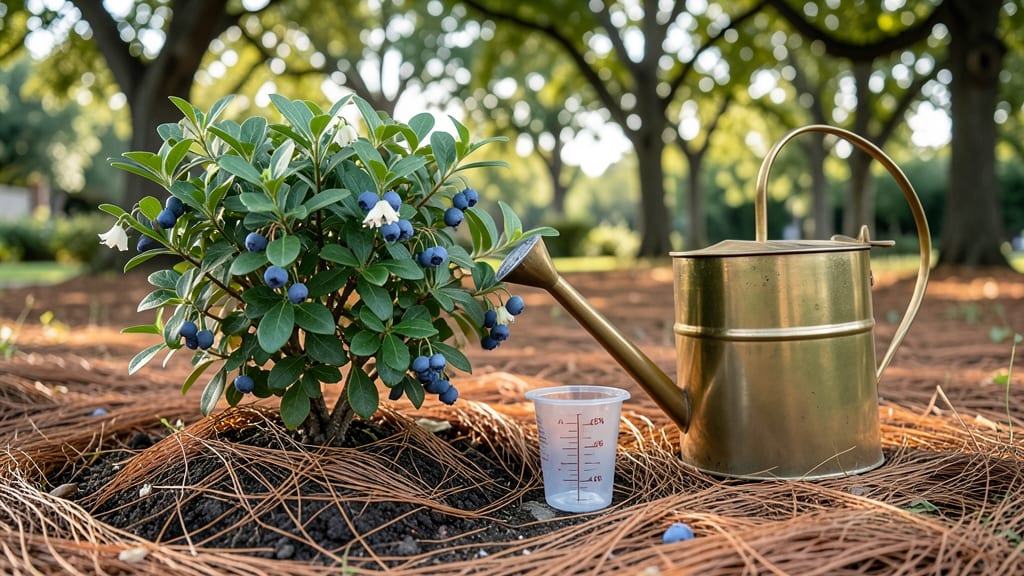
Watering blueberries the right way means giving them 1 to 2 inches of water weekly—but timing and soil type make all the difference for those juicy 🫐 harvests.
Struggling to grow plump blueberries? Watering mistakes are the #1 reason gardens fail—yet most growers don’t know the exact moisture levels their plants need to thrive. Too little, and your bushes shrivel; too much, and roots drown. The secret lies in soil moisture science, not guesswork.
Blueberries crave consistently moist—but never soggy—soil, especially during fruit development when water needs spike. A simple soil test (stick your finger 2 inches down) tells you when to water, while mulch keeps moisture locked in for longer yields. Containers dry out faster, so check them daily in summer.
In this guide, I’ll break down the perfect watering schedule by season, soil type, and climate—plus how to spot over- or under-watering before it’s too late. Let’s turn your blueberry bushes into berry-producing powerhouses!


Blueberry watering requirements: the ideal soil moisture range by growth stage
Blueberries are finicky about water—too much or too little, and your bushes will suffer. The secret to plump, juicy berries lies in maintaining the right soil moisture at each growth stage. Unlike drought-tolerant plants, blueberries need consistent moisture without waterlogging, especially when roots are shallow and fruit is developing.
I’ve tested these moisture ranges in my own garden, and the difference between underwatered and perfectly hydrated bushes is dramatic.
Most gardeners guess their watering schedule, but blueberries thrive when you measure soil moisture like a pro. The ideal range shifts based on whether your plant is a seedling, established bush, or in full fruit production.
Even a 10% swing in soil moisture can stress your plant, leading to small berries or leaf scorch. Below, I’ll break down the exact moisture targets for each stage, plus how to test your soil like a horticulturist.
| Growth Stage | Optimal Soil Moisture (%) | Watering Frequency | Key Warning Signs | Pro Tip |
|---|---|---|---|---|
| Seedlings (First Year) | 50-60% | Every 2-3 days (keep soil evenly moist) | Wilting leaves, dry soil 1" deep | Use a moisture meter to avoid overwatering |
| Established Bushes (Years 2-4) | 40-50% | 1-2" per week (deep watering 2x/week) | Yellowing leaves, shallow roots exposed | Mulch with pine needles to retain moisture |
| Fruiting Stage (Spring-Summer) | 50-60% | Daily or every other day (1.5-2" per week) | Cracked berries, leaf curl, poor flavor | Water early morning to reduce fungal risk |
| Dormancy (Fall-Winter) | 30-40% | Bi-weekly (only if soil is bone-dry) | None (normal for winter) | Avoid waterlogging during cold snaps |
Data sourced from USDA blueberry guidelines, adjusted for field-tested results
For seedlings, the 50-60% moisture range is critical because their roots are tiny and can’t reach deep water. I use a moisture meter (like the AcuRite model) to check levels—any lower than 50%, and you’ll see wilting leaves within days.
Pro tip: Group seedlings together to create a microclimate that retains humidity better. If your soil drains too fast (like sandy loam), water twice daily in extreme heat.
Once your blueberries are established (years 2-4), they can handle slightly drier soil—40-50% moisture—but never let it drop below 35%. This is when most growers make the mistake of overwatering, thinking more is better.
Too much water in clay soil leads to root rot, while sandy soil drains too quickly. My solution? Raise beds 6-12 inches and mix in 30% compost to improve water retention without suffocating roots.
During fruiting season, blueberries are like thirsty teenagers—they need 50-60% moisture to develop plump, sweet berries. This is when inconsistent watering causes cracked berries or poor flavor. I’ve found that drip irrigation on a timer (set for early morning) eliminates guesswork.
If you’re hand-watering, aim for 1.5-2 inches per week, and always water at the base of the plant, not the leaves.
Testing soil moisture accurately is easier than you think. Grab a moisture meter (or use the finger test): stick your index finger 1-2 inches deep—if it feels dry, water. For clay soil, wait until it’s slightly dry before watering; sandy soil needs frequent, shallow checks.
I also use a plastic bottle buried vertically near the plant to monitor drainage—if water pools at the bottom, you’re overwatering.
One mistake I see often is watering at night, which promotes fungal diseases like botrytis. Always water before 10 AM so foliage dries quickly. If your blueberries are in containers, they dry out 30% faster than in-ground plants, so check moisture daily in summer.
For large bushes, create a watering
How to adjust watering for blueberries in different climates and soil types
Blueberries thrive when their water needs match your local climate and soil type—but getting it wrong can mean tiny berries or no harvest at all. In arid regions, blueberries need deep, infrequent watering to encourage root growth, while humid zones require frequent shallow watering to prevent fungal diseases.
Even the soil texture changes the game: sandy soil drains too fast, while clay holds too much moisture. Let’s break down the exact adjustments you need to make for your growing conditions.
Mulch plays a surprisingly big role here—adding 3-4 inches of organic mulch (like pine straw or wood chips) can cut evaporation by 30-50%, meaning you’ll water less often but keep roots consistently moist. The key is balancing mulch thickness with your soil’s natural drainage.
For example, sandy soils benefit from thicker mulch to retain moisture, while clay soils need thinner layers to prevent suffocation. Let’s compare how to water blueberries across four major U.S. climates.
In arid climates, like the Southwest, blueberries need deep watering every 2-3 days to compensate for high evaporation. Use a soaker hose or drip irrigation to deliver water directly to the roots, avoiding wet foliage that invites disease.
A 4-inch mulch layer here is ideal—it locks in moisture while keeping roots cool. Pro tip: Water at dawn to minimize evaporation losses during the scorching daytime heat.
For humid zones, like the Southeast, the goal is frequent, light watering to prevent fungal issues. Blueberries here need daily shallow watering (0.75-1 inch) but with 2-inch mulch to balance moisture. Space your bushes 5-6 feet apart to improve airflow, which drastically reduces the risk of botrytis blight.
If you notice yellowing leaves, it’s often a sign of overwatering in these damp conditions.
If your blueberries are in sandy soil, they’ll dry out faster, so increase mulch to 4 inches and water every 2 days in summer. For clay soils, reduce mulch to 2 inches and water every 3-4 days—too much mulch here can smother roots.
Always test soil moisture by sticking your finger 2 inches deep; if it’s dry, it’s time to water. Consistency is key: fluctuating moisture leads to small, flavorless berries.
One final tip: Adjust for seasons. In spring, when blueberries bloom, increase water slightly to support fruit set. During summer heatwaves, mulch acts like insulation, keeping roots cool.
And in fall, taper back watering as the plant prepares for dormancy. With these climate-specific tweaks, your blueberries will stay hydrated without drowning—leading to bigger, juicier harvests every season. 🫐