
Watering
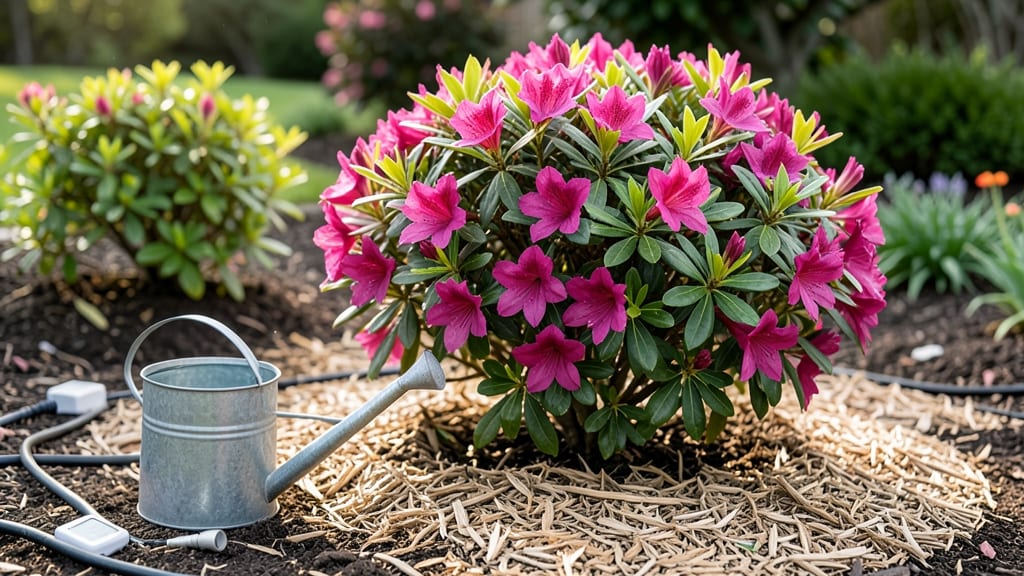
How often should azaleas be watered? The answer keeps their roots happy but not soggy—the key to lush blooms without root rot lies in a rhythm that matches their seasonal needs.
Picture this: your 🌸 azalea shrubs look perky and vibrant one week, then suddenly droop or develop yellow leaves the next. That’s often a sign you’re either drowning them or leaving them thirsty.
The right balance isn’t just about how often you water—it’s about when, how deeply, and how your local climate plays into the mix.
In Zone 6a and beyond, azaleas need deep waterings about once a week during spring’s blooming season, but that shifts to every 5-7 days in summer’s heat. Too much water?
Roots suffocate. Too little? Buds fail to open. I’ve learned the hard way that skipping the soil check can turn a thriving shrub into a sad, wilted mess.
Below, I’ll break down the exact watering schedule by season, how to spot over- or underwatering, and the pro tips—like mulching and soil drainage—that make all the difference for happy, blooming azaleas.
Azalea watering schedule by season: what works for each climate zone
Azaleas thrive on consistency, but their watering needs shift dramatically with the seasons and your local climate. In USDA zones 7-10, where azaleas flourish year-round, understanding these seasonal rhythms is key to avoiding root rot or drought stress.
I’ve grown azaleas in both humid zone 8 and dry zone 10 climates, and the difference in watering strategies is night-and-day. Let’s break it down by month so you can tailor your approach to your specific conditions.
First, always water azaleas deeply but infrequently. A thorough soak once a week is better than light sprinkles daily. This encourages deep root growth and prevents shallow roots that invite disease.
I’ve seen azaleas in containers dry out in just 3 days during summer heat, while established in-ground shrubs in zone 7 can go 2 weeks without watering if rains are plentiful. The secret? Check soil moisture before watering—stick your finger 2 inches down. If it’s dry, water; if damp, wait.
Here’s how to adjust your watering schedule based on the season and your specific zone:
| Season | USDA Zone 7 | USDA Zone 8 | USDA Zone 9 | USDA Zone 10 |
|---|---|---|---|---|
| Spring (Mar-May) | Weekly (deep soak) | Every 5-7 days | Every 4-6 days | Every 3-5 days |
| Summer (Jun-Aug) | Every 5-7 days | Every 3-5 days | Daily (morning) | Every 2-3 days |
| Fall (Sep-Nov) | Bi-weekly | Every 10-14 days | Every 2 weeks | Every 2-3 weeks |
| Winter (Dec-Feb) | Monthly (if no rain) | Every 4-6 weeks | Every 6-8 weeks | Every 8-10 weeks |
*Adjust for rainfall: Reduce watering if your area gets 1 inch of rain per week.
Spring is all about encouraging blooms and new growth. In zone 7, where frosts linger into April, I start watering weekly once the soil warms above 50°F. The goal is to keep the soil evenly moist but never soggy.
In warmer zones 9-10, azaleas wake up earlier, so I begin watering in March to support their rapid growth phase. A mulch layer 2-3 inches thick helps retain moisture and regulates soil temperature—critical for preventing root shock.
Summer heat is when azaleas demand the most attention. In zone 10, where temperatures can exceed 90°F, I water my azaleas every 2-3 days in the early morning to prevent evaporation and fungal issues.
For container-grown azaleas, I switch to daily watering during heatwaves, as pots dry out 3x faster than in-ground soil. Pro tip: Use a moisture meter or the finger test—if the top 2 inches of soil feel dry, it’s time to water.
Avoid wetting the foliage to minimize powdery mildew risk.
Fall marks the transition to dormancy. As temperatures drop below 70°F, I reduce watering to every 2 weeks in zone 7. The key is to taper off gradually—sudden drought stress can cause leaves to drop prematurely.
In zone 10, where winters are mild, I still cut back to monthly watering but monitor for dry spells. Always water deeply before the first frost to ensure roots are hydrated for winter. A 3-inch layer of mulch acts as insulation, protecting roots from temperature swings
Signs your azaleas are overwatered or underwatered (and how to fix it)
Azaleas thrive on balance—too much water drowns their roots, while too little leaves them thirsty and stressed. Yellowing leaves, mushy stems, or soggy soil are red flags, but so are crispy edges and drooping buds.
These signs often appear gradually, so catching them early means the difference between a quick recovery and losing your shrub.
First, check the soil—overwatered azaleas often smell musty, while underwatered ones pull away from the pot or ground. Root rot (from overwatering) spreads faster than you think, while drought stress causes buds to drop before they even bloom.
Both issues share similar symptoms, so let’s break down the key differences.
💧 How Often Should Azaleas Be Watered?
Azaleas need 1-2 inches of water weekly (adjust for rain). Morning watering prevents fungal diseases, while container azaleas dry out faster—check soil daily in summer. Overwatering is riskier than underwatering; always ensure pots have drainage holes.
If your azalea’s leaves turn yellow with green veins, it’s likely overwatered. This classic sign means roots are suffocating in soggy soil. Prune affected stems to redirect energy, and let the soil dry out completely before watering again.
For underwatered azaleas, leaves often curl inward and feel dry to the touch—give them a deep soak and monitor closely.
Mold or fungus on the soil surface? That’s a clear overwatering signal. Root rot spreads when soil stays waterlogged for days. Stop watering immediately, improve drainage with organic matter, and consider repotting if roots are mushy.
For underwatered plants, stems may shrink between nodes—this is irreversible damage, so focus on preventing future stress.
Azaleas in containers need more frequent checks—stick your finger 1-2 inches deep; if dry, water thoroughly. Mulch helps retain moisture but avoid piling it against stems.
In hot climates, water every 5-7 days, while cool seasons may only need bi-weekly watering. Adjust based on your local climate zone and soil type.
Recovery starts with correcting the watering habit. For overwatered azaleas, reduce frequency and use a moisture meter to guide decisions.
Underwatered plants need consistent moisture—aim for 1 inch per week during growing seasons. Amend soil with peat moss to improve water retention and drainage, and always water at the base of the plant, not the leaves.
With these adjustments, your azaleas will bounce back in 2-4 weeks. Keep an eye on new growth—healthy leaves should be dark green and firm. And remember: prevention is key. A little extra attention now saves hours of heartache later. Happy gardening!