
How To
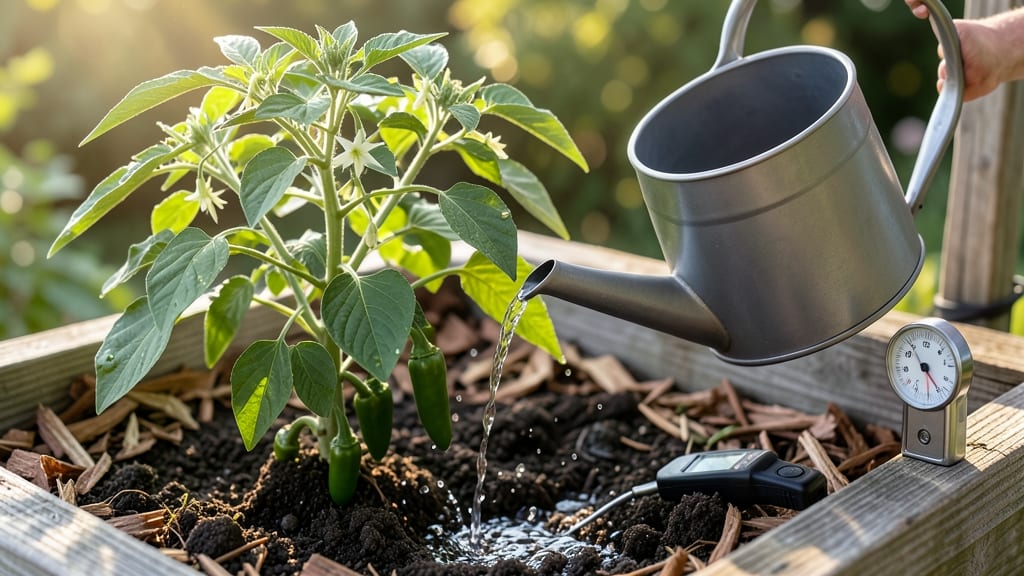
Watering your jalapeño plants 🌶️ the right way is the difference between a bountiful harvest and wilted disappointment — and most gardeners get it wrong.
You might think these peppers are drought-tolerant, but they actually need consistent moisture to grow strong and produce spicy pods. Too much water drowns roots, while too little stunts growth and invites pests. The key? A schedule that changes as your plants mature and the seasons shift.
In this guide, I’ll break down exactly how often to water at each growth stage — from seedlings to fruiting — plus the simple soil test that tells you when it’s time to water, no guesswork needed.
By the end, you’ll know how to adjust for heat waves, containers, and even your soil type so your jalapeños thrive without the trial and error.
Jalapeño watering schedule by growth stage: seedling to harvest
Watering your jalapeño plants isn't a one-size-fits-all task—it changes dramatically from seedling to harvest. Too much water early can drown tender roots, while too little during fruiting shrinks your yield.
The key is understanding each growth stage and adjusting your watering routine accordingly. Let's break down the perfect schedule to keep your peppers thriving from start to finish.
Jalapeños need consistent moisture but hate soggy soil. In their early stages, they're delicate, while mature plants can handle slightly drier conditions. The biggest mistake? Ignoring the environmental factors like heat waves or humidity.
For example, a 90°F day might require daily watering, while cooler 60°F mornings could stretch your watering to every 5 days. Let's dive into the exact schedule you need.
During the seedling stage, your jalapeños are most vulnerable. Use a spray bottle or gentle watering can to keep the soil evenly moist without disturbing the delicate roots. A good rule of thumb: if the top ½ inch of soil feels dry, it's time to water.
Avoid overhead watering to prevent fungal diseases like damping off, which can wipe out your seedlings overnight.
As your plants enter the vegetative stage (4-8 weeks), they'll start growing taller and bushier. This is when you can gradually increase both the frequency and depth of watering. Aim to water every 3-4 days, soaking the soil down to 1 inch deep.
This encourages roots to grow deeper, making your plants more resilient to drought later on. A simple trick? Stick your finger 1 inch into the soil—if it feels dry, water thoroughly.
The flowering stage (8-12 weeks) is where your jalapeños start producing those iconic buds. Here, you'll want to reduce frequency but increase depth. Water every 4-5 days, soaking the soil to 1.5 inches deep.
This helps prevent flower drop, a common issue when plants experience moisture stress. Pro tip: Water in the early morning to let foliage dry out during the day, reducing the risk of powdery mildew.
When your jalapeños hit the fruiting stage (12+ weeks), they'll demand the most attention. During this phase, aim to water every 3-5 days, providing 1-1.5 inches of water per session. In
The soil dry test method: how to check jalapeno water needs without guessing
Watering your jalapeño plants correctly is an art—not a guess. Overwatering causes root rot, while underwatering leads to stunted growth and bitter peppers. The soil dry test method is my go-to technique to determine when your plants truly need water, ensuring consistent moisture without the risk of overdoing it.
This method combines three simple checks: the finger test, visual soil cues, and plant behavior. Together, they give you a clear picture of your jalapeño's hydration status. For example, I once saved a struggling plant by noticing soil cracks and wilting leaves—signs I was watering too infrequently.
Overwatering is the #1 killer of jalapeños. Check soil moisture before watering—especially in containers, which dry out faster. Water deeply but less often (1-1.5 inches per week) to encourage deep root growth. Morning watering prevents fungal diseases like blossom end rot, which thrives in damp conditions.
Start with the finger-check method: Stick your index finger 1-2 inches into the soil near the plant's base. If it feels dry at this depth, it's time to water.
For potted jalapeños, check the soil surface and bottom drainage holes—if both are dry, water thoroughly until it drains from the bottom.
Next, watch for visual cues like leaf wilting or yellowing. While wilting can signal thirst, it can also mean overheating or pests. Pair this with soil cracks—deep fissures in the earth indicate prolonged dryness.
I’ve found that mulching with straw or wood chips helps retain moisture and reduces the need for frequent watering.
For precision, invest in a moisture meter. These tools measure soil moisture levels digitally, eliminating guesswork. Place the probe 2-3 inches deep in multiple spots around the plant. Most meters use color-coded readings: green means moist, yellow means dry, and red signals it's time to water immediately.
Adjust your watering based on growth stages. Seedlings need light, frequent watering to keep soil moist, while mature plants with fruiting peppers require deep, infrequent watering.
During hot summer months, you may need to water daily, but always let the top 1-2 inches of soil dry between waterings to prevent rot.
Remember, consistency is key. Jalapeños hate moisture fluctuations, which can lead to cracked peppers or blossom drop. By mastering the soil dry test, you’ll create an ideal environment for your plants to thrive—resulting in healthier plants and a bountiful harvest of spicy peppers. 🌶️