Watering
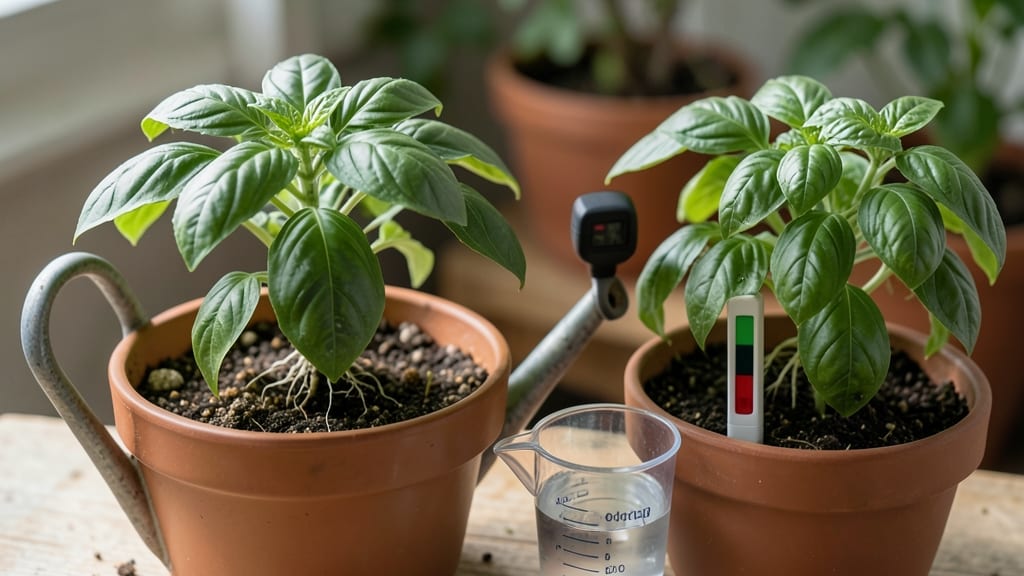
To know how much water to give a plant, lift the pot: if it feels light, the plant needs water; if it's heavy, wait another day or two. This simple weight test prevents over- or under-watering for healthier growth.
This method works because soil moisture affects a pot's weight—dry soil feels noticeably lighter than damp soil. 💧 For container plants, I've found that checking weight after watering helps establish a baseline for future checks.
Larger pots retain moisture longer, while smaller containers dry out faster, so adjust your schedule accordingly. The key is consistency: stick to the same time of day for testing to account for daily temperature fluctuations.
Different plants have unique needs too. Succulents, for example, thrive with infrequent deep watering, while tropical plants like ferns prefer consistently moist soil. Always observe your plant's leaves—yellowing or wilting can signal over- or under-watering, respectively.
I keep a small notebook by my garden bench to track which plants need more or less water based on their pot size and sunlight exposure.
💡 In This Article
- How the Weight Test Method Works for Plant Hydration
- Adjusting Watering Based on Plant Type and Environment
How the weight test method works for plant hydration
The weight test method relies on soil's moisture retention capacity, which is directly tied to its water-holding ability. When soil dries out, it loses moisture and becomes significantly lighter—sometimes up to 30% less than when fully saturated.
This weight difference occurs because water molecules fill the spaces between soil particles, creating a denser structure. For example, a 5-gallon pot of potting mix might weigh 12 pounds when dry but 15 pounds after thorough watering—a noticeable difference when lifted.
Root zones absorb water through capillary action, where water moves upward through tiny soil pores. When the soil feels light, it means most of these pores are empty, signaling it's time to water.
The key is the root zone's saturation threshold: most plants need the top 1-2 inches of soil to dry out before watering again, but deeper-rooted plants like tomatoes may require checking 3-4 inches down.
Overwatering disrupts this balance by forcing roots to suffocate in waterlogged soil, while underwatering stresses roots by limiting their access to moisture.
This method works best when you establish a baseline after watering. Lift the pot immediately after watering to feel its weight, then compare it daily. For instance, a 10-inch pot of basil might feel 8 pounds when dry but 10 pounds when moist.
This consistency helps you recognize subtle weight changes—like a 1-pound drop—that indicate it's time to water. The weight test also accounts for evaporation rates, which vary by climate and pot material (terracotta dries faster than plastic).
What most people don't realize is how soil composition affects this method. Sandy soil drains quickly and feels lighter when dry, while clay holds moisture longer and stays heavier. Organic mixes with peat or coconut coir retain water better, making them ideal for plants that need consistent moisture.
To adapt, adjust your watering schedule based on your soil type—sandy mixes may need watering every 2-3 days, while clay-based mixes might only need it every 5-7 days.
Visual cues can reinforce the weight test. Dry soil often appears cracked or pulls away from the pot edges, while saturated soil feels cool and clumps together when squeezed.
For container plants, I recommend watering until 20-30% of the water drains out the bottom—this ensures the root zone gets fully hydrated without leaving excess moisture. The weight test becomes even more reliable when combined with these visual checks, creating a foolproof system for plant hydration.