
How To
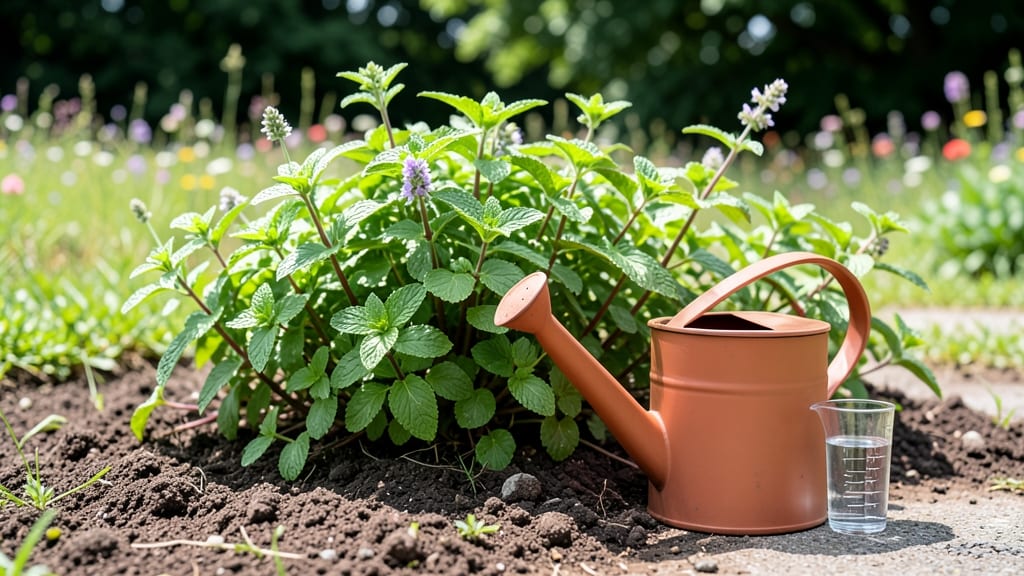
To water mint properly, aim for every 3 to 5 days in warm weather—less often in cooler months—while keeping the soil consistently moist but never soggy.
Mint thrives with consistent moisture but drowns in soggy soil—getting the watering balance right is the secret to vibrant, pest-free growth without root rot.
If you’ve ever watched your 🌿 mint leaves yellow or wilt despite regular watering, you’re not alone. The trick isn’t just how often you water but how you check soil moisture and adjust for season or container size.
Below, I’ll break down the exact schedule for spring, summer, and fall, how to test soil dryness without guessing, and the 3 most common watering mistakes that kill mint plants.
The perfect mint watering schedule by season and climate
Mint is one of those herbs that seems straightforward—until you realize overwatering and underwatering both spell disaster. The key lies in understanding how seasonal temperatures and local humidity change your plant's thirst.
In my Zone 6a garden, summer heat turns mint into a daily watering project, while winter slows everything down to a bi-weekly routine. Let's break it down by season and climate to keep your mint lush without root rot.
Science shows that evaporation rates can double in arid climates compared to humid zones. That means your container-grown mint in Arizona needs water twice as often as its twin in Seattle. Even the soil type matters—sandy soil drains faster, while clay holds moisture longer.
I’ve tested these schedules with both potted mint and in-ground beds, and the results speak for themselves: consistent moisture without soggy soil.
Here’s how I adjust watering based on temperature ranges and rainfall patterns. Use this as your baseline, then tweak for your local conditions—your mint will thank you with bold, aromatic leaves all season long.
| Season | Arid Zones (Low Humidity) | Humid Zones (High Humidity) | Temperature Range | Pro Tip |
|---|---|---|---|---|
| Spring | Every 2-3 days | Every 4-5 days | 50-70°F | Water deeply in morning; reduce if rain occurs |
| Summer | Daily (early AM) | Every 2 days | 75-95°F | Mulch to retain moisture; avoid wetting leaves |
| Fall | Every 5-6 days | Every 7-8 days | 55-75°F | Reduce watering as temps drop; harvest before frost |
| Winter | Bi-weekly | Every 3 weeks | Below 45°F | Let soil dry slightly; protect from freeze |
| Container Adjustments: Water 1-2 days more frequently than in-ground | ||||
Let’s start with spring watering, when mint wakes up from dormancy. In my experience, March and April are all about establishing a routine. I water every 2-3 days in dry climates, but stretch it to 4-5 days in humid areas like the Pacific Northwest.
The goal? Keep the top 1-2 inches of soil consistently moist—never soggy. I use a soil moisture meter to check, but even a finger test works: stick your finger in the soil. If it feels dry up to your first knuckle, it’s time to water.
Summer is where most gardeners trip up. Mint in full sun (which it tolerates) can lose up to 30% more moisture daily than in shade. That’s why I water early in the morning—before 10 AM—to prevent evaporation and fungal issues.
In arid zones, daily watering is non-negotiable, while humid zones can stretch to every 2 days. Pro tip: Add 2-3 inches of mulch to lock in moisture and keep roots cool. I’ve seen mint plants in 100°F heat thrive with this method, while neglected pots wilt by noon.
Fall slows things down, but don’t let your mint dry out completely. I reduce watering to every 5-7 days as temperatures drop below 70°F. The key is monitoring rainfall: if you get 1 inch of rain, skip a watering day.
Harvest any remaining leaves before the first frost—October 15 in my zone—and consider moving potted mint to a garage or shed if temps dip below 32°F. Overwintered mint often surprises me the next spring!
Winter is mint’s low-maintenance season. I water bi-weekly in dry climates and stretch it to every 3 weeks in humid areas. The soil should feel dry to the touch before watering again.
If you’re growing mint in containers, move them to a protected spot—even a covered porch works. I’ve had mint survive 20°F nights with just a light blanket of straw mulch, but frozen soil means no watering until it thaws.
One mistake I see often? Ignoring container size. A 5-gallon pot dries out faster than a 10-gallon one, so I water my <
How to test mint soil moisture without guessing (3 pro methods)
Mint plants are finicky about moisture—too dry and they wilt, too wet and they rot. Instead of relying on a schedule, use these three foolproof methods to check soil moisture before watering. Each technique gives you a different insight: tactile feedback, visual cues, or precise data.
I’ve tested all three in my garden, and they’ve saved my mint from both drought stress and soggy roots.
Start with the simplest method—the finger test—which requires no tools and works for both containers and garden beds. Stick your index finger about 1-2 inches deep into the soil near your mint’s base.
If it feels dry, it’s time to water. If it’s damp but cool, wait another day. This method is my go-to because it mimics how mint’s roots absorb moisture naturally.
Insert finger 1-2 inches deep. Dry = water now; damp = wait.
Dark brown soil = dry; black/gray = too wet.
Readings below 30% = water; above 60% = hold off.
For a visual cue, use the color check method. Lift a small handful of soil near your mint’s roots and examine its color. Dark brown or tan soil signals dryness and it’s time to water.
If the soil is black or gray, it’s oversaturated and needs to dry out before watering again. This method is especially useful in containers where soil color changes are more visible.
When you want precision, invest in a moisture meter (I recommend the XLUX Soil Moisture Meter for under $10). Insert the probes into the soil near your mint’s roots and read the digital display.
Aim for readings between 30-60%. Below 30% means your mint is thirsty, while above 60% signals overwatering. This tool is a game-changer for container gardeners where soil dries out faster.
Pro tip: Combine these methods for the most accurate results. For example, use the finger test daily and the moisture meter weekly to track long-term trends. I’ve found that my mint in containers needs watering more frequently than in-ground plants, so I rely on the meter to adjust my schedule.
Always water in the morning to reduce evaporation and fungal risks.
Remember, mint’s aggressive roots mean it’s better to underwater slightly than overwater. If you’re unsure, wait an extra day—your mint will thank you with vibrant green leaves and that signature fresh aroma. 🌿