
How To
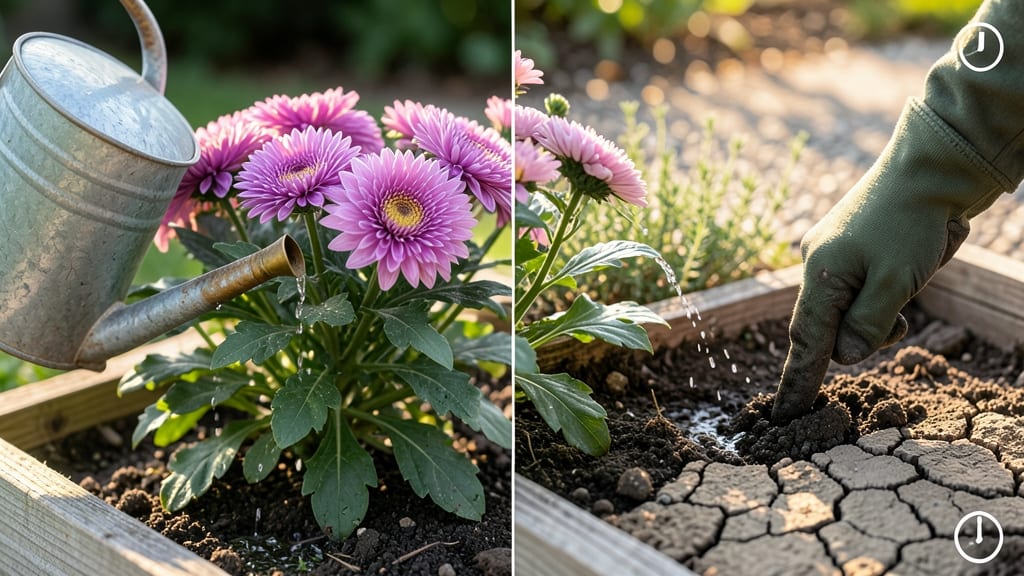
Watering mums in full sun 3-4 times per week keeps their 🌼 blooms vibrant and healthy, but too much or too little can spell disaster.
Picture this: you’ve spent weeks nurturing your chrysanthemums, only to watch them wilt or develop soggy roots because you guessed wrong on watering. The secret isn’t just frequency—it’s knowing when the soil is truly dry.
Full sun means faster evaporation, so checking soil moisture with your finger (or a moisture meter) is the game-changer. Too dry? The leaves crisp. Too wet? Roots rot. Neither is what you want when you’re aiming for that showstopping fall display.
Below, I’ll walk you through the exact schedule, soil tests, and adjustments for heatwaves or rain delays—so your mums stay lush, blooming, and stress-free all season.

How often to water mums in full sun: the exact schedule based on soil conditions
Mums (chrysanthemums) thrive in full sun but need precise watering to avoid stress. In hot, sunny conditions, they typically require 3-4 waterings per week, but this changes with soil type and seasonal shifts.
The finger test method is your best tool to avoid overwatering or drought stress, ensuring those vibrant blooms last all season.
Your watering schedule should start with understanding your soil drainage. Sandy soils dry out faster and need daily checks, while clay soils hold moisture longer, requiring every 5-7 days.
Loamy soil—the gold standard for mums—balances perfectly with 3-4 waterings weekly. Always water deeply to encourage strong root growth, aiming for 1-2 inches of soil moisture at all times.
| Soil Type | Watering Frequency | Depth per Watering | Best Time |
|---|---|---|---|
| Sandy | Every 1-2 days | 1-1.5 inches | Early morning |
| Loamy | Every 3-4 days | 1.5-2 inches | Morning or evening |
| Clay | Every 5-7 days | 2 inches | Morning only |
| Peat-based | Every 2-3 days | 1 inch | Morning |
Temperature plays a huge role in adjusting your schedule. During summer heatwaves (above 90°F), increase frequency to daily waterings in sandy soils or every other day for loamy soils.
Conversely, in spring or fall, reduce to every 5-7 days unless your soil is particularly dry. Always prioritize morning watering to prevent fungal diseases from evening moisture.
Seasonal shifts demand flexibility. In late summer, when mums are pushing blooms, they need consistent moisture—about 1 inch per week. After blooming, in early fall, taper back to every 7-10 days to prepare them for dormancy.
Winter care is minimal: water bi-weekly only if the ground isn’t frozen, using the finger test to guide you.
Never rely on a rigid schedule—always check soil moisture before watering. Stick your finger 2 inches deep into the soil. If it feels dry, water thoroughly.
If it’s damp, wait another day. This soil dry test prevents both root rot and wilting, keeping your mums healthy and blooming until frost.
Mulching is a game-changer for mums in full sun. Apply 2-3 inches of organic mulch (like shredded bark) around the base to retain moisture and regulate soil temperature. This reduces evaporation and cuts watering needs by 20-30%. Just keep mulch 6 inches away from stems to avoid rot.
Watch for visual stress signals that demand immediate action. Wilting leaves mean underwatering, while yellowing foliage or mushy stems signal overwatering. Adjust your schedule based on these cues—mums are resilient but won’t tolerate soggy roots.
A quick fix for underwatered plants is a deep soak in the morning followed by mulch.
For container-grown mums, the rules change slightly. Pots dry out 2-3x faster than garden beds, so check soil moisture daily in summer. Use self-watering containers or place pots in saucers filled with water to maintain even moisture.
Dwarf varieties need less water (about ½ cup per watering), while standard mums require 1-2 cups.
Remember: consistency is key. Mums hate moisture swings—stick to your schedule once you’ve mastered the finger test. With the right balance, your mums will reward you with bold, long-lasting blooms that define your autumn garden. Happy growing!
Soil dry test tricks for mums: how to check moisture like a pro gardener
Mastering the soil dry test is my secret weapon for keeping mums thriving in full sun gardens. Unlike other plants, chrysanthemums hate soggy roots but also wilt when thirsty. The key? Checking moisture before watering—never on a schedule. I’ll show you how to read your soil like a pro.
Start with the finger test, the simplest way to gauge moisture. Stick your index finger about 1-2 inches deep into the soil near your mum’s base. If it feels dry and crumbly, it’s time to water.
If it’s damp or cool, wait another day. This method mimics how mums naturally absorb water in well-draining soil.
For a more precise check, try the stick method. Insert a wooden skewer or chopstick vertically near the plant. After 30 minutes, pull it out—if moisture clings to it, your soil’s fine. No moisture? Water immediately. This trick works especially well in sandy soil, where water drains faster.
In full sun conditions, mums need 3-4 waterings per week in summer, but timing matters. Watering at night or after 4 PM traps moisture on leaves, inviting fungal diseases like powdery mildew. Always water early morning (6-9 AM) to let foliage dry before heat sets in.
Signs of overwatering: Yellowing leaves, mushy stems, or soil that smells sour. Adjust by letting the top 2 inches of soil dry out between waterings.
Pay attention to soil color too. Dark, rich soil often holds moisture longer, while pale, sandy soil dries out fast. I test both by squeezing a handful—if it forms a loose ball that crumbles easily, your mums are ready for water.
For clay-heavy soil, wait until the surface feels dry to the touch.
Tech-savvy gardeners swear by moisture meters for consistency. These handheld tools give exact readings, which is a game-changer in extreme heat or drought-prone areas. I use one during heatwaves to avoid guesswork. Set the meter’s probe to 1-2 inches deep and check daily if temps exceed 90°F.
Avoid these common mistakes: watering based on a rigid schedule (soil dries faster in sun), ignoring leaf wilting (a late sign of thirst), or using cold water (shocks roots).
Instead, water deeply at the base and mulch with 2-3 inches of organic matter to retain moisture. Your mums will reward you with bold, long-lasting blooms all season.