
How To
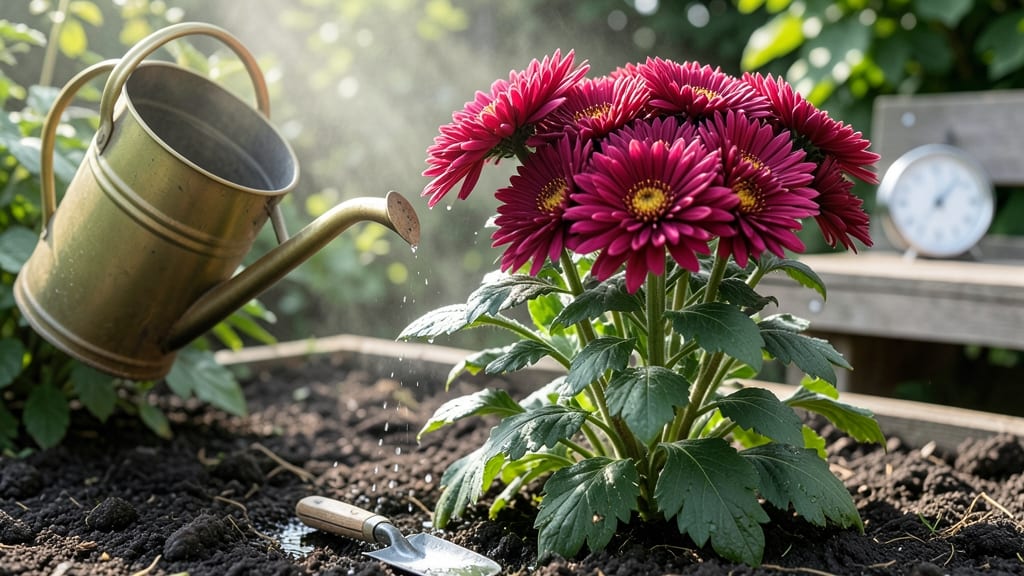
Watering mums the right way means giving them just 1 inch of moisture each time—too much or too little, and those show-stopping blooms won’t last.
Struggling to keep your 🌼 thriving? Overwatering or underwatering can kill their vibrant blooms faster than you think—here’s the science-backed method to keep them lush all season.
Mums in USDA Zone 6a need a balance: deep watering that encourages strong roots but never leaves the soil soggy. The trick is timing—morning is best to prevent fungal issues, and containers dry out faster than garden beds.
Below, I’ll walk you through the 1-inch rule, how to spot over- or under-watering, and seasonal tweaks so your mums stay healthy from spring planting through fall harvest.


The 1-Inch rule: how deep and how often to water mums
If you’ve ever watched your chrysanthemums (mums) wilt despite regular watering—or worse, develop powdery mildew from soggy soil—you’re not alone. The secret to vibrant, long-lasting blooms lies in the 1-inch rule, a precision watering technique that balances hydration without drowning roots.
This method ensures root health, extends bloom season, and prevents diseases that thrive in overly wet conditions.
Here’s the science: Mums need consistent moisture at the root zone, not surface-level dampness. Watering to a 1-inch depth encourages roots to grow deeper, making plants more resilient. Too little water stresses them; too much suffocates roots and invites fungal infections.
Let’s break down exactly how to apply this rule for spring, summer, and fall—because seasonal adjustments make all the difference.
🌼 Quick Tip: Use a rain gauge or trowel to measure soil depth—your thumb is too imprecise! Aim for 1 inch of water per week, adjusting for rain or extreme heat.
Let’s start with spring watering, when mums are establishing roots after planting. Aim for 1 inch of water every 5–7 days, but check soil moisture first—stick your finger 2 inches deep. If it’s dry, water; if damp, wait.
Overwatering in spring can lead to root rot, while underwatering stunts growth. Morning watering is ideal because it gives leaves time to dry, reducing powdery mildew risk.
Summer is the most critical season for mums, especially in USDA Zone 6a where heat and drought stress plants. Increase your depth to 1–1.5 inches every 3–5 days, depending on rain and temperature.
Use a soaker hose or drip irrigation to deliver water directly to the root zone without wetting foliage. If your mums are in containers, they’ll dry out faster—check daily. Mulch with 2–3 inches of straw to lock in moisture and keep roots cool.
Fall is when mums really shine, but their water needs shift as temperatures drop. Stick to the 1-inch rule, but reduce frequency to every 5–7 days as cooler air reduces evaporation. This is also when you’ll see bud formation—consistent moisture now ensures longer-lasting blooms.
Avoid watering late in the day; wet foliage overnight invites fungal diseases like powdery mildew, which can ruin your display.
Winter care is minimal, but not nonexistent. If you’re in a snow-free zone, water every 10–14 days with just 0.5 inch to prevent desiccation. Focus on mulching heavily (4–6 inches) to insulate roots.
Dormant mums need less water, but don’t let the soil dry out completely—this can kill the plant before spring. If snow covers your garden, it’s doing the job for you!
Pro watering hack: Use a plastic bottle cap as a makeshift gauge. Fill it with water and place it near your mums. When it’s empty, you’ve hit your 1-inch target.
This trick is perfect for container gardens where precise measurements matter most. Pair it with a moisture meter for in-ground plants to avoid guesswork.
Finally, watch for
Signs your mums are overwatered or underwatered (and how to fix it)
Your chrysanthemums (mums) might look stunning at first glance, but subtle signs of overwatering or underwatering can sneak in. I’ve seen yellowing leaves or mushy stems turn a once-vibrant plant into a sad, struggling specimen—often within days.
The key is catching these symptoms early, before they become irreversible. Let’s break down the 5 most common warning signs and how to fix them before your mums wilt away.
First, check your soil moisture by sticking your finger 1 inch deep into the soil. If it feels damp, you’re likely overwatering. If it’s bone-dry, your mums are thirsty. Mums prefer well-draining soil—they hate soggy roots but also can’t handle drought stress.
The balance is tricky, but mastering it will give you those long-lasting blooms you love. Let’s dive into the fixes.
How to Water Mums: Pros & Cons
✅ DO These for Healthy Mums
- Water deeply 1-2x/week (spring/fall) or every 3-5 days in summer.
- Use morning watering to reduce fungal risk and evaporation.
- Test soil drainage—amend clay soil with perlite or sand.
- Check container drainage—potted mums need holes to prevent root rot.
- Apply 2-3 inches of mulch to retain moisture and regulate soil temp.
❌ DON'T Do These (Common Mistakes)
- Avoid night watering—promotes powdery mildew and fungal diseases.
- Never let soil stay waterlogged—mums rot in soggy conditions.
- Skip light watering—shallow drinks encourage weak root systems.
- Don’t ignore yellowing leaves—could mean overwatering or nutrient deficiency.
- Resist hard water for potted mums—use rainwater or filtered water.
If your mums show yellow leaves with green veins, overwatering is likely the culprit. The yellowing happens because roots can’t absorb oxygen in waterlogged soil. My fix? Stop watering immediately and let the soil dry out.
For potted mums, lift the pot to check weight—if it’s light, water; if heavy, wait. Add coarse sand or orchid bark to improve drainage if needed.
On the flip side, underwatered mums will show crispy brown edges on leaves and dry, brittle stems. These plants are begging for water! Water deeply until it drains from the bottom of pots or seeps 6 inches into garden soil.
For in-ground mums, use a soaker hose to deliver water slowly. Mulch heavily to lock in moisture—this is especially critical during hot summer months.
Watch for white mold (powdery mildew) on leaves—this is a red flag for excess moisture combined with poor airflow. Prune affected leaves immediately and space plants 18-24 inches apart for better circulation. For stubborn cases, spray with a neem oil solution (1 tsp neem oil + 1 quart water).
Always water at the base of the plant, not overhead, to prevent fungal spores from spreading.
Stunted growth or small, sparse blooms? Your mums might be stressed from inconsistent watering. Roots need steady moisture to support those vibrant fall blooms. Try a drip irrigation system for garden beds—it delivers water slowly and directly to the roots.
For containers, group pots together and water them as a unit to maintain even moisture levels. Remember: consistency is key—mums hate moisture swings!
When in doubt, dig deeper. Use a soil moisture meter ($10 at garden centers) to check moisture levels at the root zone. Aim for 60% moisture in the top 6 inches of soil.
Adjust your watering schedule based on readings—this takes the guesswork out of hydration. With these fixes, your mums will bounce back in 2-3 weeks, ready to dazzle your garden again.