
How To
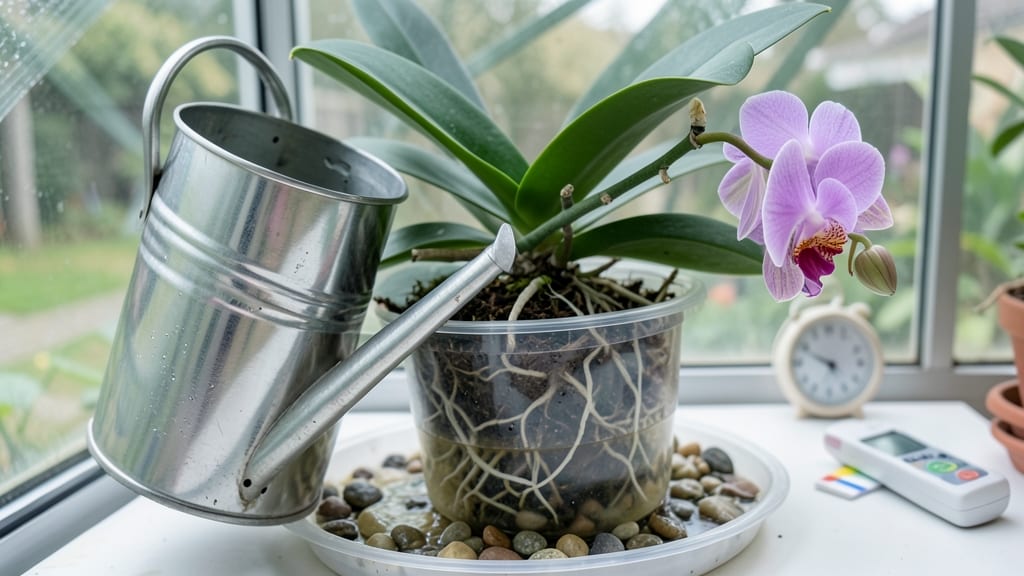
Watering orchids 🌸 in a greenhouse depends on more than just days between sessions—it’s about reading their subtle cues and adjusting for your greenhouse’s unique conditions.
Struggling to keep your greenhouse orchids thriving? Overwatering or underwatering can silently kill these delicate plants—yet most gardeners get the timing wrong. The key isn’t a rigid schedule but understanding your orchid’s true thirst signals.
In a controlled greenhouse environment, humidity and airflow shift constantly, meaning what works in summer may drown your orchids in winter. Below, I’ll break down the 3-zone moisture check method to pinpoint the perfect watering window, plus how to tweak your routine for seasonal changes.
You’ll learn to spot the 5 hidden signs of over- or under-watering, from wrinkled pseudobulbs to root color shifts, so you never guess again. Let’s make your greenhouse orchids thrive year-round—without the trial and error.
The 3-Zone moisture check method for greenhouse orchids
Greenhouse orchids thrive on precision—not guesswork—when it comes to watering. Unlike outdoor plants, their root health depends on three moisture zones in the potting mix. Skipping any zone can lead to rot or dehydration, even in humid greenhouses.
The key is checking the surface, mid-depth, and base of the pot to match your orchid’s needs with your greenhouse’s humidity and airflow.
Most gardeners water based on a schedule, but greenhouse orchids need a dynamic approach. High humidity can trick you into thinking they need less water, while poor airflow makes roots stay soggy longer.
That’s why the 3-zone method works better than a calendar. Start by testing all three zones before deciding whether to water.
| Zone | Moisture Level | Action | Greenhouse Adjustment |
|---|---|---|---|
| Surface (Top 1-2 inches) | Dry to touch | Water if dry | Check daily in low humidity |
| Mid-Depth (2-3 inches) | Slightly damp | Wait if damp | Hold off in high humidity (70%+) |
| Base (Bottom 1 inch) | Moist but not soggy | Water if too dry | Reduce watering if poor airflow |
Use a wooden skewer or moisture meter for accuracy in dense mixes.
Start by inserting a wooden skewer or your finger into the top 1-2 inches of the potting mix. If it feels dry, this is your first clue—but don’t water yet. Dig deeper to the mid-depth zone (2-3 inches).
Here, the mix should be slightly damp, not bone-dry or soggy. This zone tells you whether your orchid has recovered from the last watering.
Now check the base zone (bottom 1 inch). This is where most orchid roots live, and it’s the most critical zone. If the mix here is still moist but not wet, your orchid is happy.
If it’s bone-dry, you’ve been underwatering. Conversely, if it’s soggy, you’re overwatering, especially in a low-airflow greenhouse. Adjust your watering based on this zone’s condition.
Greenhouse humidity throws a wrench into this method. In a humid greenhouse (70%+), the top zone may stay damp longer, tricking you into thinking the orchid needs water. Always check the mid-depth and base zones first.
If they’re dry, water. If they’re still moist, wait 2-3 more days. Use a hygrometer to monitor humidity—aim for 50-70% for most orchids.
Airflow is just as critical. Poor ventilation in greenhouses can traps moisture near the roots, causing rot. If your greenhouse has stagnant air, reduce watering frequency by 25-30% and increase airflow with a small fan or ventilation system.
This mimics natural conditions and prevents fungal infections like root rot.
For Phalaenopsis orchids (the most common type), the 3-zone method works best with a 7-10 day watering cycle in summer and 10-14 days in winter. Cattleyas, however, prefer slightly drier conditions—wait until the mid-depth zone is fully dry before watering.
Always water in the morning to allow the mix to dry slightly during the day.
Pro tip: Use clear plastic pots for a few weeks to monitor root health. Healthy roots are silver-green when dry and green when hydrated. If roots stay dark brown or mushy, you’re overwatering.
If they’re shriveled and gray, you’re underwatering. Adjust your 3-zone checks based on these visual cues.
Remember, the 3-zone method isn’t just about moisture—it’s about balancing your greenhouse’s microclimate. By mastering these checks, you’ll give your orchids the consistent moisture they crave without drowning their roots. Start today, and watch your orchids bloom healthier than ever.
Greenhouse watering schedule by season: adjusting for temperature and humidity
Seasonal shifts dramatically change your orchid’s water needs—what works in summer’s heat can drown roots in winter’s chill. Unlike houseplants, greenhouse orchids face microclimates where humidity and airflow vary by location.
Tropical varieties like Phalaenopsis thrive in 60-80% humidity, while Cattleyas prefer 40-60%. Adjusting your schedule isn’t just about temperature—it’s about matching your greenhouse’s unique conditions.
Your first step? Identify whether your greenhouse mimics tropical or temperate** climates. Tropical setups (consistent warmth, high humidity) let you water more frequently, while temperate ones (cooler nights, dry winters) demand patience. Even a 5°F difference can halve your watering frequency.
For example, my Cattleya in a temperate greenhouse needs water every 10-14 days in winter, but my Phalaenopsis in a tropical zone drinks every 5-7 days year-round.
| Season | Tropical Greenhouse | Temperate Greenhouse | Key Adjustment |
|---|---|---|---|
| Spring | Every 5-7 days | Every 7-10 days | Increase airflow |
| Summer | Every 3-5 days | Every 5-7 days | Morning watering only |
| Fall | Every 7-10 days | Every 10-14 days | Reduce humidity |
| Winter | Every 10-14 days | Every 14-21 days | Check root color |
Summer is the most critical season—high greenhouse temperatures (above 85°F) can dry out orchid roots in 24 hours. I’ve seen Phalaenopsis leaves crisp up by noon if watered only every 7 days in peak heat.
My trick? Use a hydrometer to track humidity and water at 7 AM when evaporation is lowest. For temperate greenhouses, summer watering should mirror spring’s schedule until temperatures stabilize below 75°F at night.
Winter dormancy is where most gardeners overcorrect—cutting water too early or too late. Orchids like Dendrobium need drier conditions (40-50% humidity) to trigger blooming, but Phalaenopsis can rot if deprived. My rule: Wait until 50% of roots turn silver-gray before watering in winter.
In tropical greenhouses, this might mean watering every 10-14 days, while temperate setups may stretch to 3-4 weeks between waterings.
Humidity is the silent watering regulator. A humidifier or pebble tray can extend time between waterings by 30-50% in dry seasons. I once added a fogging system to my greenhouse and reduced summer watering from every 3 days to every 5 days—without stressing my Vandas.
For low-humidity areas, group orchids together to create a microclimate and avoid watering near ventilation fans, which dry roots faster.
Pro tip: Use clear plastic pots to monitor root moisture visually. Healthy roots should be green or silvery—never mushy or black. If your greenhouse has hot afternoons, switch to clay pots; they wick moisture away faster.
And always water until 20% more drains out—the bottom 20% of the pot is where roots store reserves for dry spells. Adjust your schedule weekly based on what you see, not what’s on the calendar.