
Watering
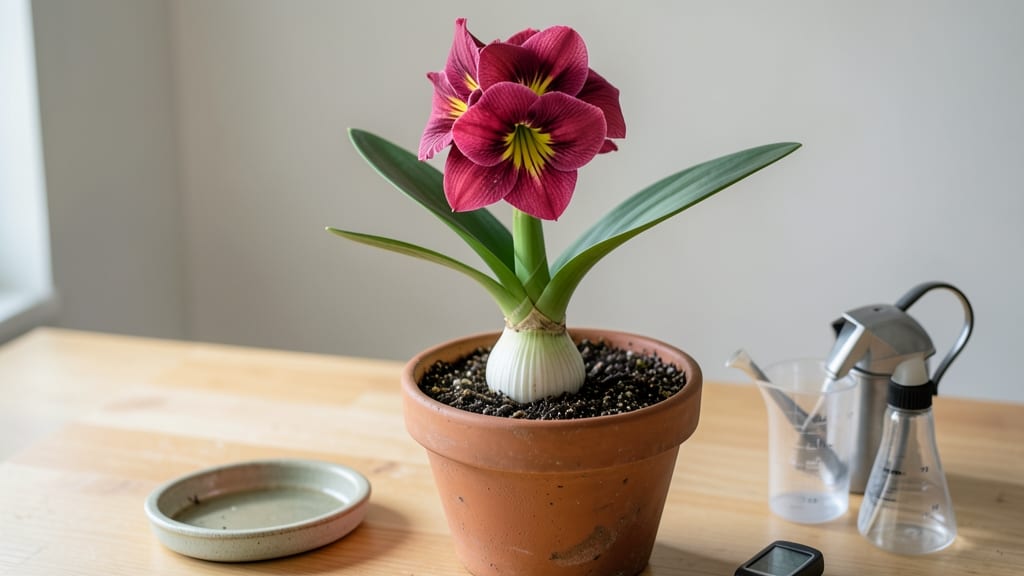
Watering an amaryllis bulb too often or too little can mean the difference between stunning 🌷 blooms and a sad, wilted plant.
Struggling to keep your amaryllis blooming year after year? The secret lies in mastering its watering schedule—too much or too little can kill your plant before it even shows off its stunning flowers.
In Zone 6, where most gardeners grow amaryllis, the best watering rhythm shifts with the seasons: deep soaks once a week in spring, bi-weekly in summer, and barely anything in winter.
Below, I break down the exact watering schedule by season, how to check soil moisture without guessing, and the one sign that tells you right now whether you’re over- or underwatering.
Amaryllis watering schedule by season: exact frequency for healthy blooms
Amaryllis bulbs thrive when you match their watering routine to their natural growth cycle. Unlike many houseplants, they demand a seasonal watering approach—too much water in dormancy can rot the bulb, while too little during growth stunts blooms.
The key is understanding when your amaryllis is dormant (fall/winter) versus actively growing (spring/summer). I’ve grown these stunning 🌷 flowers for years, and I’ve learned that consistency is everything.
Your amaryllis’s watering needs shift dramatically between seasons. In dormancy, minimal water keeps the bulb alive without encouraging rot. When growth resumes in spring, you’ll ramp up watering to support stem elongation and flower bud formation.
Summer’s heat demands careful balance—enough to prevent wilting, but not so much that you drown the roots. Let’s break down the exact schedule you need to follow for healthy blooms year after year.
Pro Tip: Always water in the morning to reduce evaporation and fungal risks. Use room-temperature water to avoid shocking the roots. If you’re unsure whether your amaryllis needs water, stick your finger 1-2 inches into the soil. If it feels dry, it’s time to water.
| Season | Growth Stage | Watering Frequency | Soil Moisture Check | Notes |
|---|---|---|---|---|
| Fall (Oct-Nov) | Dormancy Begins | Every 3-4 weeks | Dry 2-3 inches deep | Reduce water as leaves yellow |
| Winter (Dec-Feb) | Dormant | Monthly (light mist) | Dry 3+ inches deep | Avoid soggy soil at all costs |
| Spring (Mar-Apr) | Active Growth | Weekly (deep soak) | Top 1 inch dry | Increase water as buds form |
| Summer (May-Jun) | Blooming | Every 5-7 days | Top 1-2 inches dry | Monitor evaporation rates |
| Late Summer (Jul-Aug) | Post-Bloom | Bi-weekly (reduce) | Top 2 inches dry | Prep for next dormancy |
During dormancy (fall/winter), your amaryllis bulb stores energy for next year’s blooms. This is when most gardeners make the fatal mistake of overwatering. I’ve seen healthy bulbs rot in just weeks from sitting in damp soil during their rest period.
The goal is to keep the soil barely moist—just enough to prevent the bulb from shriveling. In winter, a monthly light mist over the soil is often sufficient, especially if your home has dry air from indoor heating.
When spring arrives and you notice new green shoots emerging, it’s time to increase watering. This is your active growth phase, and your amaryllis will drink eagerly. Water deeply once a week, allowing the water to penetrate 4-6 inches into the soil.
You’ll know you’re doing it right when water runs out the drainage holes of your pot. This encourages the bulb to grow stronger roots and produce those showstopping flowers you’re craving.
Summer is when your amaryllis puts on its best show, but it’s also when watering gets tricky. The blooming phase demands consistent moisture, but you must avoid letting the soil stay soggy. I recommend watering every 5-7 days during peak summer heat, adjusting based on your home’s humidity.
If you notice the flower stems wilting in the afternoon, it’s a sign to water more frequently. However, if the soil stays damp for more than a day after watering, you’re overdoing it.
After the blooms fade, don’t relax your watering just yet. The post-bloom phase (late summer) is crucial for rebuilding the bulb’s energy reserves. Reduce watering to every 2 weeks and allow the soil to dry out more between waterings.
This gradual reduction signals the bulb that it’s time to prepare for dormancy. If you skip this step, your amaryllis may not produce as many flowers next season—or worse, it might refuse to bloom at all.
One mistake I see often is assuming that potted amaryllis and in-ground bulbs have the same watering needs. Potted plants dry out 30-50% faster because they have less soil to retain moisture.
If you’re growing your amaryllis in a container, you may need to water 2-3 days earlier than the schedule above. Always check the soil moisture before watering—your finger is the best tool for this job.
Environmental factors play a huge role in your watering routine. If your amaryllis sits in a sunny south-facing window, the soil will dry out faster than one in a north-facing spot. Similarly, homes with low humidity (common in winter) will require more frequent watering than humid environments.
Pay attention to your plant’s leaves and stems: drooping or crispy edges mean it’s thirsty, while yellowing leaves signal overwatering.
Remember, the goal is to mimic nature’s water cycle as closely as possible. In the wild, amaryllis
Common watering mistakes that kill amaryllis bulbs (and how to fix them)
Amaryllis bulbs are stunning showstoppers, but their beauty fades fast when watering goes wrong. The #1 killer of these tropical plants isn't pests or disease—it's watering mistakes that create soggy soil or leave roots parched.
I've lost count of how many amaryllis plants I've revived by fixing just these simple errors.
Most gardeners make one of two critical mistakes: overwatering during dormancy or underwatering when the plant is actively growing. Both scenarios stress the bulb and prevent those dramatic 6-inch blooms you're dreaming of.
Let's tackle the most common pitfalls and how to correct them before your amaryllis throws in the towel.
🚨 How Often to Water Amaryllis Bulbs (The Exact Rule)
Water amaryllis bulbs only when the top 2 inches of soil are completely dry—this means every 7-14 days for potted plants and every 10-21 days for in-ground bulbs. The key is deep watering (1-2 cups per bulb) rather than frequent light sprinkles. During dormancy (summer), reduce to monthly watering or less.
Pro Tip: Stick your finger 2 inches into the soil—if it feels dry, water thoroughly. If it's still moist, wait 2-3 more days. Overwatering is the silent killer of amaryllis bulbs!
One of the first signs you're overwatering is yellowing leaves that feel mushy to the touch. This is your bulb's SOS for root rot, which spreads faster than you can say "bloom season." I've seen healthy amaryllis plants turn into sad, slimy messes in just 10 days of overwatering.
The fix? Stop watering immediately, repot in fresh, well-draining soil, and trim any blackened roots with sterilized scissors.
On the flip side, underwatering causes wrinkled bulbs and stems that flop like overcooked noodles. If your amaryllis leaves start curling inward or the stem bends at the base, it's begging for water.
The solution is simple: deep watering (not just a quick spray) and adding a 2-inch layer of perlite to your potting mix to improve drainage. For in-ground plants, water at the base rather than overhead to prevent evaporation.
Here's where most people mess up: ignoring the drainage. Amaryllis bulbs hate soggy feet—literally. If your pot lacks drainage holes or your garden soil is heavy clay, water will pool around the bulb, causing rot.
My go-to fix is adding a 1-inch layer of gravel at the bottom of pots or mixing in 50% perlite with your potting soil. For in-ground planting, choose a spot with sandy loam soil or amend clay soil with compost.
Seasonal changes throw off even experienced gardeners. During dormancy (summer months), amaryllis bulbs store energy underground and need minimal water—just enough to keep the soil from drying out completely. I've seen people drown their bulbs during this time, thinking they need regular watering.
The fix? Move potted amaryllis to a cool, dark place and water only once a month until you see new growth in fall.
Remember, amaryllis bulbs are drought-tolerant once established, but they despise inconsistency. Stick to a weekly moisture check and adjust based on your plant's needs—not your watering schedule.
With these fixes, your amaryllis will reward you with vibrant blooms year after year, proving that less water often means more flowers. 🌷