
Watering
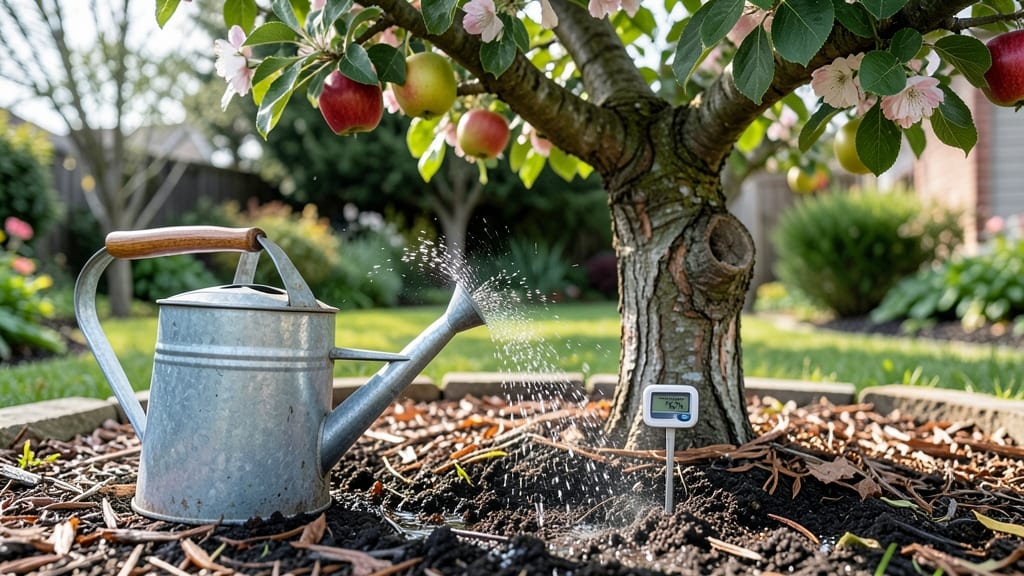
Watering an apple tree the right way means knowing how often to water it—because too much or too little can ruin years of growth.
Picture this: You’ve just planted your 🍎 sapling, eager for a future harvest, only to watch it wilt under inconsistent watering—or worse, drown in soggy soil. The truth? Most gardeners guess, and their trees pay the price.
Here’s the game-changer: A seasonal watering schedule tailored to your tree’s age, soil, and climate. We’ll break down exactly when to water—from deep soaks in summer to light touches in winter—so you never over- or underwater again.
Ready to master the rhythm? By the end, you’ll know the three key signs your apple tree is thirsty (or drowning) and how to adjust your routine in just 5 minutes.
Apple tree watering frequency by season: expert schedule for healthy root development
Apple trees thrive on consistency, but their watering needs shift dramatically with the seasons—just like our own hydration habits change from summer to winter. Most gardeners mistakenly assume summer droughts mean daily watering, when in reality, overwatering in hot months suffocates roots and invites fungal diseases.
The key is understanding how root depth and seasonal growth cycles dictate your watering schedule.
Young apple trees (under 3 years) need frequent, shallow watering to encourage widespread root expansion, while mature trees (5+ years) develop deep taproots that store moisture. This seasonal breakdown reveals exactly how often to water—plus how to adjust for climate variations and soil types without drowning your tree.
Spring (April-May) is when your apple tree wakes up from dormancy, and weekly deep watering (15-20 gallons for young trees) mimics natural rainfall patterns. Focus on soaking the root zone—about 12-18 inches deep—to encourage roots to grow downward. Avoid light, frequent watering, which keeps roots shallow and vulnerable to drought stress later in the season.
Most gardeners overwater in summer (June-August) because they panic when leaves wilt, but apple trees actually thrive on occasional deep droughts. Mature trees should only get water every 10-14 days, while young trees need every 5-7 days.
The trick? Water slowly in the early morning to reduce evaporation and fungal risks. Use a soaker hose or drip irrigation to deliver water 2-3 inches per hour directly to the root zone.
By fall (September-October), your tree’s growth slows, and watering shifts to maintenance mode. Reduce frequency to bi-weekly for young trees and monthly for mature ones, using half the summer volume.
This prepares roots for winter dormancy and prevents late-season fungal diseases like apple scab, which thrive in wet foliage.
Winter (November-March) is the only season you can truly neglect watering—unless you’re in a drought-prone region with no snow cover. Even then, 5 gallons monthly is enough to prevent root desiccation. The exception? Bare-root trees planted in late winter need weekly moisture until leaves emerge. Always check soil moisture 4-6 inches deep before watering.
Soil type dramatically affects watering needs. Sandy soil drains quickly, requiring daily checks in summer, while clay soil holds moisture longer and may need watering every 2 weeks even during droughts. To test moisture, stick your finger 3-4 inches deep—if it feels dry, water. If it’s damp, wait. Mulch (3-4 inches of wood chips) retains moisture and reduces evaporation, cutting watering needs by 30-40%.
Here’s the #1 mistake I see: gardeners water based on leaf appearance rather than root health. Wilting leaves often mean underwatering, but yellowing leaves usually signal overwatering.
Always dig 2 inches deep near the trunk—if the soil smells sour or feels soggy, stop watering immediately and let the soil dry out. Healthy roots should smell earthy and feel slightly damp but not wet.
Pro tip: Drought training in summer strengthens roots. For mature trees, skip watering entirely during short dry spells (under 2 weeks) to encourage deep root growth. Young trees can handle 3-5 days without water in summer if soil is moist below 6 inches.
The result? A tree that’s far more resilient to future droughts—and produces bigger, sweeter apples.
🌱
Signs your apple tree needs water (vs. overwatering) and how to fix it
Your apple tree communicates its water needs through subtle but critical signs—wilting leaves, curled edges, or dry soil can mean thirst, while yellowing foliage or mushy roots signal overwatering. The key is learning these visual cues to adjust your watering schedule before damage occurs.
Young trees (under 3 years) need more frequent checks, while mature trees can handle deeper, less frequent watering.
Start by inspecting the leaf texture. Healthy leaves are firm and vibrant; thirsty leaves droop or feel crispy at the edges. For a quick check, gently tug a leaf—if it resists slightly, your tree’s hydration levels are likely fine.
But if leaves curl or fall easily, it’s time to water. Morning watering is ideal to prevent fungal diseases like apple scab, which thrives in damp foliage.
How Often to Water Your Apple Tree
Young Trees (1-3 years)
✅ Pros:
- Encourages deep root growth
- Prevents transplant shock
- Supports rapid foliage expansion
❌ Cons: - Overwatering causes root rot
- Poor drainage leads to fungal issues
Frequency: Every 5-7 days (deep soak)
Mature Trees (4+ years)
✅ Pros:
- Builds drought resistance
- Reduces water waste
- Supports fruit development
❌ Cons: - Underwatering stresses fruit production
- Shallow watering weakens roots
Frequency: Every 10-14 days (deep soak)
*Adjust for climate: Water more often in summer heat or sandy soil.
The finger test is your best tool for checking soil moisture. Insert your finger 2-3 inches deep for young trees or 4-6 inches deep for mature trees. If the soil feels dry at these depths, it’s time to water.
For a deep watering session, apply 15-20 gallons slowly to encourage roots to grow downward. Avoid light, frequent watering—this promotes shallow roots and weakens the tree’s resilience.
Overwatering is just as harmful as underwatering. Signs include yellowing leaves, mushy roots, or a foul smell around the base. If you suspect overwatering, reduce frequency and improve drainage by adding organic compost or installing a drainage layer of gravel.
Raised beds can also help if your soil retains too much moisture. Always ensure your tree’s planting site has well-draining soil to prevent root suffocation.
To fix watering issues, follow this 3-step protocol: First, pause watering for 3-5 days to let the soil dry out. Second, aerate the soil around the base with a fork to improve airflow. Finally, water deeply but less often, focusing on the root zone.
For young trees, a soaker hose or drip irrigation system can deliver water directly to the roots without wetting the foliage, reducing disease risk.
Remember, seasonal adjustments are key. In spring and summer, your apple tree will need more frequent watering to support fruit development, while fall and winter require minimal watering as the tree enters dormancy.
By tuning into your tree’s signals and adjusting your approach, you’ll nurture a healthy, productive orchard for years to come. 🍎✂️💧