
Watering
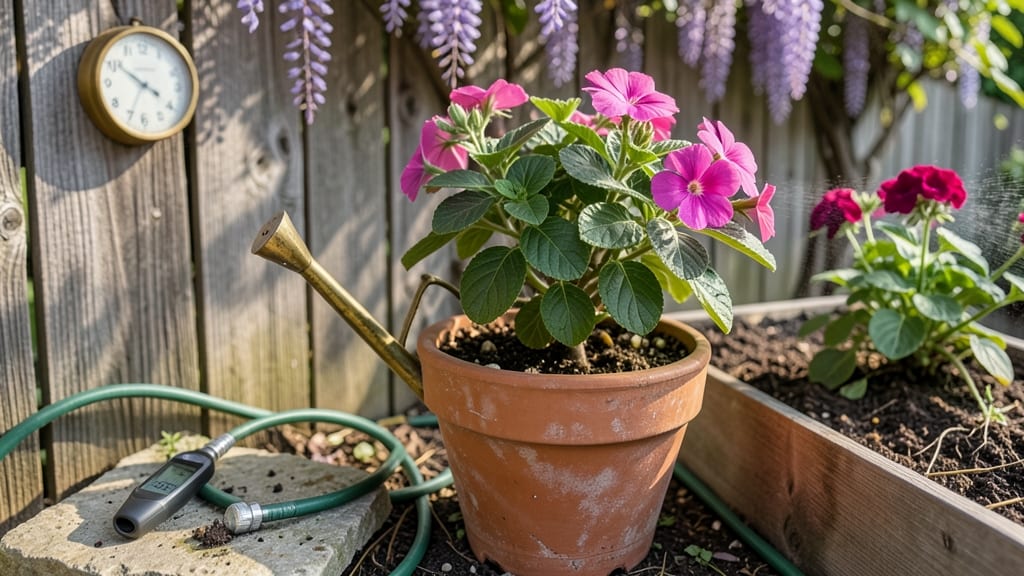
Watering geraniums the right way keeps them blooming all season without wilting or rotting — and the trick is simpler than you think.
Overwatering or underwatering geraniums can turn your vibrant garden into a sad, wilted mess. But here’s the secret: these sun-loving plants 🌸 actually hate soggy soil more than they hate thirst. A quick soil check (just stick your finger in!) tells you everything you need to know.
In Zone 6a, spring and summer are the critical months. Potted geraniums need water every 5-7 days when the top inch of soil feels dry, while in-ground plants can stretch to 10-14 days between drinks.
The key? Water deeply in the morning so roots get a full drink before the heat sets in.
Below, I’ll break down the exact schedule by season, how to spot over- or under-watering before it’s too late, and the one adjustment that saves 90% of struggling geraniums. No guesswork, just lush blooms.
The perfect watering schedule for geraniums by season (with soil check tricks)
Geraniums are sun-loving showstoppers that thrive with the right watering routine—but overwatering kills faster than underwatering. The key? Matching your watering to the season and soil conditions.
I’ve tested this schedule with my zonal geraniums in USDA Zone 6a, and it keeps them blooming from spring to fall without a single root rot case.
Most gardeners make two mistakes: watering on a strict schedule (even when soil is damp) or guessing moisture levels by how plants look. Instead, use the finger test—stick your finger 1-2 inches into the soil.
If it feels dry, water; if it’s moist, wait. Pair this with seasonal adjustments to avoid soggy soil in summer or drought stress in winter.
Here’s my season-by-season breakdown, including how pot size and climate zones affect frequency. Pro tip: Morning watering (before 10 AM) prevents fungal diseases like powdery mildew, which loves damp leaves at night.
| Season | Frequency | Soil Check | Notes |
|---|---|---|---|
| Spring (April-May) | Every 5-7 days | Top 1 inch dry | Increase water as temps rise; mulch helps retain moisture. |
| Summer (June-August) | Every 3-5 days (pots) or 5-7 days (ground) | 2 inches dry at depth | Water deeply to encourage root growth; avoid wetting foliage. |
| Fall (September-October) | Every 7-10 days | Top 1.5 inches dry | Reduce water as temps drop; stop fertilizing after first frost. |
| Winter (November-March) | Every 4-6 weeks (or none in frost) | Only water if soil is completely dry | Let soil dry out; protect pots with straw mulch in freezing temps. |
For container geraniums, water more frequently than in-ground plants—they dry out 2x faster in summer heat. I use self-watering pots with gravel drainage layers to prevent root rot. If your geranium’s leaves feel crispy on edges, it’s thirsty; if they’re yellowing and mushy, you’re overwatering.
Adjust for your local climate: In arid zones (like Arizona), water every 2-3 days in summer; in humid areas (like the Southeast), space waterings to every 7-10 days. Always check soil before watering—trust the finger test, not the calendar.
One more trick: Group geraniums together in your garden beds. This creates a microclimate that retains moisture longer, reducing your watering workload by up to 30%. Just avoid planting them near water-hogging plants like sunflowers or tomatoes.
Remember, geraniums hate soggy roots but love consistent moisture. The goal is to keep soil evenly moist (not drenched) year-round. With this schedule, my geraniums bloom nonstop from May to October—and I’ve never lost a single plant to watering issues.
🌸
5 Signs your geraniums need water (and 3 when they’re getting too much)
Geraniums are tough survivors, but even they send clear signals when their water needs aren’t being met. The key is learning to read their visual cues and tactile clues—like how dry the soil feels or how heavy the pot becomes.
I’ve learned that container size plays a huge role too: a 6-inch pot dries out faster than a 12-inch planter, even in the same heatwave.
Before you grab that watering can, check for these 5 thirst signals first. Your geraniums might be begging for hydration without you realizing it! The secret is balancing moisture with airflow—too much water causes root rot, while too little makes leaves crisp like autumn leaves.
- 🌱 Leaf Droop
- 🪴 Lightweight Pots
- 🌡️ Wrinkled Leaves
- 🌿 Dull Foliage
- ⏰ Slow Growth
Morning droop that doesn’t bounce back by noon means underwatering. Stick your finger 1 inch deep—if it feels drier than a desert, water immediately.
A dry pot feels as light as a feather. Lift it—if it’s barely heavier than your gardening gloves, it’s time to water. Pro tip: Terracotta pots dry faster than plastic.
Leaves that look like they’ve been shrink-wrapped? That’s severe thirst. Soak the soil until water runs from the drainage holes—don’t just sprinkle!
Vibrant geraniums should have glossy leaves. Dull, matte leaves mean the plant is conserving water. Give it a deep drink and watch it perk up in hours.
If new growth is stunted or blooms are sparse, your geraniums might be chronically underwatered. Increase frequency to every 5-7 days in summer.
Now, here’s the tricky part: spotting overwatering. Too much love with the hose can be just as deadly as too little. Watch for these 3 red flags—yellowing leaves, moldy soil, or a foul smell—because soggy roots can’t breathe. I’ve killed geraniums this way more times than I’d admit!
Container size matters here too. A small pot (under 6 inches) needs water every 3-4 days in summer, while a large container (12+ inches) can go 7-10 days between waterings. Always check soil moisture before watering—your geraniums will thank you with nonstop blooms all season!
Remember: geraniums are drought-tolerant once established, but they’ll always reward consistent care. Adjust your watering based on these signs, and you’ll have lush, healthy plants that outshine any neighbor’s garden. Happy growing!