
Companion Plants
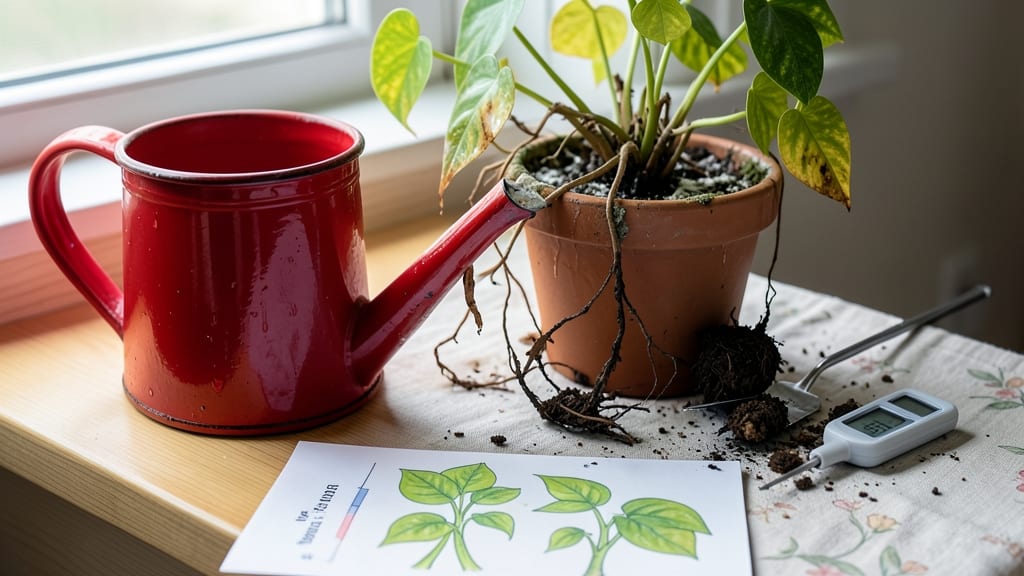
To know if a plant is overwatered, look for drooping leaves, yellowing foliage, or stems that feel soft and mushy. Digging into the soil reveals soggy, dark roots—clear signs of excess moisture. Overly damp soil, often smelling musty or moldy, confirms the problem. Stop watering immediately, improve drainage, and let the soil dry out to prevent root rot.
Overwatering disrupts a plant's ability to absorb oxygen, suffocating roots and triggering rot. 🌱 The classic yellowing leaves (chlorosis) happen when chlorophyll breaks down due to nutrient starvation from waterlogged soil.
I've seen this happen most often with potted plants—containers dry out faster, but overenthusiastic waterers can't resist checking moisture daily. A simple finger test (inserting your finger 1-2 inches deep) tells you more than any soil meter ever will.
For container plants, check the weight—lifting a pot gives instant feedback. If it feels heavy, hold off on watering. Adding perlite or sand to potting mixes creates air pockets that prevent compaction.
Remember, most houseplants prefer their soil to dry out between waterings. The key is observing your plant's natural rhythm rather than following rigid schedules.
💡 In This Article
- Science Behind Overwatered Plant Symptoms
- Step-by-Step Root and Soil Assessment Guide
Science behind overwatered plant symptoms
When roots sit in waterlogged soil, they suffocate because oxygen can't reach them. Plants need oxygen to respire—this process converts sugars into energy.
Without it, roots starve even when surrounded by moisture. 🌱 The lack of oxygen also creates the perfect environment for anaerobic bacteria, which produce toxins that damage root cells. This microbial imbalance triggers root rot, where healthy white roots turn brown, mushy, and smell foul—like rotting fruit or wet newspaper.
Excess water leaches vital nutrients from the soil, particularly nitrogen and phosphorus, which are essential for chlorophyll production. When chlorophyll breaks down, leaves lose their green color and turn yellow—a condition called chlorosis. This often starts on older leaves first because the plant redirects nutrients to younger growth.
The yellowing spreads as the plant's energy reserves deplete, and the leaves may eventually drop off. In severe cases, stems become weak and mushy because the plant can't transport water and nutrients effectively.
Soil pH also shifts in waterlogged conditions, becoming more acidic as organic matter decomposes. This acidity accelerates nutrient loss and makes it harder for roots to absorb what's left. 💧 The combination of oxygen deprivation, microbial toxins, and nutrient starvation creates a perfect storm for plant decline.
Even plants adapted to moist environments, like ferns or calatheas, struggle when their roots can't breathe. The key is understanding that "wet" doesn't always mean "hydrated"—it often means "drowning."
Consider how different plant types respond: succulents and cacti show immediate wilting because their thick leaves store water, but overwatering causes them to puff up or develop soft spots. Meanwhile, tropical plants like monstera or pothos may droop dramatically before showing leaf discoloration.
The timing of symptoms depends on the plant's natural resilience and root structure. For example, shallow-rooted herbs like basil show signs within days, while deep-rooted trees may take weeks to exhibit stress.
What most gardeners miss is how quickly root damage occurs. Within 24-48 hours of waterlogging, roots begin to die back from the tips inward. This is why a root test is critical—you can't rely solely on leaf appearance.
The roots' texture tells the real story: healthy roots should be firm and white, while overwatered roots feel slimy and darken to brown or black. The sooner you catch this, the better the plant's chances of recovery.
Here's what's actually happening at the cellular level: excess water causes root cells to swell and burst due to osmotic pressure. This disrupts the plant's vascular system, preventing water and nutrient transport.
The result? Wilting leaves that feel limp to the touch, even when the soil is damp. 🌿 This is your plant's last-ditch effort to conserve moisture—it's not just thirsty, it's suffocating.