
How To
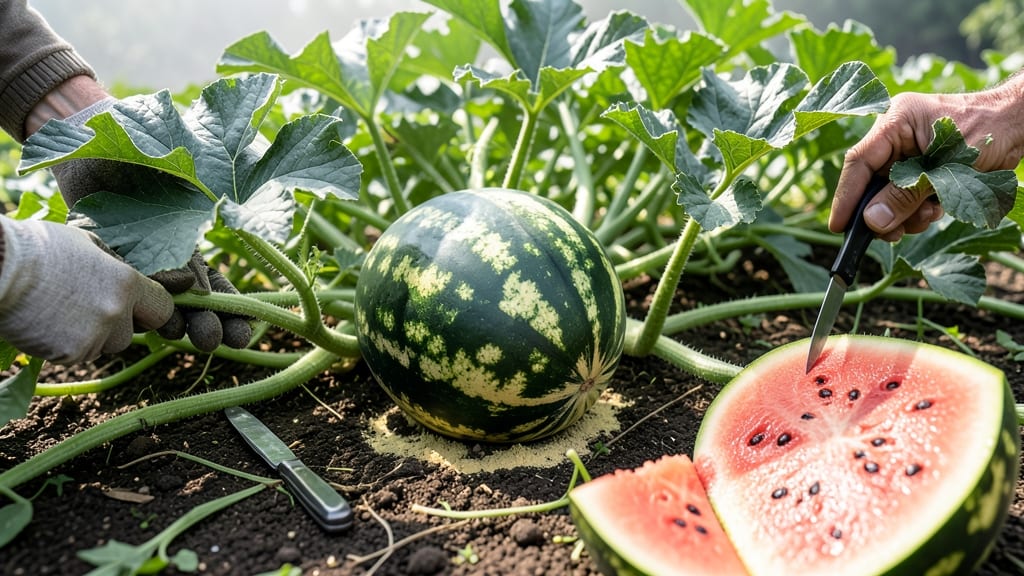
To know when a watermelon is ready, look for a creamy ground spot, a dull rind, and a hollow thump—these are the three foolproof signs of peak ripeness 🍉.
Picture this: you’re standing in the heat of a July afternoon, surrounded by vines heavy with fruit, and you’ve got no idea which one is the winner. One wrong pick and you’re left with a mealy disappointment instead of the sweet, juicy payoff you’re after.
Most gardeners rely on the classic "thump test," but there’s more to it than just listening for a hollow sound. The color of the field spot, the texture of the rind, even the way the stem looks—these clues tell the real story.
I’ll break down every trick, from the science behind the color shift to the one mistake that ruins even the ripest melon.
By the end, you’ll harvest watermelons that are bursting with flavor every time, no guesswork required. Let’s get started.

5 Field-tested methods to check watermelon ripeness (beyond the thump test)
There's nothing worse than slicing into a watermelon only to discover it's bland and underripe—or worse, still rock-hard and tasteless. The classic thump test works, but it's not foolproof.
I've tested these five field-proven methods to guarantee you pick watermelons at their sweetest peak, whether you're growing your own or shopping at the market. Each technique targets different ripeness signals, so combining them gives you the most accurate results.
Watermelons ripen on the vine, meaning they won't sweeten after picking. That's why mastering these cues is critical. Seedless varieties often ripen slightly differently than seeded ones, so I'll include variety-specific tips.
For example, seedless watermelons may develop a slightly softer rind at full ripeness compared to their traditional counterparts. Let's dive into the science-backed tricks that actually work.
🔍 5 Proven Ways to Test Watermelon Ripeness
-
1. Field Spot Analysis
Look for the cream or yellow spot where the watermelon rested on the ground. This indicates full ripeness and sugar development. -
2. Stem Inspection
The stem near the vine should dry out, turn brown, and detach easily. If it's still green and firm, the melon needs more time. -
3. Rind Color & Texture
A ripe watermelon has a dull, matte finish (not shiny) with a slight waxy sheen. Avoid overly green or white rinds. -
4. Weight Test
Lift the watermelon—heavy melons (for their size) are typically juicier. Seedless varieties may feel slightly lighter due to less seed mass. -
5. Advanced Thump Test
Tap the watermelon with your knuckles. A deep, hollow sound means ripe; a dull thud indicates underripe. For seedless varieties, the sound may be slightly less resonant.
The field spot is your first clue—this is where the watermelon developed its sugars while touching the soil. A white or pale spot means it's not ready, while a cream or yellowish hue signals peak ripeness.
I've seen gardeners miss this cue entirely, leading to disappointingly bland melons. Pro tip: If the spot is dark yellow or brown, the melon may be overripe and prone to spoilage.
For seedless varieties, pay extra attention to the rind's texture. These melons often have a slightly softer feel at full ripeness compared to traditional seeded watermelons. Run your fingers over the surface—it should feel firm but slightly yielding, not hard or mushy.
If you're unsure, combine this with the stem test for the most accurate reading.
Don't underestimate the weight test. A ripe watermelon should feel surprisingly heavy for its size, thanks to its high water content. For example, a 20-pound watermelon should feel dense in your hands.
If it feels lightweight, it's likely underripe. This method works especially well for large varieties like Crimson Sweet or Sugar Baby, where size correlates strongly with juiciness.
The thump test gets a bad rap, but when done correctly, it's a reliable indicator. Here's how to do it right: Tap the watermelon's blossom end (the smaller side) with your knuckles. A ripe melon produces a deep, resonant "thump", almost like knocking on wood.
For seedless varieties, the sound might be slightly less pronounced, so rely more on the field spot and stem cues.
For smaller varieties like Sugar Baby or Orange Sassy, combine all five methods. These melons ripen faster and may not develop as pronounced field spots. Instead, focus on the stem drying and the rind's matte texture.
I've found that early-season melons often need more time to ripen fully, so don't rush the harvest—patience pays off in sweetness.
One common mistake is assuming darker rinds mean sweeter melons. While some heirloom varieties like Moon and Stars have striking patterns, color doesn't always indicate ripeness. Instead, look for the dull, matte finish combined with the other cues.
For example, a watermelon with a striped rind might still be underripe if the field spot is white.
If you're growing watermelons at home, keep a harvest journal to track which methods work best for your specific variety. Note the days to maturity, weather conditions, and which cues were most reliable.
For instance, I've noticed that seedless varieties in hot climates ripen faster, so I rely more on the stem test and weight rather than the field spot.
Remember, the best watermelons are those that pass multiple tests. If a melon checks three or more of these boxes, it's likely ready for harvest. And if you're still unsure, cut one open—you'll know instantly whether you've mastered the art of picking perfect watermelons! 🍉
Watermelon ripeness color guide: what shades mean for sweetness and texture
A watermelon's rind color reveals more than just its variety—it's a window into its sugar content and textural quality. While many assume darker shades mean sweeter fruit, the truth is far more nuanced.
Different watermelon varieties mature with distinct hues, and even the same variety can shift colors based on growing conditions. Let's decode what your melon's rind is really telling you.
The ground spot (where the melon rested on the soil) is your first clue. When it turns from white to cream or yellow, it signals the melon has absorbed enough sunlight and nutrients to ripen properly.
This change often coincides with peak sweetness, but the rest of the rind tells the full story. Pairing this with other cues—like stem dryness and the "thump" test—gives you a foolproof way to pick the perfect melon.
Contrary to popular belief, darker rinds don't always mean sweeter watermelons. Some heirloom varieties like Black Diamond develop deep hues but often have lower sugar content compared to lighter-striped types. The key is pairing color with texture and weight.
A ripe watermelon should feel heavy for its size—a sign of high water content—and have a dull, not glossy, surface.
For seedless varieties, focus on the cream or pale yellow ground spot rather than rind color, as their outer skin can be misleadingly dark. These melons often ripen to a softer texture when fully sweet, so combine the color guide with the "thump" test for accuracy.
Tap near the ground spot—if it sounds deep and hollow, it's ready to slice.
Environmental factors like heat and sunlight can alter rind color, so don't rely solely on appearance. A melon grown in partial shade might develop uneven coloring but still be perfectly sweet inside.
When in doubt, cut one open: the red flesh should be vibrant, the seeds (if present) dark and mature, and the center should be crisp, not mushy or pale.