
How To
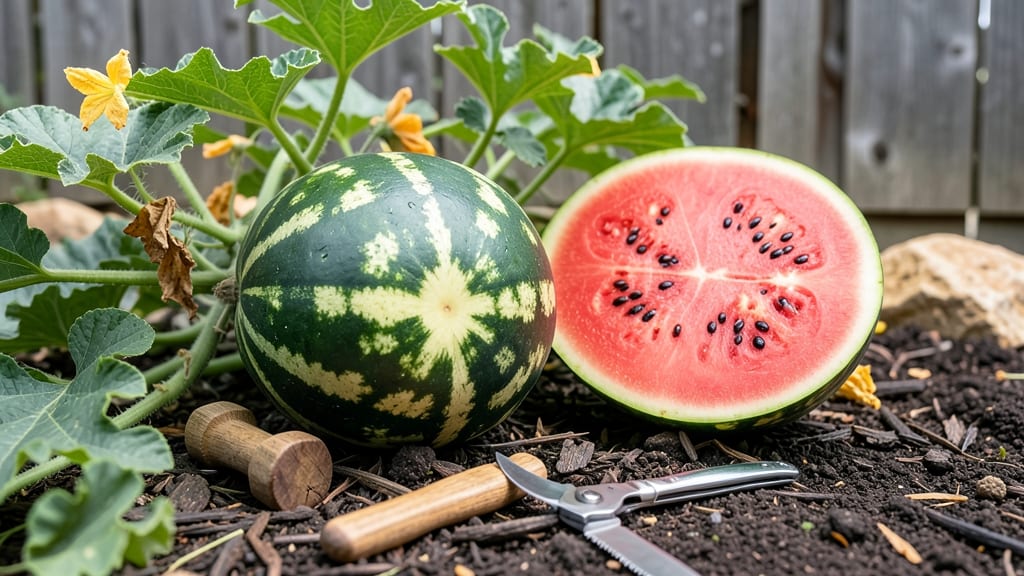
To tell if a watermelon is ripe and sweet, you don’t need a degree in botany—just a few simple tricks that save you from slicing into a mealy, underripe 🍉 disappointment.
Picture this: you’ve spent all summer waiting for that perfect watermelon, only to bring one home and find it’s either rock-hard or mushy inside. Frustrating, right?
The good news is that with a few easy checks—like the thump test, the curve trick, and the strip method—you can spot a sweet, juicy watermelon every time.
These methods work whether you’re shopping at the store or harvesting from your own garden in USDA Zone 6a. I’ll walk you through each one, so you can confidently pick a watermelon that’s ready to eat, not just sit on the shelf.
Ready to stop guessing and start enjoying that sweet, refreshing crunch? Let’s dive into the secrets that turn watermelon shopping from a gamble into a sure thing.

Watermelon ripeness tests: thump, curve, and strip methods explained
Nothing beats the excitement of harvesting a perfectly ripe watermelon—one that’s sweet, juicy, and packed with flavor. But how do you know it’s truly ready? Many gardeners rely on the thump test, curve check, and strip inspection to avoid the disappointment of a watery, underripe melon.
These three methods are field-tested and trusted by experts to predict sweetness and ripeness with remarkable accuracy.
Each method reveals different clues about the watermelon’s maturity. The thump test checks for hollow sounds, the curve check examines the shape and texture, and the strip inspection reveals the color of the inner rind.
Together, they form a foolproof system for selecting the best watermelon from your garden or the market. Let’s dive into how to perform each test correctly and what to look for.
The thump test is one of the most popular methods because it’s quick and doesn’t damage the watermelon. To perform it, tap the melon firmly with your knuckles near the stem end. A deep, hollow sound indicates that the seeds have fully developed and the fruit is ripe.
If it sounds dull, it’s likely underripe. This method works best when the watermelon is at room temperature, as cooler melons may produce misleading sounds.
Next, use the curve check to assess the watermelon’s shape and resting spot. A ripe watermelon will have a pronounced curve from the stem end to the bottom, where it rested on the ground.
Look for a creamy yellow spot on the underside—this is where the melon absorbed heat from the soil, signaling ripeness. Avoid watermelons with a flat bottom or a greenish spot, as these are often underripe.
The strip inspection is the most invasive but also the most reliable method for predicting sweetness. Cut a small strip of the outer rind near the stem and examine the color of the inner rind. If it’s white or pale yellow, the watermelon is ripe and sweet.
A greenish inner rind means it’s underripe, while a brown or dark yellow rind suggests it’s overripe and may be seedy or mushy.
For home gardeners, I recommend combining all three methods to ensure you’re picking the sweetest watermelon. Start with the curve check to narrow down your options, then use the thump test to confirm ripeness without damaging the fruit.
Finally, if you’re unsure, perform the strip inspection on one melon to check the inner rind color. This three-step approach minimizes guesswork and maximizes your chances of harvesting a flavorful watermelon.
One common mistake is assuming that a heavy watermelon is always the ripest. While weight can be a factor, it’s not a reliable indicator on its own. A heavy melon might just be waterlogged or overripe.
Always pair weight with the thump test and curve check for the best results. Additionally, avoid watermelons with soft spots, cracks, or bruises, as these can indicate damage or overripeness.
If you’re harvesting watermelons from your garden, keep an eye on the tendril near the stem. When it turns brown and dried, it’s a strong sign that the watermelon is ready to pick.
This natural indicator aligns perfectly with the curve check and strip inspection methods, giving you multiple clues to confirm ripeness. By paying attention to these details, you’ll consistently harvest watermelons that are bursting with sweetness.
Remember, the key to selecting a ripe watermelon lies in observing both external clues (like the curve and yellow spot) and internal cues (like the hollow sound and rind color). With practice, you’ll develop an instinct for spotting the perfect watermelon every time. Happy harvesting!
Hidden signs of sweetness: color, texture, and stem clues
Watermelon sweetness isn’t just about the thump test—it’s hidden in subtle visual and tactile clues. The field spot (where the melon rested on the ground) should be a creamy yellowish-white, not pale or green.
This indicates full sun exposure and sugar development. Many gardeners overlook this color pattern, assuming darker rinds mean ripeness.
Don’t ignore the stem condition either. A ripe watermelon will have a dried, brown tendril near the stem—this means the vine cut off nutrients, signaling maturity. Green stems?
That’s a red flag for underripe fruit. I’ve seen gardeners pick melons too early just because they looked big, only to find them bland and watery.
- 🍯 Field Spot: Creamy yellow-white (not green)
- 🟤 Rind Texture: Firm but yields slightly to thumb pressure
- 🪴 Stem Tendril: Brown and dried (not green)
- 🌿 Color Pattern: Deep, consistent hue (no streaks)
- 🔊 Sound: Hollow when tapped (not dull)
The rind texture also holds secrets. A ripe watermelon’s skin should feel slightly rough like a sandpaper surface—not smooth or waxy. Press your thumbnail into the rind: if it leaves a slight dent that doesn’t bounce back, it’s ready.
Smooth skins often mean the melon was harvested too soon or stored improperly.
One common misconception is that bigger watermelons are sweeter. Size matters less than color uniformity. Look for a deep, even color—no pale patches or green streaks near the stem.
Varieties like Sugar Baby or Crimson Sweet develop richer flavors when fully mature, but their smaller size can fool you into thinking they’re underripe.
Pro tip: Check the underside of the melon for a yellowish bloom. This natural waxy coating (called cutin) develops as the melon ripens. Skip any with a shiny or wet surface—this often means it’s been overhandled or stored improperly.
Finally, trust your nose. A ripe watermelon should smell sweetly floral near the stem. If it smells musty or sour, it’s past its prime.
I’ve learned the hard way that overripe melons (with fermented scents) are just as bad as underripe ones—both lack the perfect balance of sugar and crunch.