
How To
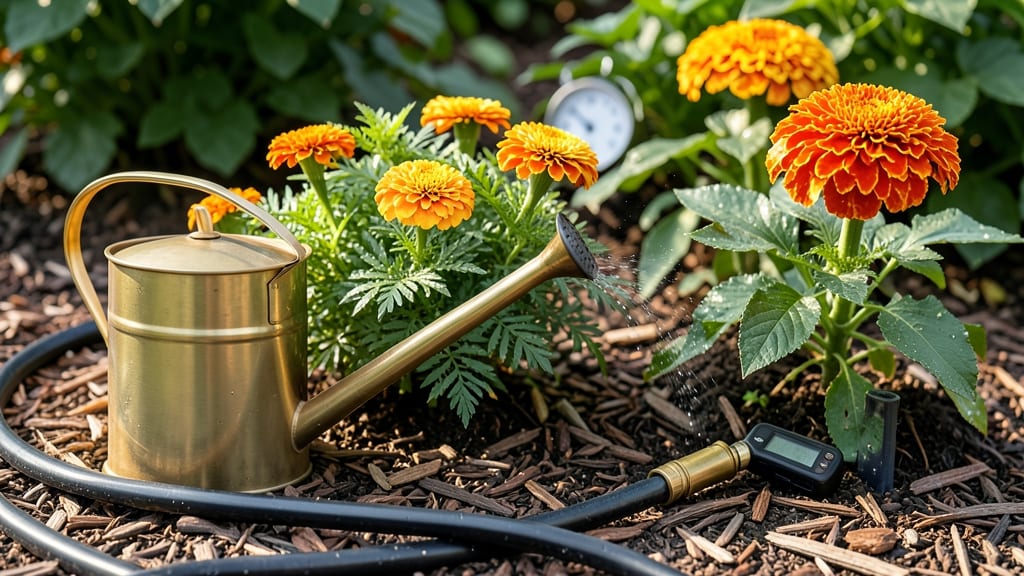
To water marigolds properly, focus on deep, consistent moisture rather than frequent light sprinkles—this keeps their roots happy and blooms vibrant 🌼.
Marigolds may be hardy and low-maintenance, but watering them wrong can kill their vibrant blooms faster than aphids on a zucchini leaf. Too much water leads to root rot, while too little stresses the plant and dulls those cheerful colors.
Here’s the secret: soil moisture is your best guide. Stick your finger 2 inches into the soil—if it’s dry, it’s time to water. In containers, this happens every 3-4 days, while in-ground plants may only need a drink weekly.
Below, I’ll break down seasonal adjustments, how to spot over- or under-watering, and the easiest techniques to keep your marigolds thriving without guesswork.


The perfect watering schedule for marigolds by season and climate
Marigolds thrive with the right balance of moisture, but their water needs shift dramatically between seasons and climates. In hot, dry summers, they demand frequent hydration, while cool, rainy springs require a lighter touch.
Even humidity levels—high in coastal areas or muggy summers—change how often you should water. The key? Consistency without letting their roots sit in soggy soil.
I’ve learned the hard way that marigolds wilt faster than a daylily in drought but also rot if overwatered. Their shallow root systems need moisture at the surface, but they hate soggy feet.
Whether you’re growing them in containers or garden beds, adjusting your schedule by season keeps those vibrant blooms coming all season long.
Below is a season-by-season breakdown of how to water marigolds, tailored to temperature, humidity, and rainfall. Use this as your guide to avoid the two biggest watering mistakes: drought stress and root rot.
| Season | Climate Zone | Watering Frequency | Soil Moisture Check | Best Time to Water |
|---|---|---|---|---|
| Spring | Cool/Dry (Zones 3-6) | Every 5-7 days | Top 1-2 inches dry | Morning (8-10 AM) |
| Spring | Warm/Humid (Zones 7-10) | Every 7-10 days | Top 2-3 inches dry | Late afternoon (4 PM) |
| Summer | Hot/Dry (Zones 3-6) | Every 3-4 days | Top 1 inch dry | Early morning (6-8 AM) |
| Summer | Hot/Humid (Zones 7-10) | Every 2-3 days | Top 1-2 inches dry | Morning (8-10 AM) |
| Fall | Cool/Dry (Zones 3-6) | Every 7-10 days | Top 2 inches dry | Morning (9-11 AM) |
| Winter | All Zones (Dormant) | Every 14-21 days | Top 3-4 inches dry | Mid-morning (10 AM) |
Note: Adjust for containers (water more frequently) and rainy weeks (skip watering).
In spring, marigolds wake up from dormancy and need a gentle coaxing with water. If you’re in a dry climate like Zone 5 or 6, water every 5-7 days when the top 1-2 inches of soil feel dry.
But if you’re in a humid southern zone, stretch it to 7-10 days—overwatering here leads to powdery mildew faster than you can say "aphid attack."
When summer
Signs your marigolds are overwatered or underwatered (and how to fix it)
Marigolds are tough little plants, but even they can't handle watering extremes. Overwatering smothers their roots, while underwatering causes wilting and stunted growth. The key is finding that sweet spot where the soil stays moist but not soggy.
Let's decode the visual clues your marigolds give you when their water needs aren't met.
Start by checking the soil moisture with your finger—stick it 1-2 inches deep. If it feels damp, hold off on watering. If it's bone dry, it's time to hydrate. Yellowing leaves are often the first sign of trouble, but they can mean either too much or too little water.
Here's how to tell the difference—and how to fix it.
Marigold Watering Fixes
- 🌱 Yellow leaves (lower leaves first)
- 🌱 Mushy stems at the base
- 🌱 Foul-smelling soil (root rot)
- 🌱 Slow growth despite frequent watering
- ✅ Stop watering immediately
- ✅ Loosen compacted soil
- ✅ Repot if in containers (fresh soil)
- ✅ Improve drainage (add perlite)
- 🌱 Drooping leaves (even in morning)
- 🌱 Crispy leaf edges (brown and dry)
- 🌱 Slow wilting (leaves curl inward)
- 🌱 Dry, hard soil when touched
- ✅ Water deeply (until soil is moist 2" down)
- ✅ Water in the morning (avoid evening)
- ✅ Mulch around base (retain moisture)
- ✅ Adjust frequency (every 3-4 days in heat)
If your marigolds show mushy stems or blackened roots, they're likely suffering from root rot—a fungal infection caused by overwatering. Pull the plant gently and inspect the roots: healthy roots are white or light tan, while rotten roots smell bad and turn brown or black.
For severe cases, trim the affected roots with sterilized scissors and repot in fresh, well-draining soil.
For underwatered marigolds, the fix is simpler: deep watering. Use your finger to check moisture levels 2 inches down—this is where the roots actively seek water.
If the soil is dry at this depth, water until it runs out the drainage holes (for containers) or seeps into the soil below (for in-ground plants). Morning watering is best because it gives leaves time to dry, reducing fungal risks.
Prevent future watering woes by mulching around your marigolds with 2-3 inches of organic mulch (like straw or shredded leaves). This helps retain moisture, regulates soil temperature, and suppresses weeds. Avoid watering at night—wet foliage overnight invites powdery mildew, a common marigold enemy.
Instead, water early in the day so leaves dry quickly.
Pro tip: Test your soil before watering. Stick a wooden skewer into the soil—if it comes out clean, water; if it's damp, wait. Marigolds prefer consistent moisture, not soggy soil. With these fixes, your marigolds will bounce back and reward you with bold blooms all season long. 🌼