
Watering
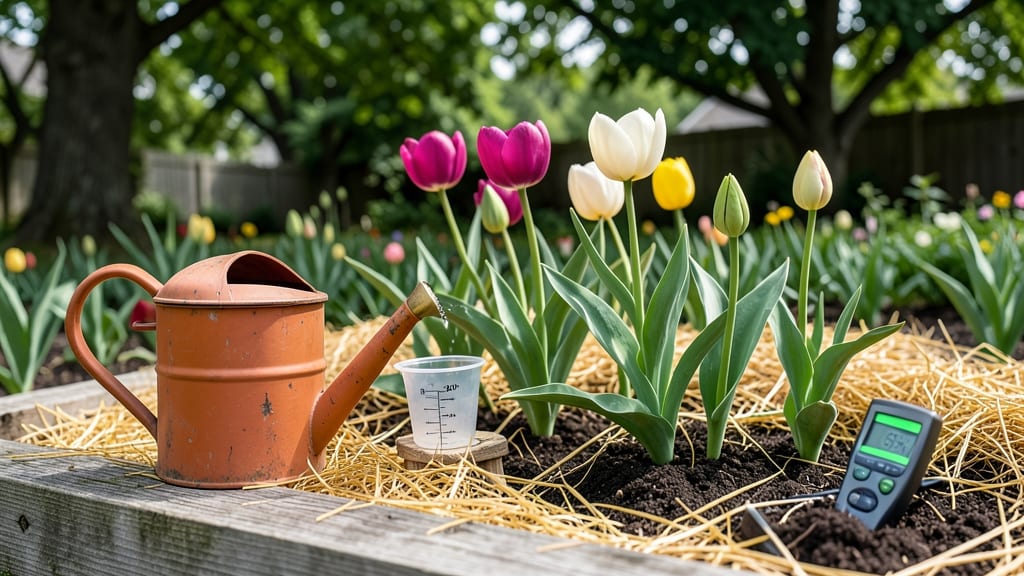
The tulip water requirements are all about balance—neither too much nor too little—to ensure your flowers stay vibrant and healthy. Struggling to keep your tulips blooming?
The secret isn’t just in the soil—it’s in understanding their precise water needs. Overwatering or underwatering can turn vibrant tulips into sad, wilted stems overnight.
Tulips hate soggy roots but also need consistent moisture, especially when they’re sprouting in spring or flowering in early summer. Too little water, and they’ll droop; too much, and you risk rot.
I’ll walk you through the exact watering schedule by season, how to spot trouble, and the best soil tricks to keep them happy without the guesswork.
Whether you’re planting bulbs in fall or caring for established 🌷 tulips, you’ll learn how to balance hydration—no more wasted water or wasted blooms.


How much water do tulips need? Ideal watering schedule by season
Tulips might look delicate, but they’re surprisingly resilient once you master their watering needs. Unlike thirsty annuals, tulips prefer moderate moisture—too much or too little can stunt blooms or rot bulbs. The key is understanding how their seasonal cycles change water requirements from planting to dormancy.
When you plant tulip bulbs in fall (September-November), focus on deep watering to encourage root growth before winter. Once established, they adapt to dry spells, but consistent moisture during spring growth ensures vibrant blooms. Let’s break down the perfect schedule by season to keep your tulips thriving.
| Season | Watering Frequency | Depth | Notes |
|---|---|---|---|
| Fall (Planting) | Weekly (until ground freezes) | 6-8 inches deep | Encourages root growth before dormancy |
| Spring (Growth) | Bi-weekly (after foliage emerges) | 4-6 inches deep | Keep soil evenly moist but not soggy |
| Summer (Dormancy) | Minimal (natural rainfall) | Surface water only | Avoid overwatering; bulbs store energy |
| Winter (Dormancy) | None (unless drought) | N/A | Snow provides natural moisture |
In fall, water newly planted bulbs weekly until the ground freezes to help roots establish. Aim for 1 inch of water per week, delivered deeply to encourage downward growth. Use a soaker hose or drip irrigation to avoid wetting foliage, reducing fungal risks.
When tulips emerge in spring (March-April), shift to bi-weekly watering once foliage reaches 4-6 inches tall. This is their active growth phase, so consistent moisture prevents bud drop.
Test soil moisture by sticking your finger 2 inches deep—water when dry. Mulch with 2-3 inches of straw to retain moisture and regulate temperature.
During summer dormancy (June-August), tulips need minimal water. Natural rainfall is usually sufficient, but in drought-prone areas, give a light drink every 3-4 weeks. Overwatering now can cause bulb rot or attract pests. Let the soil dry slightly between waterings to mimic their natural cycle.
Winter care is hands-off unless you’re in an arid climate. Snow provides ample moisture, and tulips rely on dormancy to recharge for next year. If your region gets little snow, a light watering in January can help, but avoid soggy soil.
Protect bulbs with mulch if temperatures drop below 20°F.
Container-grown tulips dry out faster than in-ground plants. Water potted tulips every 5-7 days in spring, using well-draining pots with drainage holes. Check moisture daily—containers can bake in full sun. Add perlite or sand to potting mix to improve airflow and prevent root rot.
Watch for yellowing leaves or mushy stems, signs of overwatering. Tulips also wilt in drought, but their leaves won’t crisp like annuals. Adjust your schedule based on rainfall and soil type: clay holds moisture longer than sandy soil. A moisture meter can help fine-tune your approach.
Pro tip: Water in the early morning to reduce evaporation and fungal risks. Avoid evening watering, which leaves foliage damp overnight. With this seasonal schedule, your tulips will reward you with bold, healthy blooms year after year.
Signs of overwatering tulips and how to fix damaged plants
Tulips may look delicate, but they’re surprisingly resilient—when watered correctly. The biggest mistake gardeners make is drowning these bulbs, which leads to mushy stems, yellow leaves, and even bulb rot. Unlike many plants, tulips prefer their soil to dry out slightly between waterings, especially after blooming.
I’ve seen beautiful tulip beds turn into sad, soggy messes overnight because of overzealous watering, and I’m here to help you avoid that fate.
Overwatering isn’t always obvious. While wilting signals underwatering, tulips often show subtle signs like drooping foliage or leaves that turn yellow with brown edges. The key is catching these early.
If you notice moldy soil or a foul smell around your tulips, it’s a red flag that your watering routine needs an overhaul. Let’s dive into how to spot these issues and rescue your plants before it’s too late.
⚠️ Tulip Water Requirements Warning
Tulips need: 1 inch of water per week (including rain) during active growth. Never let them sit in soggy soil—their bulbs rot quickly. Morning watering prevents fungal growth, and well-draining soil is non-negotiable. Overwatering in summer dormancy is especially deadly—reduce to minimal watering once foliage yellows.
Start by checking the soil around your tulips. Stick your finger about 2 inches deep—if it feels damp, hold off on watering. Tulips stored moisture in their bulbs, so they don’t need frequent drinks. When you do water, aim for a deep soak rather than light sprinkles.
This encourages roots to grow downward, where they’ll find stability. If your tulips are in containers, ensure they have drainage holes—no exceptions.
If you’ve already overwatered, don’t panic. First, stop all watering immediately and let the soil dry out completely. Next, gently loosen the top 2 inches of soil around the base of the plant to improve airflow. This helps prevent fungal growth and gives the roots a chance to recover.
In severe cases, you might need to dig up the bulb, trim any mushy or blackened roots, and replant it in fresh, dry soil. It’s a drastic step, but it can save your tulip for next season.
Mulching is your best friend when it comes to tulip care. Apply a 2-inch layer of organic mulch (like straw or shredded leaves) around your tulips to regulate soil moisture. This keeps water from pooling around the bulbs while retaining just enough moisture for healthy growth.
Just remember to pull mulch back slightly from the stem to prevent rot. A little mulch goes a long way in preventing overwatering disasters.
Finally, adjust your watering schedule based on the season. Tulips need more water in spring when they’re actively growing, but less in summer when they’re dormant. In fall, before the ground freezes, give them a final deep watering to help them store moisture for next year.
Pay attention to your local climate—if you’re in a rainy region, you might need to skip watering entirely during wet spells. With these adjustments, your tulips will thrive year after year.