
Watering
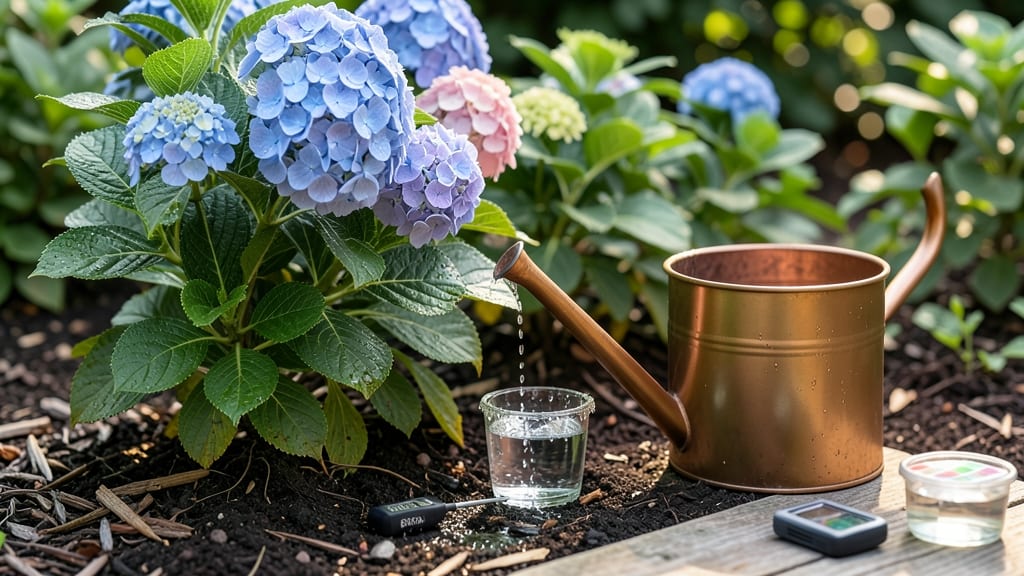
Understanding your hydrangea’s water needs is the key to those showstopping blooms you’ve been dreaming of—without the guesswork or wasted water.
Struggling to keep your hydrangeas blooming beautifully without overwatering or drowning their roots? The secret lies in understanding their precise water needs—and a simple soil test can make all the difference.
These thirsty shrubs 🌸 crave consistent moisture but hate soggy roots, which means your watering schedule isn’t just about frequency—it’s about timing, soil type, and even the season. Too little, and you’ll get crispy leaves; too much, and you risk root rot.
In this guide, I’ll walk you through the exact soil checks to avoid both extremes, adjust for your climate, and even tweak watering for container vs. in-ground plants—so you can enjoy lush, vibrant blooms all season long.


How to test soil moisture for perfect hydrangea watering
Hydrangeas thrive when their roots stay consistently moist, but overwatering can suffocate roots just as quickly as underwatering causes wilting. The key? Testing soil moisture before you water—no guesswork needed. I’ve used these three foolproof methods for years, and they’ve saved my hydrangeas from both drought stress and root rot.
Most gardeners make the mistake of watering on a schedule rather than checking soil conditions. Hydrangeas in containers dry out faster than in-ground plants, while heavy clay soil holds moisture longer. That’s why these simple tests work for any soil type and garden setup.
-
1. Finger-Poke Test (Best for Loamy Soil)
Push your index finger 2-3 inches deep into the soil near the plant’s base. If it feels dry or crumbly, it’s time to water. For clay soil, go deeper—3-4 inches—since it holds moisture longer. -
2. Screwdriver Test (Best for Heavy Soil)
Drive a wooden screwdriver (or metal one with a rubber cap) into the soil. If it resists or pulls out clean, the soil’s too dry. If it slides in easily with wet soil clinging, hold off on watering for 2-3 more days. -
3. Weight-Check Method (Best for Containers)
Lift your potted hydrangea—if it feels light, the soil is dry. A heavy pot means moisture remains. For accuracy, check the weight daily in extreme heat (every 1-2 days). -
4. Visual Cues by Soil Type
Sandy soil: Dry at 1 inch deep.
Loamy soil: Dry at 2-3 inches deep.
Clay soil: Dry at 3-4 inches deep.
Pro tip: Press your finger into the soil—if it holds its shape, it’s moist enough. -
5. Morning Watering Rule
Always test soil in the morning (6-9 AM). Evening tests can trick you into overwatering because soil appears drier after daytime evaporation. Water deeply until moisture seeps 6 inches down.
For in-ground hydrangeas, focus on the root zone (the top 6 inches of soil). If the soil near the drip line (where water naturally falls) feels dry, water there first. This mimics natural rainfall patterns and encourages deeper root growth.
Container hydrangeas need frequent checks because their roots have limited access to moisture. I water mine when the top 1 inch of soil feels dry, but I always double-check by lifting the pot—if it’s light, it’s thirsty. Pro tip: Use a moisture meter for containers to avoid overwatering.
One common mistake? Testing soil moisture after watering. The soil will always feel damp, giving you a false sense of security. Instead, wait 24 hours after watering to test again. This helps you gauge the true absorption rate of your hydrangea’s roots.
Seasonal adjustments matter too. In summer heat, I test soil moisture daily and water in the early morning to reduce evaporation. During fall and spring, a weekly check suffices. Winter? Almost never water unless the soil feels bone-dry at 4 inches deep.
Remember: Hydrangeas hate soggy roots. If your soil stays waterlogged for more than 24 hours, it’s time to improve drainage with compost or sand. Over time, your soil will hold moisture better, and your hydrangeas will reward you with vibrant blooms all season.
🌸
Hydrangea watering schedule by season: what you’re getting wrong
Most gardeners assume hydrangeas need constant watering year-round, but their needs shift dramatically with the seasons. I’ve learned the hard way that overwatering in winter can suffocate roots, while skipping deep watering in summer leads to droopy blooms.
The key is adjusting your schedule based on seasonal growth phases and whether your hydrangeas live in containers or the ground.
Climate zones also play a huge role—hydrangeas in humid Southern climates (like Zone 8) may need less frequent watering than those in dry Western regions (Zone 5). Let’s break down the seasonal watering schedule you’ve likely been getting wrong, plus how to adapt for containers versus in-ground plants.
| Season | In-Ground Watering | Container Watering | Climate Adjustments |
|---|---|---|---|
| Spring | Every 3-4 days (deep soak) | Every 2-3 days (containers dry faster) | In Zone 5-7: Water more in early spring; in Zone 8+, reduce slightly. |
| Summer | Daily or every other day (morning watering) | Every 1-2 days (check soil daily) | In arid zones, mulch heavily; in humid zones, water less frequently. |
| Fall | Every 5-7 days (reduce as temps drop) | Every 3-4 days (containers stay moist longer) | In cool climates, taper watering by September; in warm zones, extend to October. |
| Winter | Bi-weekly (only if no snow cover) | Monthly (drain excess water) | In Zone 6+, water lightly if soil is frozen; in Zone 4, skip entirely. |
Spring is when hydrangeas wake up from dormancy, so consistent moisture is critical for bud formation. I’ve noticed that in-ground hydrangeas in my Zone 6 garden thrive with deep watering every 3-4 days, while container-grown plants dry out faster and need daily checks.
The trick is to water at the base—avoid wetting foliage to prevent fungal diseases like powdery mildew.
Summer demands the most attention, especially in hot, dry climates. My potted hydrangeas in Zone 9 wilt within 24 hours if I skip watering, so I’ve switched to a drip irrigation system set for morning watering.
For in-ground plants, mulching with 3-4 inches of organic mulch retains moisture and keeps roots cool—a game-changer for large hydrangea varieties like 'Endless Summer'.
Fall is often overlooked, but hydrangeas need gradual water reduction to prepare for winter. I cut back to watering every 5-7 days in October, but adjust based on rainfall. In container gardens, I’ve learned to empty saucers after watering to prevent root rot during cooler months.
This is also the time to test soil pH—hydrangeas love acidic soil (5.2-5.5) for those vibrant blue blooms!
Winter watering is where most gardeners go wrong. I used to drown my hydrangeas in January, thinking they needed extra moisture, but this actually smothers roots. Now, I only water bi-weekly in Zone 6 if the ground isn’t frozen.
For container hydrangeas, I move pots to unheated garages or wrap them in burlap to protect from freezing temps. The goal is to keep roots barely moist—not soggy.
Pro tip: Use a moisture meter or the finger test (stick your finger 2 inches into soil—if dry, water). I’ve saved multiple hydrangeas by adjusting my schedule based on real soil conditions rather than guesswork.
With these seasonal adjustments, your hydrangeas will reward you with lush foliage and show-stopping blooms all year.