
Watering
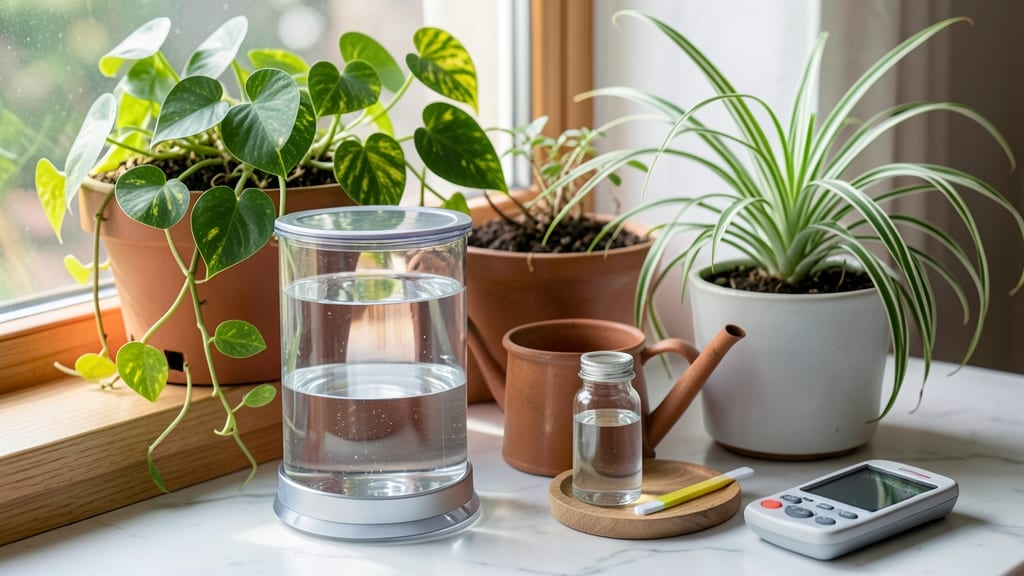
Dehumidifier water is generally good for plants when used carefully, since it contains no chlorine or fluoride but may hold dust, mold spores, or trace minerals from your home's air. Use it sparingly and avoid overwatering to prevent buildup.
This water's safety comes down to what's floating in it—your home's air quality directly affects its contents. 🌱 In dry climates or homes with clean air, the water's often just pure H₂O with minor mineral traces.
But if your space has high humidity or mold issues, those contaminants can end up in your plants' roots. I've found that succulents and hardy houseplants handle it best, while delicate ferns or orchids might react poorly.
Always let the water sit for 24 hours before using it to allow heavier particles to settle.
For extra peace of mind, try this simple test: pour a small amount into a clear glass and leave it overnight. If you see visible particles or cloudiness, it's best to dilute the water with fresh or use it only for non-edible plants.
The key is moderation—think of it as a supplement rather than a primary water source. Many gardeners I know keep a dedicated dehumidifier just for their indoor plants, running it for short cycles to maintain water quality.
💡 In This Article
- Chemical Composition of Dehumidifier Water and Plant Safety
- Best Practices for Watering Plants with Dehumidifier Water
Chemical composition of dehumidifier water and plant safety
Dehumidifier water stands out from tap water because it's collected from the air rather than municipal sources, which means it naturally lacks chlorine and fluoride—the two most common chemical additives in treated water that can harm plants. 🌿 Chlorine, often used to kill bacteria in tap water, can linger in soil and inhibit microbial activity, while fluoride can accumulate in plant tissues over time.
The water you collect from a dehumidifier is essentially distilled in reverse, capturing only what's airborne in your home.
However, what it does contain depends entirely on your indoor environment. In homes with clean air, dehumidifier water may only have trace amounts of minerals like calcium or magnesium—typically less than 10 parts per million (ppm)—which are generally harmless to most plants.
But in spaces with high humidity, dust mites, or mold, you might find microscopic particles like pollen, skin flakes, or even mold spores suspended in the water. These contaminants can clog soil pores over time, reducing aeration and potentially encouraging fungal growth in sensitive plants.
Humidity levels directly impact water quality. In dry climates, dehumidifier water is often purer because there's less moisture to carry contaminants.
But in humid environments—like bathrooms or basements—the collected water can become a breeding ground for airborne microbes. 💧 For example, a dehumidifier running in a laundry room might collect lint fibers and detergent residue, while one in a kitchen could pick up cooking oils and food particles.
Always consider where your dehumidifier operates before using its water for your plants.
To test for contaminants before watering, perform a simple "settling test": pour 1 cup of dehumidifier water into a clear glass and let it sit for 24 hours.
If you notice visible particles at the bottom or cloudiness, it's best to dilute the water with fresh (1:1 ratio) or avoid using it for sensitive plants.
For peace of mind, I recommend running your dehumidifier for 12-24 hours in a clean, well-ventilated area before collecting water for your garden—this helps minimize airborne debris.
Some plants are more resilient to potential contaminants than others. Hardy varieties like snake plants (Sansevieria), pothos (Epipremnum aureum), or spider plants (Chlorophytum comosum) can often tolerate dehumidifier water without issues. 🌱 These plants have evolved to thrive in environments with variable water quality.
On the other hand, delicate tropical plants like ferns or orchids may show signs of stress if exposed to dust-laden water, such as yellowing leaves or slowed growth.
One often-overlooked factor is the pH of dehumidifier water. Since it's collected from air, its pH tends to hover around neutral (6.5-7.5), which is ideal for most houseplants.
However, if your home has acidic or alkaline air (common in areas with volcanic soil or limestone buildings), the water's pH may shift slightly. Always check your soil's pH before assuming the water is safe—some plants, like blueberries or hydrangeas, are extremely sensitive to pH imbalances.