
Planting
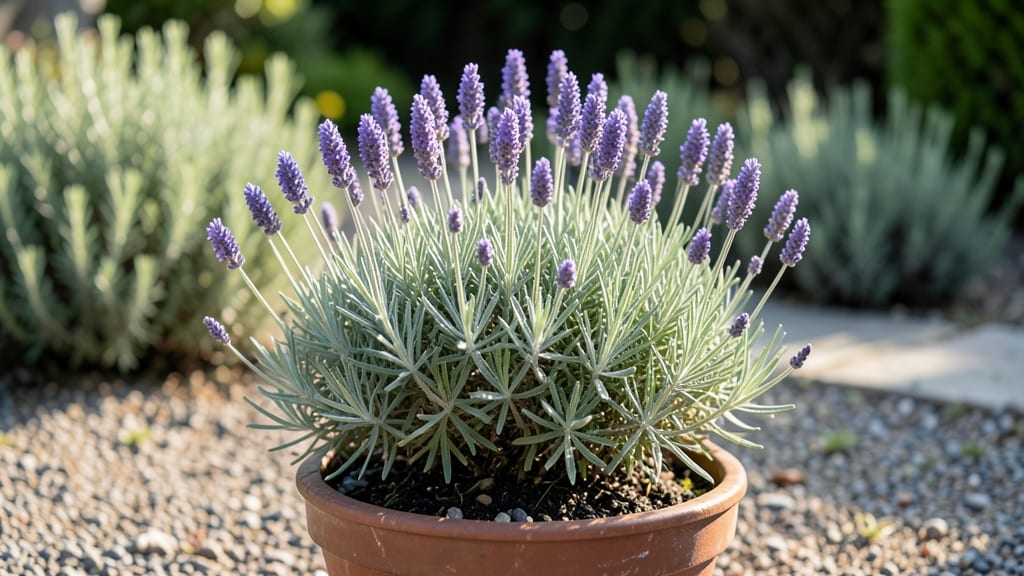
Lavender is a perennial plant in warm climates but behaves as a short-lived perennial or self-seeding annual in colder regions, thriving for 3–5 years with proper care and winter protection.
Lavender's perennial nature depends heavily on your climate. In warmer zones (like USDA 7-9), it establishes deep roots and returns reliably each year, blooming annually for years. 🌿 However, in colder regions (USDA 5-6), the plant often dies back to the ground in winter but resprouts from the base—unless protected.
This explains why many gardeners in northern areas treat it as an annual, even though it's technically a perennial with the right care.
What sets lavender apart is its woody stems and flowering habits. Unlike many perennials, lavender's growth cycle includes a dormant phase where it sheds leaves but maintains its root system. This adaptation allows it to bounce back stronger each season when conditions are right.
The key difference between true perennials and lavender's behavior lies in its cold sensitivity—most perennials survive winter dormancy without protection, while lavender often needs winter mulch or shelter to persist.
💡 In This Article
- Lavender’s Perennial Growth Cycle Explained
- Cold Hardiness Zones for Growing Lavender Long-Term
Lavender’s perennial growth cycle explained
Lavender’s perennial nature stems from its deep, fibrous root system that can extend 3–5 feet underground, anchoring it firmly in well-drained soil. This root structure allows it to store nutrients and moisture during dormancy, a critical survival mechanism in its native Mediterranean climate.
Unlike annuals that complete their life cycle in one season, lavender’s roots persist year after year, enabling regrowth from the base even after above-ground stems die back in winter. 🌱
The plant’s woody stems—characteristic of many perennials—play a key role in its longevity. These stems develop over multiple seasons, becoming thicker and more robust, which helps lavender withstand environmental stresses.
What’s unique is how lavender’s flowering cycle aligns with its dormancy: it blooms in late spring to early summer, then enters a semi-dormant phase in late summer, shedding leaves but maintaining its root system and basal buds. This adaptation ensures it can rebound quickly when conditions improve.
Seasonal regrowth patterns vary by species. English lavender (Lavandula angustifolia), the most cold-hardy variety, typically dies back to the ground in winter but resprouts from its base in spring. French lavender (Lavandula stoechas), however, often struggles in colder climates because its basal buds are less protected.
The key to perennial growth lies in protecting these basal buds—whether through mulch, microclimates, or shelter—during harsh winters. Without this protection, lavender may appear dead but can still recover if the roots remain intact. ✨
In warmer climates (USDA zones 7–9), lavender thrives as a true perennial, blooming annually for 5–10 years with minimal care. The plant’s ability to self-seed also extends its lifespan, as new plants emerge from fallen seeds, ensuring continuity.
However, in colder zones (USDA 5–6), lavender’s perennial nature becomes conditional—it may only survive 2–3 years without winter protection, as freezing temperatures can damage or kill the basal buds.
What most gardeners overlook is how lavender’s growth cycle mirrors its natural Mediterranean habitat. In its native environment, lavender experiences hot, dry summers and mild winters—conditions that trigger dormancy but don’t cause lethal damage.
Replicating this cycle in colder regions requires mimicking these conditions: well-drained soil, full sun, and winter protection. Without these, lavender’s perennial potential is severely limited. 🌿
For example, in zone 5, lavender planted in a south-facing slope with a thick layer of 3–4 inches of mulch (like straw or wood chips) can survive winters and regrow each spring.
In contrast, lavender planted in a low-lying, frost-prone area may succumb to winter kill within 1–2 years, as the roots can’t access the warmth needed to sustain dormancy.