
Watering
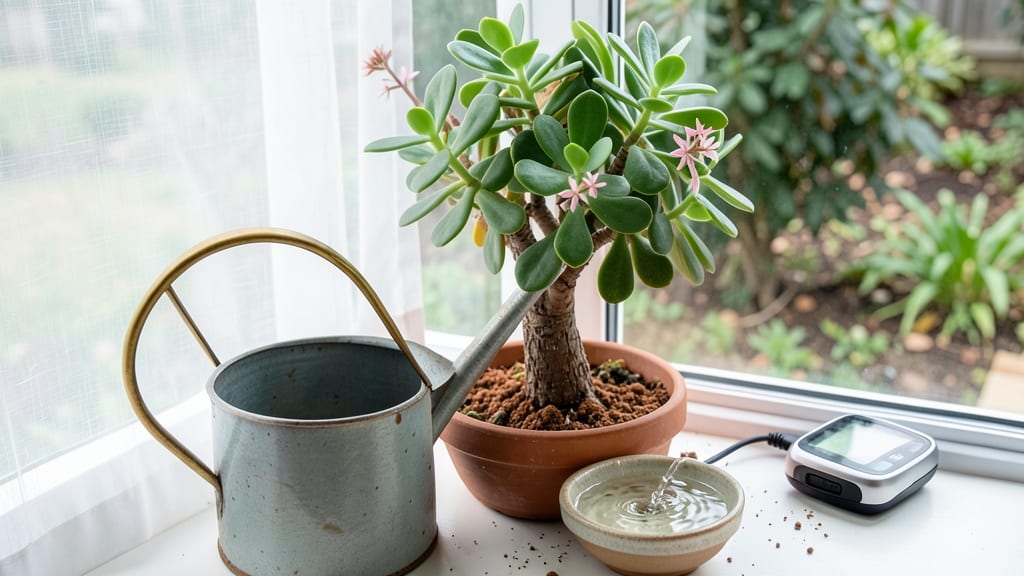
Watering a jade plant 🌿 requires less than you think—just enough to keep the soil barely damp between soakings, or you’ll drown its roots.
Overwatering kills more jade plants than underwatering—but most gardeners still get it wrong. The 1-2 finger test isn’t just folklore; it’s the science-backed secret to keeping your jade plant lush without inviting root rot.
Succulents like the jade plant store water in their thick leaves, so they thrive on neglect more than frequent drinks. Stick your finger an inch deep into the soil: if it feels dry, water thoroughly. If it’s still moist, wait another week.
Here’s how to adjust for seasons, spot trouble early, and keep your jade plant happy with minimal effort—no guesswork required.

How to use the 1-2 finger test for jade plant watering
Jade plants (Crassula ovata) thrive on neglect—but that doesn’t mean they need zero water. The 1-2 finger test is my go-to method for determining when your jade plant needs hydration without risking root rot.
Unlike other succulents, jade plants store water in their thick, plump leaves, but their roots still need time to dry out between waterings. This simple test helps you gauge soil moisture accurately, saving you from guesswork.
Here’s the science behind it: Jade plants prefer well-draining soil that mimics their natural desert habitat. When you stick your finger into the soil, you’re checking the moisture level at the root zone—typically the top 1-2 inches.
This depth ensures you’re not watering just the surface, which can lead to uneven moisture distribution and stress the plant. The test works because jade plants are shallow-rooted, so their roots absorb water from the top layers of soil.
Step-by-Step: The 1-2 Finger Test for Jade Plants
- 1 Wash and dry your fingers thoroughly. Dirty fingers can introduce bacteria or contaminants into the soil, harming your plant’s health.
- 2 Insert your index finger into the soil about 1 inch deep. For larger pots (over 6 inches in diameter), use your middle finger and go 2 inches deep.
- 3 Check for moisture. If your finger feels dry, it’s time to water. If it feels slightly damp but not soggy, wait 1-2 more days before testing again.
- 4 Water thoroughly until water drains from the bottom of the pot. Empty the saucer afterward to prevent root suffocation from sitting water.
- 5 Wait until the topsoil dries before testing again. Jade plants hate wet feet, so always let the soil dry out completely between waterings.
Adjusting for seasonal changes is key. During spring and summer, when your jade plant is actively growing, the soil may dry out faster due to increased sunlight and warmth. In these months, you might need to water every 2-3 weeks, but always confirm with the finger test.
Conversely, in fall and winter, growth slows down, and the plant enters a dormant phase. This is when you’ll water every 4-6 weeks, as the soil retains moisture longer.
Humid climates throw a wrench into the finger test because moisture lingers in the air and soil. If you live in a high-humidity area, reduce your watering frequency by 30-50% and monitor the soil more closely.
A good rule of thumb is to water only when the soil feels completely dry to the touch, even if it’s been a few weeks since your last watering. Humidity can trick you into thinking the soil is dry when it’s not, so trust the finger test over the calendar.
One common mistake is overwatering after repotting. When you move a jade plant to a new container, the soil is already moist from the transplant process. Hold off on watering for 7-10 days to let the roots adjust and the soil settle.
During this time, stick to the finger test to avoid waterlogged soil, which can cause the roots to rot before they even establish themselves in their new home.
If you’re still unsure whether your jade plant needs water, look at its leaves. Healthy jade plant leaves are thick, plump, and vibrant green. If the leaves start to wrinkle or pucker, it’s a clear sign the plant is thirsty.
On the other hand, if the leaves feel soft or mushy, you’ve likely overwatered. The finger test helps you avoid these extremes by giving you a real-time read on soil conditions.
Pro tip: Keep a watering journal to track when you water your jade plant and how the soil feels. Over time, you’ll start to recognize patterns based on your home’s humidity, the size of the pot, and the time of year.
This personal data will fine-tune your finger test skills and help you become a jade plant watering pro. With practice, you’ll water just enough to keep your plant happy without drowning its roots.
Remember, jade plants are forgiving when it comes to underwatering, but they’re not when it comes to overwatering. The 1-2 finger test is your best friend for striking that perfect balance.
Once you master it, you’ll see your jade plant thrive with glossy leaves and robust growth—proof that even the simplest tests can yield the best results.
Jade plant watering schedule by season (with visual guide)
Your jade plant thrives on a seasonal watering rhythm that mirrors its natural drought tolerance. Unlike thirsty houseplants, jade plants store water in their thick leaves—meaning they hate soggy soil.
The key is adjusting your watering frequency by season while keeping soil 60-70% dry between waterings. Let’s break down exactly how often to water based on temperature, sunlight, and growth cycles.
Spring is when your jade plant wakes up from dormancy, so it needs moderate watering every 2-3 weeks. This is also when you’ll see the most new leaf growth. Summer demands the least water—every 3-4 weeks—because high heat forces the plant to conserve moisture.
Fall slows growth, so reduce to every 3-4 weeks again, and winter means minimal watering every 4-6 weeks since the plant is dormant.
Here’s your seasonal watering guide in one easy-to-follow table:
Notice how summer and winter require the least water despite being opposite seasons? That’s because summer’s heat forces the plant to conserve, while winter’s low light triggers dormancy. Always water in the morning to prevent fungal risks from evening moisture.
If your jade plant is in a terracotta pot, it may dry out faster—check soil moisture daily in summer but only weekly in winter.
Pro tip: If your jade plant’s leaves start shrinking, it’s thirsty—but if they’re yellowing or mushy, you’re overwatering. Adjust your schedule based on these visual cues rather than sticking rigidly to the chart.
Humidity also plays a role: in humid climates, reduce watering by 25% to prevent root rot.
Remember, jade plants are succulents, not tropicals. They’d rather thrive on neglect than drown in kindness. Stick to this schedule, and your jade plant will reward you with thick, glossy leaves for years to come. 🌱