
Watering
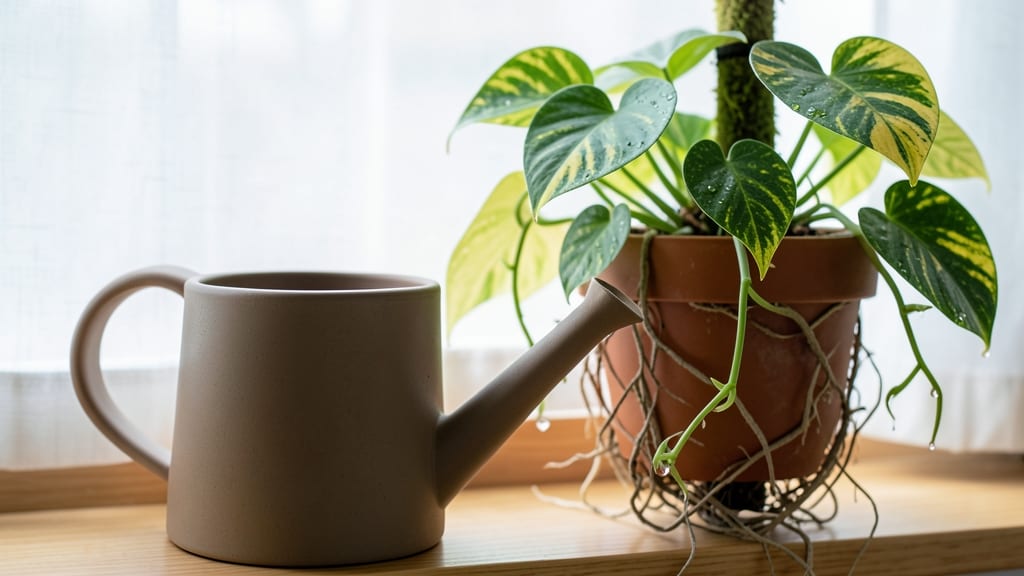
Watering a money plant 💰 the right amount keeps its leaves vibrant and prevents root rot, but most people get this step wrong by either drowning or starving their plant.
If you’ve ever watched your money plant’s leaves turn crispy at the edges or droop like a sad noodle, you’re not alone. The secret isn’t complicated—it’s about letting the soil dry out between waterings, but not so much that the roots scream for help.
Here’s the game-changer: a simple 2-week dry test that tells you exactly when to water, whether you’re dealing with a dry indoor air or a humid bathroom corner. No more guessing, just thriving leaves.
Below, I’ll walk you through how to read your plant’s signals, adjust for seasonal changes, and fix common watering mistakes before they turn your money plant into a sad, brown mess.

The 2-Week dry test: how much water does a money plant really need?
Money plants (Epipremnum aureum) are famously resilient, but even these hardy vines need the right balance of moisture. The 2-week dry test is a foolproof method to determine when your plant truly needs water—without risking root rot or dehydration.
Unlike thirsty annuals, money plants store water in their thick stems, allowing them to survive drought-like conditions for extended periods.
Most gardeners overestimate how often money plants need water. A common mistake is watering every 5-7 days, which can drown roots in pots without drainage.
Instead, we’ve found that letting the top 2-3 inches of soil dry out between waterings mimics their natural tropical understory habitat—where they grow on trees and receive sporadic rainfall.
| Condition | Signs | Solution |
|---|---|---|
| Overwatering | Yellow leaves, mushy stems, foul odor | Stop watering, repot in fresh well-draining mix |
| Underwatering | Dry, crispy leaf edges, slow growth | Water deeply until drainage exits bottom of pot |
| Ideal Moisture | Top 2-3" soil dry to touch | Water every 10-14 days (adjust for climate) |
To implement the test, start by watering your money plant thoroughly until water runs out the drainage holes. Then, wait 14 days before checking soil moisture with your finger.
If the top 2-3 inches feel dry, it’s time to water again. This method eliminates guesswork by relying on the plant’s natural water storage capacity.
One common misconception is that larger pots require more frequent watering. In reality, bigger containers hold moisture longer, so you’ll need to extend the dry period to 3-4 weeks for pots over 12 inches in diameter.
Always use a pot with drainage holes—even if you’re watering sparingly—to prevent root suffocation.
Signs of overwatering often appear first on older leaves, which turn yellow and droop. For underwatering, new growth may appear stunted or develop brown, crispy tips. Both issues can be reversed by adjusting your watering schedule, but root rot from overwatering is far more dangerous and requires immediate action.
Indoor humidity plays a critical role in watering needs. If your home has dry air (common with central heating), your money plant will need water slightly more often—every 10-12 days—because moisture evaporates faster. Place a humidity tray nearby or mist leaves lightly to mimic tropical conditions without overwatering.
Outdoor money plants in summer may need water every 5-7 days due to higher evaporation rates, but they still benefit from the 2-week test. Simply adjust your schedule based on how quickly the soil dries. In winter, reduce watering to every 3-4 weeks as growth slows dramatically.
Pro tip: Use a moisture meter for accuracy, especially if you’re new to this method. Insert the probe into the soil (not touching the pot) to get precise readings. Most money plants thrive with soil moisture readings between 40-60% humidity, indicating they’re ready for another drink.
Remember, money plants are survivors. They’ll forgive occasional underwatering but won’t recover easily from soggy roots. By mastering the 2-week dry test, you’ll give your plant the perfect balance of care—leading to lush, vibrant growth for years to come. 🌱
Adjusting water for seasonal changes: summer vs. winter money plant care
Your money plant thrives on consistency, but seasonal shifts demand smart adjustments. During summer months, higher temperatures and humidity changes mean watering every 5-7 days—but only when the top 1-2 inches of soil feel dry.
In winter, growth slows dramatically, so reduce watering to every 3-4 weeks to prevent root rot from sitting moisture.
Indoor plants face unique challenges since central heating dries out air faster than outdoor humidity. Place a pebble tray under the pot or use a hygrometer to monitor humidity levels—aim for 40-60% year-round.
Outdoor money plants in containers dry out quicker than in-ground plants, so check soil moisture daily during heatwaves.
Watch for environmental cues like drooping leaves or crispy edges—these signal your watering schedule needs adjustment. In summer heat, water thoroughly until it drains from the bottom, but avoid soggy soil.
For winter care, let the soil dry completely between waterings, as cold air reduces evaporation and slows root activity.
Pro tip: Use a moisture meter for precise readings, especially in low-humidity indoor spaces. If your money plant develops yellow leaves in winter, it’s likely overwatered—reduce frequency immediately. For outdoor plants, move them to a sheltered spot before first frost to prevent cold damage.
Remember, money plants are drought-tolerant—they’d rather go thirsty than drown. Stick to this seasonal guide, and your lush green foliage will reward you year-round. 💧🌿
For extra peace of mind, keep a watering journal noting dates, soil conditions, and leaf responses. This helps you fine-tune care based on your specific microclimate—whether it’s a sunny south-facing window or a dim corner. 📝☀️