
Watering
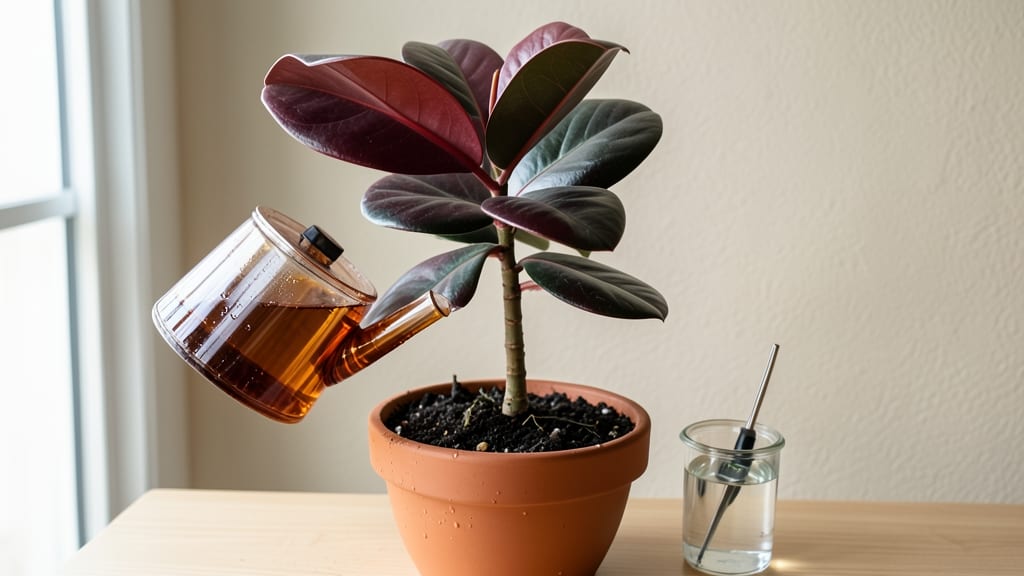
Watering a rubber plant properly means giving it just the right amount of water—enough to keep the soil slightly moist but never soggy, which is where most plant owners go wrong.
Overwatering kills rubber plants faster than underwatering—yet most gardeners get this critical balance wrong, leading to yellow leaves, mushy stems, and root rot. This guide reveals the exact 4-week schedule that keeps your rubber plant thriving without a single guess.
Why does this matter? Because rubber plants are tough but not invincible. Too much water drowns their roots, while too little leaves them wilting and brittle. The key is understanding how often to water based on your home’s humidity, pot size, and even the season.
Here’s what you’ll learn: the science-backed intervals for spring, summer, fall, and winter, plus how to tell when your plant is thirsty (or drowning) and how to fix it fast.

How often to water a rubber plant: the 4-Week schedule by season
Rubber plants (Ficus elastica) are tough survivors, but even they struggle when watered incorrectly. I’ve learned the hard way that sticking to a rigid schedule—like watering every Sunday—leads to disaster.
Instead, we use the 3-2-1 rule: Wait until the top 3 inches of soil are dry, check the 2-inch layer with your finger, and water only when it’s bone-dry down to 1 inch. This method keeps roots happy without drowning them.
The biggest mistake I see? Gardeners water based on calendar days instead of soil conditions. Rubber plants in 6-inch pots dry out faster than those in 12-inch containers, and humidity levels shift with seasons.
That’s why I’ve broken down a 4-week watering schedule tailored to your climate zone and plant’s needs. Let’s dive into the science-backed approach that’s saved my rubber plants from root rot.
⚠️ NON-NEGOTIABLE: Always use a pot with drainage holes. Without them, even the best schedule fails. If your rubber plant is in a cache pot (decorative outer pot), ensure the inner pot has holes and lift it to check moisture.
Spring is the most critical season for rubber plants because that’s when they rebound from winter dormancy. I water mine every 7-10 days but always check the soil first. Stick your finger 2 inches deep—if it’s dry, water thoroughly until liquid drains from the bottom.
If your plant is in a terracotta pot, it’ll dry out faster than plastic, so adjust accordingly.
During summer heatwaves, rubber plants slow their growth to conserve water. That’s why I extend the interval to 10-14 days and focus on deep watering. The key is to avoid surface moisture: Light sprinkles encourage fungal growth.
Instead, water until the soil is saturated 3 inches down, then let excess drain completely. Pro tip: Place the pot on a drip tray to catch runoff.
Fall signals the start of dormancy for rubber plants. I cut back to every 2-3 weeks and reduce water volume by half. The plant’s growth rate drops, so it needs less hydration.
Watch for yellowing leaves—this is often a sign of overwatering in cooler months. If you notice this, hold off on watering until the soil is completely dry.
Winter is the easiest season for rubber plants because they enter dormancy. I water mine only when the top 4 inches of soil are bone-dry, which usually means every 3-4 weeks.
Instead of deep watering, I lightly mist the leaves to maintain humidity. Overwatering in winter is a common killer because cold soil can’t absorb moisture efficiently, leading to root rot.
Here’s my fail-proof test for soil moisture: Grab a handful of soil and squeeze it. If it holds its shape, it’s too wet. If it crumbles easily, it’s ready for water.
This tactile check beats guessing every time. I’ve saved multiple rubber plants by trusting my fingers over a calendar.
One more tip: If your rubber plant is in a low-light area, it’ll need water less often than one basking in bright indirect light. Adjust your schedule based on your plant’s location and pot size.
A 1-gallon pot holds moisture longer than a 4-inch pot, so scale your watering accordingly.
Remember, rubber plants are forgiving, but they won’t recover from chronic overwatering. If you’re unsure, underwater slightly—your plant will thank you with glossy leaves and steady growth. Now grab that finger and check your soil—your rubber plant’s health depends on it! 🌿
5 Signs your rubber plant is getting too much (or too little) water
Your rubber plant (Ficus elastica) is a resilient houseplant, but it sends clear signals when its water needs are off. The most common mistake? Overwatering, which causes root rot and yellow leaves.
But underwatering can also stress your plant, leading to crispy edges and drooping foliage. The key is learning these 5 visual cues to adjust your watering routine before damage becomes permanent.
First, check the soil moisture by sticking your finger 1-2 inches deep. If it feels damp, hold off on watering—your rubber plant may already have too much.
But if the soil is bone-dry, it’s time to hydrate. Visual signs like leaf color, stem texture, and overall plant shape will help you diagnose the issue quickly. Let’s break down the overwatering vs. underwatering symptoms so you can act fast.
Lower leaves turn yellow first, often with brown edges. This is a classic sign of root rot from excess moisture.
Stems feel soft or squishy when pressed. This indicates severe overwatering and requires immediate action.
A sour or rotten odor from the soil means bacteria or fungus is thriving due to overwatering.
New leaves are small or growth stalls entirely. Root rot steals nutrients from the plant.
Leaves wilt and don’t bounce back when watered. This is a classic sign of thirst.
Brown, dry edges on leaves indicate severe dehydration. Act fast to revive the plant.
The soil shrinks and cracks as it dries out. This is a clear sign your rubber plant needs water.
Leaves lose their glossy finish and appear dull. This is an early warning of underwatering.
If you spot overwatering signs, stop watering immediately and let the soil dry out completely. Repot your rubber plant in fresh, well-draining soil to prevent further rot. For underwatered plants, give it a deep watering until water drains from the bottom of the pot.
After that, adjust your schedule to water every 7-14 days, depending on humidity and light levels.
To reverse damage, trim any mushy or blackened stems with clean scissors, and remove yellow leaves to redirect energy to healthy growth. For crispy or drooping leaves, place the plant in a humid environment (like a bathroom or near a pebble tray) and water thoroughly.
Most rubber plants bounce back within 2-4 weeks with proper care.
Pro tip: Use a moisture meter or the finger test to avoid guessing. Water only when the top 1-2 inches of soil are dry. This simple habit will keep your rubber plant thriving year-round. 🌿