
Planting
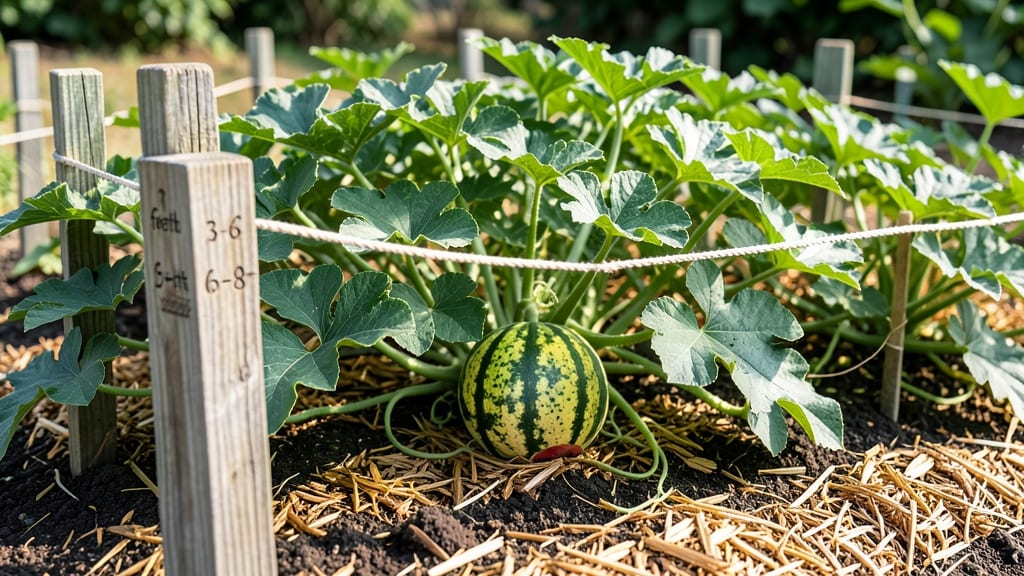
Proper spacing for watermelon is the secret to juicy, abundant harvests 🍉—and most gardeners either crowd their plants or give them too much room.
Watermelon vines can sprawl 10 to 20 feet in a single season, so squeezing them into tight rows guarantees stunted growth, powdery mildew, and fewer fruits. But with the right distances—whether you're growing dwarf varieties or sprawling heirlooms—you’ll avoid competition for nutrients, improve airflow, and make harvesting a breeze.
Below, I break down the exact spacing rules for every variety size, plus how to tweak them for containers, trellises, or small spaces. You’ll also learn the three most common spacing mistakes that slash yields—and how to fix them before it’s too late.
Ready to plan your highest-yielding watermelon patch yet? Let’s get started with the spacing science that actually works.
Watermelon spacing guidelines by variety size (with visual reference chart)
Watermelon vines can sprawl 10 to 20 feet in a single season, so proper spacing for watermelon is critical for healthy growth and high yields.
The key lies in balancing vine spread with row spacing—crowd plants too closely, and you’ll face powdery mildew, poor fruit development, and competitive root systems. But with the right planting distances, you’ll create an environment where each vine thrives without stealing resources from its neighbors.
Most gardeners focus only on plant-to-plant spacing, but row spacing matters just as much. For example, dwarf varieties like Sugar Baby need 3-foot rows, while standard varieties like Crimson Sweet demand 6-foot rows to prevent shading and improve airflow.
Below, I’ve broken down the ideal watermelon spacing by variety size and included a visual reference chart to help you plan your garden layout.
Why spacing matters: Proper spacing ensures optimal sunlight exposure, reduces disease pressure, and allows roots to access nutrients without competition. For instance, Charleston Gray vines can spread 15 feet—planting them 6 feet apart in 8-foot rows gives them room to thrive while keeping maintenance manageable. Skimp on space, and you’ll end up with smaller fruits and more weeds.
Visual reference chart: Below is a comparison of popular watermelon varieties, their ideal plant spacing, vine spread, and row spacing to help you visualize the best layout for your garden. Use this as a starting point, then adjust based on your garden size or container limitations.
| Variety | Type | Plant Spacing | Vine Spread | Row Spacing | Yield Potential |
|---|---|---|---|---|---|
| Sugar Baby | Dwarf | 2–3 feet | 3–6 feet | 3–4 feet | 1–2 fruits/plant |
| Black Diamond | Semi-Dwarf | 3–4 feet | 6–10 feet | 4–5 feet | 2–3 fruits/plant |
| Crimson Sweet | Standard | 4–6 feet | 10–15 feet | 6–8 feet | 3–5 fruits/plant |
| Charleston Gray | Standard | 5–6 feet | 12–18 feet | 8 feet | 4–6 fruits/plant |
| Moon and Stars | Heirloom | 6 feet | 15–20 feet | 8–10 feet | 5–8 fruits/plant |
For small gardens or container growing, opt for dwarf varieties like Sugar Baby, which thrive in 5-gallon pots with 2–3 feet of spacing between plants. If you’re growing standard varieties
How to adjust spacing for different growing conditions (climate, soil, containers)
Your watermelon spacing needs to adapt based on where and how you grow them. In hot, dry climates like Arizona, you’ll need wider spacing to prevent soil-borne diseases from spreading quickly.
Meanwhile, in humid regions like Florida, closer spacing can work if you prioritize airflow with trellises or raised beds. The key is balancing vine spread with your environment’s challenges.
For containers or small gardens, dwarf varieties like Sugar Baby thrive with just 2-3 feet between plants, but even then, you’ll need to prune aggressively. Standard varieties demand 5-6 feet in-ground, but in containers, you might only fit 1-2 plants per 5-gallon pot.
Always check your variety’s mature vine length—this determines your spacing baseline.
Poor soil or rocky terrain? Wider spacing (up to 8 feet) gives roots room to explore deeper for nutrients. Amend the soil with compost or aged manure to compensate, but never sacrifice airflow.
In heavy clay soils, raised beds with 4-foot spacing can work wonders, improving drainage while keeping vines from competing for space.
🌱 Watermelon Spacing Adjustments by Condition
| Condition | Standard Spacing | Adjusted Spacing | Why It Works |
|---|---|---|---|
| Hot/Dry Climate | 5-6 ft | 6-8 ft | Reduces fungal risk from high heat |
| Humid Climate | 5-6 ft | 4-5 ft + trellis | Improves airflow to prevent mildew |
| Containers | N/A | 1 plant per 5-gal pot | Limits root competition in small space |
| Poor Soil | 5-6 ft | 7-8 ft | Gives roots more exploration room |
If you’re trellising watermelons, you can cut spacing by 30-50% because vines grow vertically instead of sprawling. Use strong trellis supports (like A-frame structures) for varieties like Black Diamond, which can handle the weight.
Just remember: even trellised vines need 3-4 feet of space between plants to avoid shading each other.
In urban gardens or rooftops, consider vertical towers or hanging baskets for dwarf varieties. Space plants 18-24 inches apart in a 5-foot-wide raised bed, and use reflective mulch (like silver plastic) to maximize sunlight.
This setup works surprisingly well for Sugar Baby or Tiny Tim watermelons, yielding 2-3 fruits per plant with minimal space.
Pro tip: Always thin seedlings to your adjusted spacing plan within 2-3 weeks of germination. This prevents overcrowding early on and sets your plants up for success.
Monitor vine growth weekly—if leaves start touching, it’s time to prune or space out further. Your watermelon’s health (and your harvest) depends on it! 🌿