
Watering
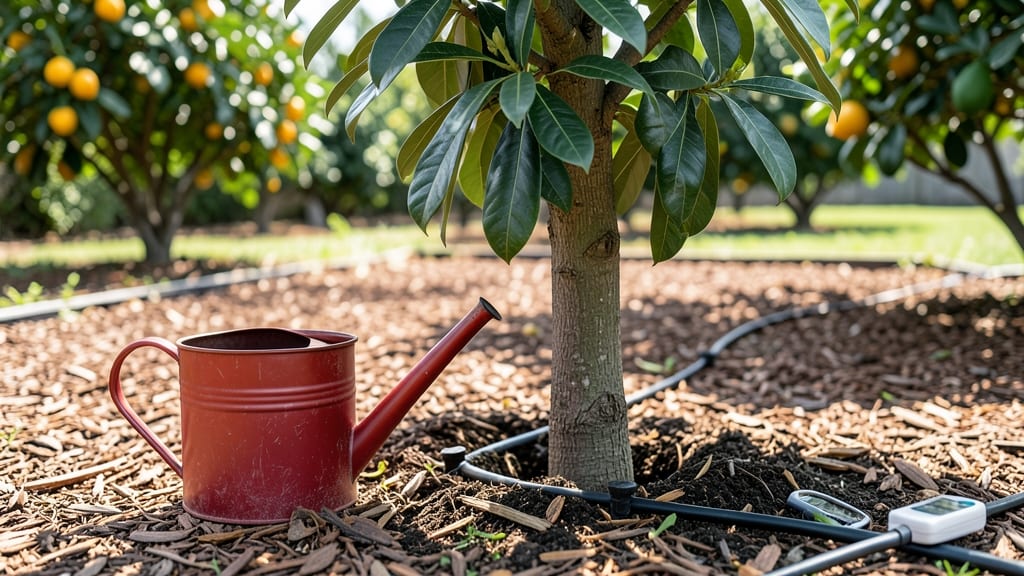
Watering an avocado tree 🥑 correctly is the difference between a lush, fruit-bearing giant and a sad, wilted stump.
You’ve probably heard that avocados need lots of water—but pour too much, and you’ll drown the roots; too little, and the tree will struggle to grow. The secret? A simple soil dry test that tells you exactly when to water, no guesswork required.
In Zone 6, where frost lingers until April, young trees need deep, infrequent watering to establish strong roots, while mature trees can handle drought better once they’re past their first decade.
I’ll walk you through the exact method, seasonal tweaks, and how to spot the warning signs before it’s too late.
By the end, you’ll know not just how much to water, but when and why—so your avocado tree thrives instead of fights for survival.


How to perform the soil dry test for avocado trees
Avocado trees need consistent moisture to grow strong roots and produce fruit, but checking soil moisture can feel tricky. The soil dry test is my go-to method—it’s simple, accurate, and saves your tree from root rot or drought stress.
Unlike guesswork, this test tells you exactly when to water based on your tree’s needs and soil type. For young trees, I check every 3-5 days, while mature trees only need testing once a week in summer. Let’s dive into the steps so you can master this essential skill.
Start by understanding your soil type—clay holds moisture longer than sandy soil, so adjustments are key. Clay soils may need watering every 10 days, while sandy soils dry out faster, requiring checks every 5-7 days.
Use a trowel or garden fork to dig a small hole near the tree’s drip line (the outer edge of the canopy). This is where the most active roots live.
For young trees, test 2-3 inches deep, and for mature trees, go 4-6 inches deep—this matches their root zone depth.
Visual cues can back up your finger test. Look for wilting leaves or yellowing edges—these are signs of underwatering. On the flip side, mushy soil or fungal growth at the base of the trunk means you’re overwatering.
For container-grown avocados, I weigh the pot: if it feels light, it’s dry and needs water. Mulch helps retain moisture, so apply a 3-inch layer of organic mulch (like wood chips) around the base, keeping it 6 inches away from the trunk.
Young avocado trees have shallow root systems, so they dry out faster than mature trees. I test their soil every 3-5 days in summer and reduce to weekly checks in cooler months.
Mature trees, with their deep roots, can go longer between waterings—7-10 days in summer and bi-weekly in fall. Pro tip: If your tree is in clay soil, it may need watering less frequently because clay retains moisture.
Sandy soil, however, drains quickly, so you’ll need to water more often.
Seasonal changes drastically affect watering needs. During spring and summer, avocado trees are in their growth phase, so I water deeply every 5-7 days. In fall, as temperatures drop, I cut back to bi-weekly waterings.
Winter is the dormant period, so I only water monthly unless we’re in a drought-prone area. Always water in the early morning to reduce evaporation and fungal risks. Avoid evening watering—wet foliage overnight can lead to root rot or leaf diseases.
If you’re in a drought-prone region, like California or Arizona, your avocado tree will need extra attention. I’ve seen trees suffer in Zone 9-10 when gardeners don’t adjust for extreme heat. In these areas, test soil daily during heatwaves and water deeply every 3-4 days.
For container-grown avocados, I use self-watering pots or bury the container half-way in the ground to mimic natural moisture retention. This trick helps roots stay hydrated longer.
Over time, you’ll develop a feel for your tree’s needs. Keep a watering journal to track when you water and how the soil feels. Note any changes in leaf color, fruit production, or growth rate—these are clues about whether you’re watering correctly.
For example, if your tree’s leaves turn yellow and drop, it might be overwatered. But if they curl and feel crispy, it’s likely underwatered. Adjust your soil dry test frequency based on these observations.
Remember, the goal is to keep the soil <
Common watering mistakes that kill avocado trees (and how to Fix them)
Avocado trees are surprisingly sensitive to watering mistakes—overwatering or underwatering can both lead to root rot or drought stress. I’ve seen even experienced gardeners accidentally kill their trees by making these five critical errors, and I’m here to help you avoid them.
The key is understanding your tree’s water needs by season and adjusting your approach accordingly.
First, let’s address the most common mistake: shallow watering. Many gardeners assume a quick sprinkle is enough, but avocado trees need deep, infrequent watering to encourage strong root growth.
Their roots can extend 6 feet deep in mature trees, so surface watering only wets the top layer, leaving deeper roots thirsty. Always water until moisture reaches 12-18 inches deep for young trees and 24+ inches for mature ones.
⚠️ callout warning ⚠️
Avocado trees enter dormancy in winter (Zone 6 and colder), slowing water uptake. Overwatering during this period suffocates roots and causes fungal diseases. Reduce watering to once every 4-6 weeks unless your soil is bone-dry. Always check with the soil dry test before watering!
💡 Fix: Mulch with 3-4 inches of organic mulch (wood chips or straw) to retain moisture and regulate soil temperature.
Another frequent error is inconsistent watering schedules. Avocado trees hate boom-and-bust cycles—alternating between drought and sudden soaking. Stick to a predictable deep-watering routine, adjusting only for rainfall or extreme heat.
For example, in summer, water every 5-7 days, but in spring/fall, extend to 7-10 days. Use a moisture meter or the finger test (insert your finger 3 inches deep—if dry, water).
Overwatering in containers is a silent killer for potted avocado trees. Small pots dry out faster, but gardeners often assume they need more water. Instead, container-grown avocados require daily checks—stick your finger 2 inches deep, and water only if the soil feels dry. Upgrade to larger pots (15+ gallons) for mature trees and ensure drainage holes are present to prevent root rot.
Let’s talk about mulching mistakes. While mulch helps retain moisture, piling it against the trunk (volcano mulching) traps moisture and invites pests like termites. Instead, create a 3-inch mulch ring around the drip line (outer edge of the canopy), keeping it 6 inches away from the trunk.
Use organic mulch (like pine bark or straw) to improve soil structure over time. In hot climates, mulch also reduces evaporation by 30%, cutting your water needs significantly.
Finally, ignoring climate adjustments leads to stressed trees. In drought-prone areas, avocado trees need drip irrigation or soaker hoses to deliver water slowly and deeply. If you’re in a humid climate, water early in the morning (before 10 AM) to prevent fungal diseases like root rot.
For Zone 6 gardeners, protect young trees with burlap wraps in winter to shield roots from freeze-thaw cycles, which disrupt water absorption.