
Shrubs
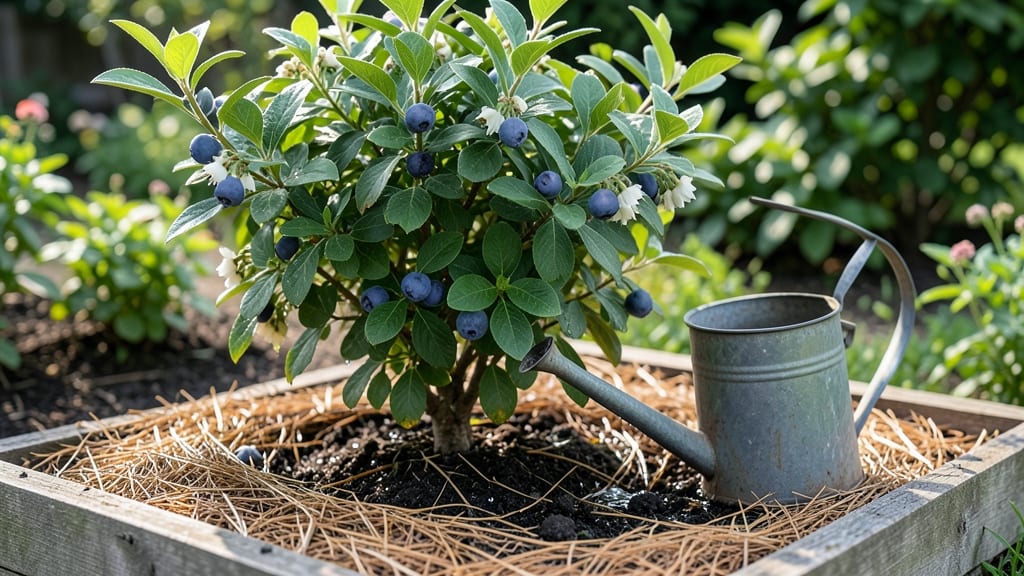
Watering blueberry bushes the right way is the key to those sweet, plump berries you crave — too much or too little, and you’ll end up with bitter fruit or stressed plants.
Struggling to get your 🫐 bushes to thrive? The secret often lies in how—and how often—you water them. Get the depth and frequency wrong, and you’ll end up with bitter fruit or even dead plants.
Blueberries need consistent moisture, especially during fruiting, but they hate soggy roots. A deep soak twice a week in summer keeps them happy, while winter dormancy means cutting back to just a monthly drink.
In this guide, I’ll break down the exact watering schedule by season, the best methods (drip irrigation vs. soaker hoses), and how to spot the signs of over- or underwatering before it’s too late.


Optimal watering depth for blueberry bushes: how deep should you go?
Blueberry bushes thrive when their roots receive consistent moisture—but not too much or too little. The key to juicy berries lies in watering deep enough to reach the root zone, typically 6 to 12 inches below the soil surface.
Shallow watering only wets the top layer, leaving deeper roots thirsty and stressing your plant. Think of it like giving your bush a long drink instead of quick sips.
Most gardeners mistakenly water blueberries too lightly, assuming frequent shallow sessions keep roots happy. In reality, this creates shallow root systems and weak plants that struggle during hot summers.
The goal is to saturate the soil so water reaches 6–12 inches deep, encouraging roots to grow downward where moisture and nutrients are abundant.
A moisture meter or simple finger test can help you gauge depth. Stick your finger 2 inches into the soil—if it feels dry, water again. For deeper checks, use a soil probe or screwdriver to verify moisture at 6 inches.
Aim for soil that feels damp but not soggy, like a wrung-out sponge.
Why depth matters: Blueberry roots need oxygen and nutrients from deeper soil layers. Shallow watering forces roots to compete near the surface, where they’re more prone to drought stress or fungal diseases from sitting in damp conditions. Proper depth ensures roots access water, nutrients, and air—the trifecta for healthy growth.
Young blueberry bushes (under 2 years old) need more frequent but shallower watering (4–6 inches deep) to establish roots. Mature bushes, however, demand deep, infrequent watering to strengthen their taproot systems. This mimics natural rainfall patterns and reduces waste.
Soil type affects depth: Sandy soil drains quickly, so you may need to water more often but deeper (up to 12 inches). Clay soil holds moisture longer, requiring less frequent but still deep watering (6–8 inches). Always adjust based on your soil’s drainage rate and moisture retention.
| Factor | Optimal Depth | Tools to Measure |
|---|---|---|
| Young Bushes (<2 years) | 4–6 inches | Finger test, trowel |
| Mature Bushes (2+ years) | 6–12 inches | Soil probe, screwdriver |
| Sandy Soil | Up to 12 inches | Moisture meter |
| Clay Soil | 6–8 inches | Finger test |
| Container-Grown | Entire root ball | Water until drainage |
Pro tip: Use a soaker hose or drip irrigation to deliver water slowly and deeply. These methods reduce runoff and ensure moisture penetrates the root zone without wetting leaves (which can cause fungal diseases). Avoid overhead sprinklers—they waste water and promote powdery mildew on blueberry foliage.
Signs of improper depth: Wilting leaves despite "wet" soil? That’s a shallow watering red flag. Yellowing leaves or cracked fruit? You might be overwatering shallowly, causing root suffocation. Adjust your depth and frequency based on these clues, and your bushes will reward you with bigger, sweeter berries.
Morning watering is ideal—it gives roots all day to absorb moisture before evening evaporation. Pair deep watering with 2–3 inches of mulch (like pine straw or wood chips) to lock in moisture and regulate soil temperature. This combo keeps your blueberries hydrated, healthy, and productive all season.
Best watering frequency by season: a month-by-month guide
Blueberry bushes thrive on a consistent watering schedule that adapts to their growth stages and seasonal needs. Unlike many plants, blueberries demand steady moisture—especially during fruit production—but they hate soggy roots.
The key is balancing frequency with depth, while accounting for your soil type and whether your bushes are in containers or planted in-ground.
I’ve grown blueberries in both clay-heavy soil and sandy loam, and the biggest lesson? Clay holds moisture longer, while sandy soil dries out fast.
Containers, meanwhile, need daily checks in summer heat. Let’s break down the perfect watering rhythm for each season to keep your bushes happy—and your berries sweet.
- 🌱 Spring (March–May): Water 1–2 times per week (deeper in clay, more often in sand). Focus on root establishment—avoid waterlogging.
- ☀️ Summer (June–August): Every 2–3 days (daily in containers). Critical for fruit development—morning watering prevents fungal issues.
- 🍂 Fall (September–November): Reduce to bi-weekly as growth slows. Prioritize root hardening before winter.
- ❄️ Winter (December–February): Water monthly if soil is bone-dry. Dormant bushes need minimal moisture to prevent rot.
In spring, your blueberries are waking up from dormancy and need gentle encouragement. I start with weekly deep waterings (about 1–2 gallons per bush) to encourage root growth.
If your soil is sandy, you might need to water twice a week, while clay soil can hold moisture longer. Mulch heavily with pine needles or wood chips to retain moisture and acidify the soil naturally.
When summer hits, this is when your bushes really drink. I water mine every 2–3 days, always in the early morning to reduce evaporation and fungal risks.
Containers dry out faster, so I check them daily during heatwaves. Overhead watering can spread disease, so I use a soaker hose or drip irrigation to deliver water directly to the roots.
As fall approaches, I taper back to bi-weekly waterings. This helps the plant harden off before winter. I also avoid late-season fertilizing, which can stimulate tender new growth that won’t survive frost.
If your bushes are in containers, move them to a sheltered spot and water lightly every 10–14 days unless the soil is completely dry.
Winter is all about patience. Blueberries are dormant, so I only water if the soil is bone-dry—usually once a month. Overwatering in winter can lead to root rot, especially in clay soil.
I also avoid heavy mulch in freezing climates, as it can insulate the roots too much and cause thawing issues.
Remember, consistency is key. Skipping watering one week can stress your bushes, leading to smaller berries or even cracked fruit. Use a rain gauge to track rainfall and adjust your schedule accordingly.
With the right rhythm, your blueberries will reward you with bountiful, juicy harvests for years to come. 🫐