
Companion Plants
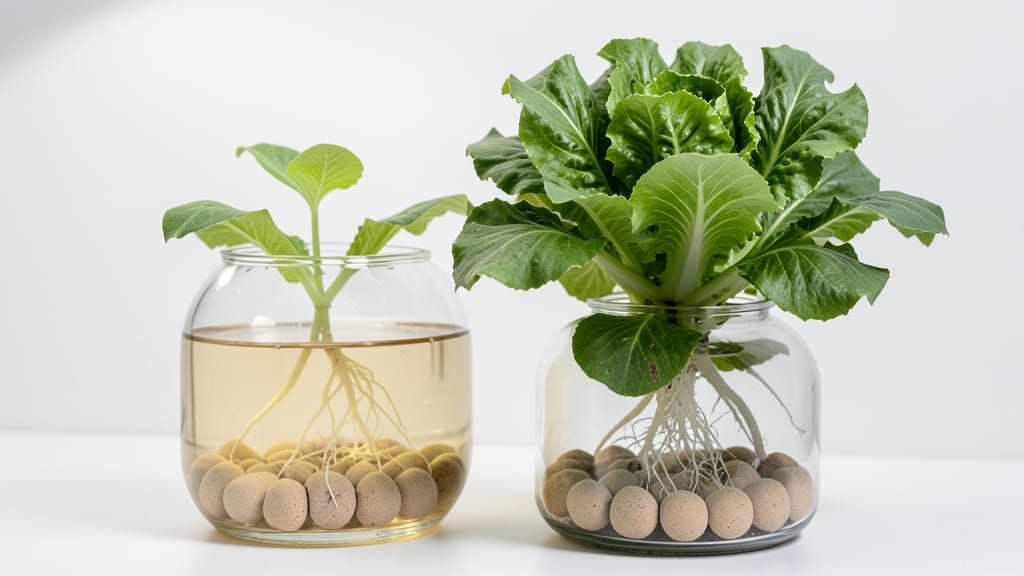
When you grow plants in water instead of soil, it's called hydroponics—a method where roots absorb nutrients directly from a water-based solution, leading to faster growth and higher yields.
This soil-free technique has been used for centuries, but modern systems make it accessible for home gardeners. 🌱 Hydroponics works by providing roots with oxygen and precisely balanced nutrients, which eliminates soil-borne diseases and reduces water usage by up to 90% compared to traditional gardening.
Many beginners start with simple setups like deep water culture or nutrient film technique, which require minimal equipment but deliver impressive results.
One of the biggest advantages is the ability to grow plants year-round, regardless of outdoor conditions. For example, leafy greens like lettuce and herbs such as basil thrive in hydroponic systems, producing harvests in just a few weeks.
The controlled environment also allows growers to optimize light, temperature, and nutrient levels for maximum plant health.
💡 In This Article
- How Hydroponics Works: Nutrient Delivery Systems Explained
- Best Plants for Hydroponic Gardening: Beginners’ Guide
How hydroponics works: nutrient delivery systems explained
Hydroponics replaces traditional soil with nutrient-rich water solutions that deliver essential minerals directly to plant roots. The core mechanism involves two critical components: oxygen and precisely balanced nutrients. Unlike soil, which can become compacted and limit oxygen flow, hydroponic systems actively aerate the water, allowing roots to breathe freely.
This oxygenation creates an ideal environment for root growth, which can expand up to 10 times faster than in soil, leading to more robust plants.
There are several hydroponic systems, each with unique ways of delivering nutrients. The most beginner-friendly is deep water culture (DWC), where plant roots dangle in a nutrient solution.
Another popular method is the nutrient film technique (NFT), where a thin film of nutrient solution continuously flows over roots in a sloped channel. For advanced setups, aeroponics mists nutrient solution directly onto roots, maximizing oxygen exposure.
Each system maintains a pH of 5.5-6.5, which is crucial for nutrient absorption—outside this range, plants struggle to uptake essential minerals like nitrogen or phosphorus.
The efficiency of hydroponics comes from its closed-loop design. Water usage drops by up to 90% compared to soil gardening because the system recirculates the nutrient solution. This also eliminates soil-borne pathogens, reducing the need for pesticides.
For example, a 5-gallon DWC bucket can grow 3-4 basil plants with just 1-2 gallons of water per week, while a soil garden would require 10-15 gallons to achieve similar yields.
The controlled environment also lets growers fine-tune conditions, such as adjusting light cycles for faster flowering in plants like tomatoes.
One common misconception is that hydroponics requires complex equipment. While advanced systems use pumps and timers, beginners can start with a $20-30 kit using a simple DWC bucket, air stone, and basic nutrients. The key is understanding that roots need both oxygen and nutrients—without either, plants will suffer.
For instance, if the air pump fails in a DWC system, roots will suffocate within 24-48 hours, even if nutrients are present. This is why most systems include backup power solutions or manual aeration methods.
Hydroponics also changes how plants grow structurally. Without soil resistance, roots develop differently, often growing denser and more fibrous. This root structure improves nutrient uptake efficiency by 20-30% compared to soil-grown plants.
For leafy greens like lettuce, this means faster regrowth after harvesting—cutting outer leaves stimulates new growth in just 2-3 weeks, whereas soil-grown lettuce may take 4-6 weeks. The controlled environment also eliminates weather-related stress, allowing consistent harvests regardless of seasonal changes.
To visualize the difference, imagine growing basil in soil versus hydroponics. In soil, roots spread horizontally, competing for space and nutrients. In hydroponics, roots grow downward in a dense cluster, maximizing surface area for nutrient absorption.
This structural difference is why hydroponic basil often produces 30-50% more leaves in the same timeframe, with a more uniform flavor profile due to consistent nutrient delivery. 🌱