
Fertilization
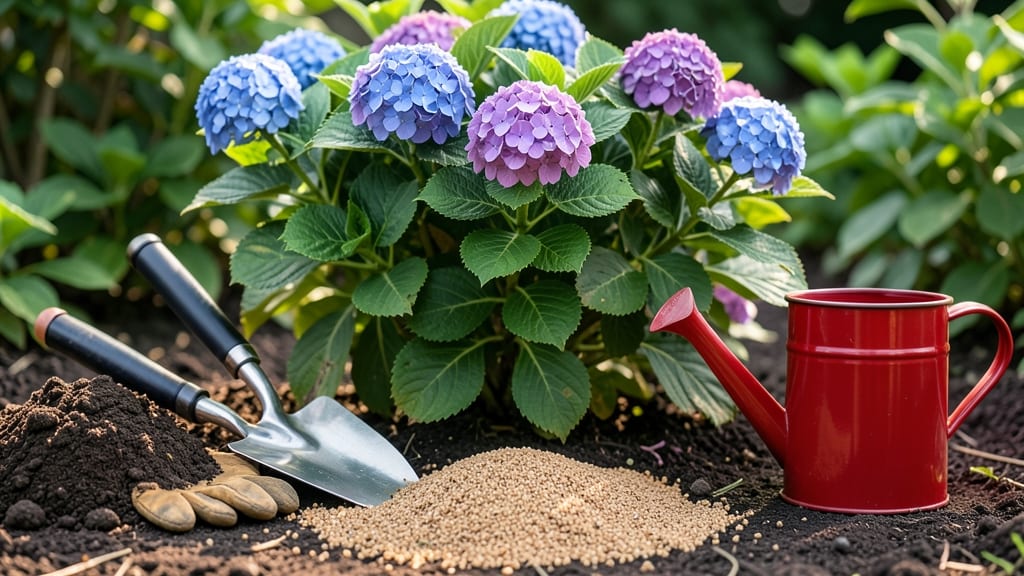
To fertilize perennials and shrubs effectively, time applications with their natural growth cycles: feed in early spring when new shoots appear, repeat mid-summer for flowering plants, and skip fall fertilization for most varieties to avoid encouraging vulnerable growth before winter. Evergreens often benefit from late-winter feeding instead.
Timing matters because plants absorb nutrients most efficiently when actively growing. 🌱 In early spring, roots wake up and need energy to fuel leaf and stem development, while mid-summer applications support blooming perennials. Shrubs like hydrangeas respond well to mid-season feeding, but woody plants often prefer a single spring dose.
The key is matching fertilizer type to your plants' needs—slow-release granules work best for perennials, while shrubs may handle liquid feeds better.
Regional climates play a role too. In colder zones, late-winter feeding for evergreens helps them prepare for spring growth, while mild-winter areas might extend the feeding window. Always check soil moisture first—dry soil limits nutrient uptake, so water thoroughly before and after applying fertilizer.
For organic gardeners, compost tea in spring provides a gentle nutrient boost without risking over-fertilization.
💡 In This Article
- How Plant Growth Stages Dictate Fertilizer Timing
- Seasonal Fertilizer Schedule for Perennials vs. Shrubs
How plant growth stages dictate fertilizer timing
Understanding why timing matters starts with root activity. During dormancy in winter, roots slow down dramatically—some perennials like hostas reduce root growth by 70% when soil temps drop below 50°F.
This is why fertilizing in fall risks burning roots: tender new growth can't handle winter's freeze-thaw cycles. 🌱 The magic happens in early spring when roots resume active growth, typically around 55-60°F soil temps, which is why that first feeding aligns with visible shoot emergence.
Nutrient absorption peaks during exponential growth phases. Herbaceous perennials like coneflowers show 300% faster nutrient uptake during their 6-8 week spring flush compared to summer. This explains why mid-summer feeding benefits blooming plants—it replenishes nutrients depleted during flowering.
Evergreens like boxwoods, however, maintain year-round root activity in mild climates, which is why they respond well to late-winter feeding when other plants are still dormant.
Plant type affects timing needs dramatically. Fast-growing perennials like daylilies need three feedings (spring, summer, fall), while slow-growing shrubs like junipers thrive on one annual application.
The key difference lies in their root systems: deep-rooted shrubs store nutrients better than shallow-rooted perennials. 🌿 This is why azaleas (acid-loving shrubs) get their primary feeding in early spring when they're breaking dormancy, while lavender (a drought-tolerant perennial) only needs summer support for its long bloom season.
Soil temperature creates invisible boundaries for fertilization. Below 45°F, microbial activity drops 90%, meaning organic fertilizers break down too slowly. Above 85°F, rapid microbial activity can cause nutrient burn.
This is why mid-summer feeding works best in Zone 5-7 climates—soil temps stay in the optimal 65-75°F range for 3-4 months, giving plants time to utilize nutrients before dormancy.
Light levels trigger hormonal responses that affect nutrient needs. Perennials like peonies produce auxin hormones in spring that signal root growth, while shrubs like hydrangeas focus energy on leaf expansion. This biological difference explains why shrubs often need less frequent but more concentrated feedings compared to perennials.
The science shows that plants with broad leaves (like hostas) absorb 25% more nitrogen than narrow-leaved varieties (like sedum) during active growth.
What most gardeners miss is how rainfall patterns interact with fertilization. In Zone 8+, where winters are mild, late-winter feeding becomes possible because roots remain active. But in Zone 4-5, even late-winter applications can stress plants if followed by sudden freezes.
This regional difference explains why northern gardeners often stick to spring feeding while southern gardeners might extend their schedule into early fall for certain perennials.