
Picking
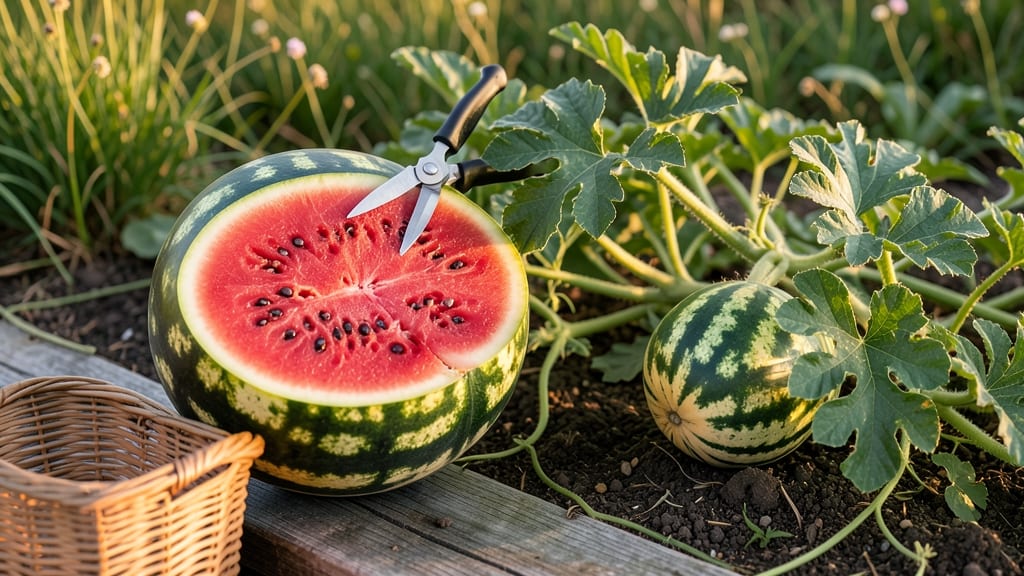
To pick watermelon from the vine at the perfect moment is all about reading three key signals—color, tendrils, and that satisfying thump—before the heat of summer turns your harvest into a gamble.
There’s nothing worse than slicing into a watermelon only to find it’s still rock-hard inside—or worse, mushy and overripe. Timing your harvest perfectly ensures juicy, sweet perfection every time, but how do you know exactly when to pull that 🍉 from the vine?
The answer lies in a few simple (but often overlooked) cues that most gardeners miss.
In Zone 6a and beyond, watermelons planted in April-May typically ripen between July and September, but the real magic happens in the final 7-10 days before harvest.
That’s when the ground spot deepens, the tendril nearest the fruit turns brown, and a firm tap yields a hollow thud—not a dull thud.
Below, I’ll break down these field-tested cues, plus how to adjust for seedless varieties, heirloom types, and even late-season heat waves so you never guess again. Your next slice will be the sweetest yet.

3 Field-tested signs your watermelon is ready to harvest
Harvesting watermelon at the perfect moment transforms your garden into a sweet, juicy treasure trove. But how do you know when that moment arrives? Over the years, we’ve learned that three key indicators—ground spot color, tendril dryness, and the thump test—reveal ripeness better than any calendar.
These signs work across seedless varieties, heirlooms, and hybrids, saving you from the disappointment of underripe or overripe fruit.
Many gardeners make the mistake of relying on size alone to judge ripeness, but a watermelon’s internal sweetness and texture depend on more than just its diameter.
The ground spot (the area where the fruit rested on the soil) changes from white to a creamy yellow or buttery tan, signaling sugar development.
Meanwhile, the tendril nearest the fruit (not the vine itself) turns brown and dries up—a classic sign the plant is redirecting energy to the melon. Finally, the thump test provides an instant audio cue: a hollow, deep sound means the seeds have fully formed and the flesh is tender.
🔍 3 Field-Tested Signs Your Watermelon Is Ready
-
1. Ground Spot Color
Check the cream-colored or tan patch where the melon touched the soil. A deep yellow means peak ripeness. -
2. Brown, Dried Tendril
The small tendril near the stem (not the main vine) should be crispy and brown, not green or flexible. -
3. Hollow Thump Test
Tap the melon with your knuckles—deep, hollow sound = ripe. A dull thud means it needs more time.
Let’s break down each sign in detail so you can avoid common pitfalls. For instance, a green ground spot or a flexible tendril means the melon isn’t ready—no matter how big it looks.
We’ve also seen gardeners overlook the thump test in favor of cutting open the melon to check, which risks damaging the rind and inviting rot. Instead, master these three cues to harvest with confidence every time.
The ground spot is your first clue because it’s directly linked to the melon’s sugar development. When the spot turns from white to buttery yellow or tan, it’s a clear signal that the internal sugars have peaked.
This change happens because the melon’s chlorophyll breaks down as it matures, revealing the true color beneath. For example, Moon and Stars heirlooms develop a deep cream spot, while Sugar Baby seedless varieties show a pale yellow.
Ignoring this cue often leads to underripe melons that taste bland or watery.
Next, pay close attention to the tendril nearest the fruit—this is not the main vine, but the small, curly stem directly attached to the melon. When it turns brown and crispy, the plant has stopped feeding the fruit and is ready for harvest.
A common mistake is confusing this tendril with the main vine’s tendrils, which stay green even when the melon is ripe. Pro tip: If the tendril snaps easily when bent, it’s a secondary sign of ripeness.
The thump test is the most instant gratification method—simply tap the melon with your knuckles and listen. A deep, hollow sound means the seeds are fully formed and the flesh is tender. A dull thud, however, signals the melon is still firm and underripe.
To perform this test correctly, tap near the ground spot (the melon’s "belly") rather than the top. We’ve found that morning is the best time to test, as cooler temperatures make the sound clearer.
But what if your watermelon checks all three boxes but still feels too heavy or light? This is where variety matters.
For instance, heirloom varieties like Crimson Sweet often develop a heavier feel due to their dense flesh, while seedless types like Sugar Baby may feel lighter but still be ripe. To double-check, gently press your thumbnail into the rind.
If it doesn’t pierce easily, the melon is ready; if it sinks in, it’s overripe.
Timing your harvest also depends on your climate zone. In hotter regions (like USDA Zones 8-10), watermelons ripen faster—sometimes in as few as 60 days—while cooler zones (like Zone 6) may need up to 90 days.
For example, in Texas or Arizona, we often harvest by late July, but in New England, the window stretches into early September. Always account for unpredictable weather, like sudden heatwaves or cold snaps, which can speed up or slow down ripening.
One final tip: Harvest on a dry morning to prevent soil from sticking to the rind, which can lead to rot during storage. Use a sharp knife or pruning shears to cut the melon, leaving about 1-2 inches of stem attached.
This helps the melon cure properly and retain its sweetness. Store ripe watermelons in a cool, dry place (like a garage or basement) for up to 2 weeks, or refrigerate for longer shelf life.
Mastering these three signs will turn your watermelon harvest from hit-or-miss to consistently perfect. Next time you’re debating whether to pick that plump melon, trust the ground spot, tendril, and thump test—your taste buds will thank you! 🍉
Watermelon ripeness by variety: timing differences for seedless, heirloom, and Hybrid types
Not all watermelons ripen on the same schedule—seedless varieties like Sugar Baby mature faster than heirlooms like Moon and Stars, while hybrids like Crimson Sweet fall somewhere in between.
Understanding these differences helps you avoid overripe or underripe fruit. Climate also plays a role: cooler regions may delay ripening by 1-2 weeks compared to hot, southern summers.
Seedless watermelons, bred for convenience and sweetness, typically reach harvest readiness in 60-70 days. Their smaller size and thinner rinds mean they ripen quicker, but don’t let their speed fool you—wait for the tendril to brown completely.
Heirloom varieties, prized for their deep flavor and unique patterns, take 80-90 days to mature, often requiring longer growing seasons or starter plants in cooler climates.
| Variety Type | Days to Maturity | Key Ripeness Cue | Climate Note |
|---|---|---|---|
| Seedless (e.g., Sugar Baby) | 60-70 days | Brown tendril + hollow thump | Fastest in heat; stalls below 75°F |
| Heirloom (e.g., Moon and Stars) | 80-90 days | Deep stripe color + firm rind | Needs 100+ frost-free days |
| Hybrid (e.g., Crimson Sweet) | 70-80 days | Yellow ground spot + stem snaps | Adaptable to varied climates |
Hybrid varieties strike a balance, maturing in 70-80 days with disease resistance that makes them ideal for shorter seasons. In my Zone 7a garden, I’ve found Crimson Sweet ripens reliably by mid-August, while Sugar Baby often hits its peak in early July.
The key is tracking vine growth—once the first fruit shows ripeness cues, others will follow within 5-7 days.
Climate adjustments are critical: in cooler northern regions, extend the season with black plastic mulch or row covers, which can add 2-3 weeks of warmth. Conversely, in hot southern climates, shade cloth may prevent sunburn on rinds while maintaining sweetness.
I’ve learned the hard way that overestimating heat tolerance leads to bitter fruit—always monitor soil temps!
Pro tip: Mark planting dates and use a garden journal to track variety-specific ripening. For example, my Moon and Stars watermelons never ripen before late August in my area, while Sugar Baby is a July harvest staple.
Adjust your harvest schedule based on these patterns to ensure you’re never left with unripe or overgrown melons.
Remember, color isn’t the only indicator—always combine visual cues with the thump test and tendril check. A ripe watermelon should sound deep and hollow when tapped, with a dry, brown tendril near the stem. This combo works across all varieties, but timing remains your best friend for variety-specific success.