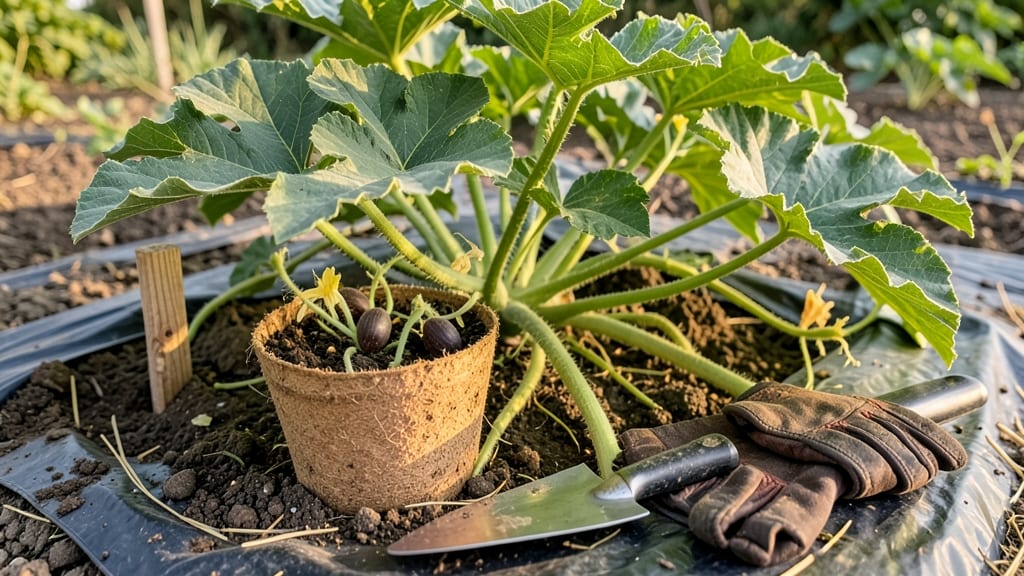
To plant watermelon seeds in Florida, wait until soil temperatures hit at least 70°F—usually mid-February to early April for spring harvests.
Get this wrong, and your seeds either rot in cold soil or bolt in the heat, leaving you with no fruit and a whole lot of frustration.
Florida’s frost-free climate means timing is all about heat, not frost, but even a few degrees off can mean the difference between a thriving vine and a failed crop.
Most gardeners in zones 9a-11 swear by direct-sowing after the last frost risk passes, but the real secret is soil warmth. A simple soil thermometer can save you weeks of waiting—plant too early, and your seeds won’t germinate; too late, and the vines struggle to set fruit before summer’s peak.
Below, I’ll break down the exact dates by zone, how to prep your soil for fast germination, and the best watermelon varieties for Florida’s heat—so you can go from seed to harvest in just 75 days.
🍉
When to Plant Watermelon
Jan
❄️
Feb
🌱
Mar
🍉
Apr
🍉
May
🍉
Jun
🌱
Jul
☀️
Aug
☀️
Sep
🍂
Oct
🍂
Nov
🍂
Dec
❄️
Florida watermelon planting calendar by zone: exact dates for fast germination
Florida’s frost-free climate makes it one of the best places to grow watermelons, but timing still matters. Unlike northern states, you don’t need to wait for spring frost to pass—but you do need to align planting with soil temperatures and humidity to ensure fast germination and strong vines.
The state’s 8 USDA zones (9a–11) create microclimates where northern Florida (zones 8a–9a) has cooler winters, while southern Florida (zones 10a–11) stays warm year-round.
For fast germination, watermelon seeds need soil temperatures of at least 70°F (21°C).
In northern Florida, this typically means waiting until mid-March, while southern Florida gardeners can start as early as February. Direct sowing is ideal, but transplanting 3–4 week-old seedlings can give you a 2-week head start in cooler zones.
Here’s your zone-by-zone breakdown for planting watermelon seeds in Florida, including soil temp thresholds, ideal planting windows, and harvest timing:
| Zone |
Soil Temp Threshold |
Direct Sow Window |
Transplant Window |
Harvest Window |
Notes |
| 8a (North FL: Jacksonville) |
70°F+ |
Mid-April |
Late March |
June–July |
Use black plastic mulch for warmth |
| 9a (Gainesville) |
70°F+ |
Late March |
Early March |
May–June |
Early varieties preferred |
| 9b (Orlando) |
70°F+ |
Early March |
Late February |
April–May |
Fall planting possible |
| 10a (Tampa) |
70°F+ |
February |
January |
March–April |
Year-round planting possible |
| 10b (Fort Myers) |
70°F+ |
January–February |
December |
February–March |
Tropical varieties thrive |
| 11 (Miami) |
70°F+ |
Year-round |
Year-round |
January–December |
How to extend your Florida watermelon season: tips for early and late plantings
Florida’s frost-free climate gives us a unique advantage for growing watermelons year-round, but even here, timing matters. The key to extending your harvest season lies in understanding how to manipulate your microclimate and variety selection.
With the right techniques, you can enjoy ripe watermelons from late spring through fall—or even year-round with tropical varieties.
Most gardeners focus on the standard planting windows, but Florida’s heat and humidity allow for creative strategies. By using black plastic mulch, row covers, and succession planting, you can push your harvest dates earlier or later than usual.
The trick is balancing soil warmth with air temperature to avoid stressing your plants during critical growth stages.
5 Ways to Extend Your Florida Watermelon Season
- 1. Use black plastic mulch to warm soil 10-15°F faster than bare ground. Lay it down 2-3 weeks before planting for early starts.
- 2. Plant tropical varieties like 'Sugar Baby' or 'Crimson Sweet' in late winter (Jan-Feb) under row covers for spring harvests.
- 3. Try shade cloth (30-50%) in peak summer heat (June-Aug) to prevent bolting and improve fruit set.
- 4. Succession plant every 2-3 weeks from March to August for staggered harvests. Use 50% shade cloth for late plantings.
- 5. Choose heat-tolerant varieties like 'Jubilee' or 'Charleston Gray' for fall plantings in July-August.
For early plantings, focus on warming your soil before seeds go in. A simple soil thermometer will tell you when it’s ready—aim for 70°F or warmer. In North Florida, this might mean starting seeds indoors in late February and transplanting after soil warms.
South Florida gardeners can direct-sow as early as mid-February with black plastic mulch.
Late-season extensions require a different approach. If you’re planting in July or August, use 50% shade cloth to protect seedlings from intense sun while they establish.
Remove it after 2-3 weeks once vines start running. This technique works especially well for fall varieties that need cooler temperatures to set fruit.
Don’t overlook the power of succession planting. By staggering plantings every 2-3 weeks from March through August, you’ll have watermelons ripening continuously. For example, plant one batch in early March, another in mid-April, and a final one in late May.
This ensures you’re always harvesting fresh fruit while avoiding glut.
Remember, Florida’s humidity can be just as challenging as its heat. Always water in the early morning and avoid overhead sprinkling to prevent fungal diseases. With these techniques, you’ll turn your watermelon patch into a year-round producer—no frost to worry about!
★★★★★5.0(14 reviews)