
Flowers
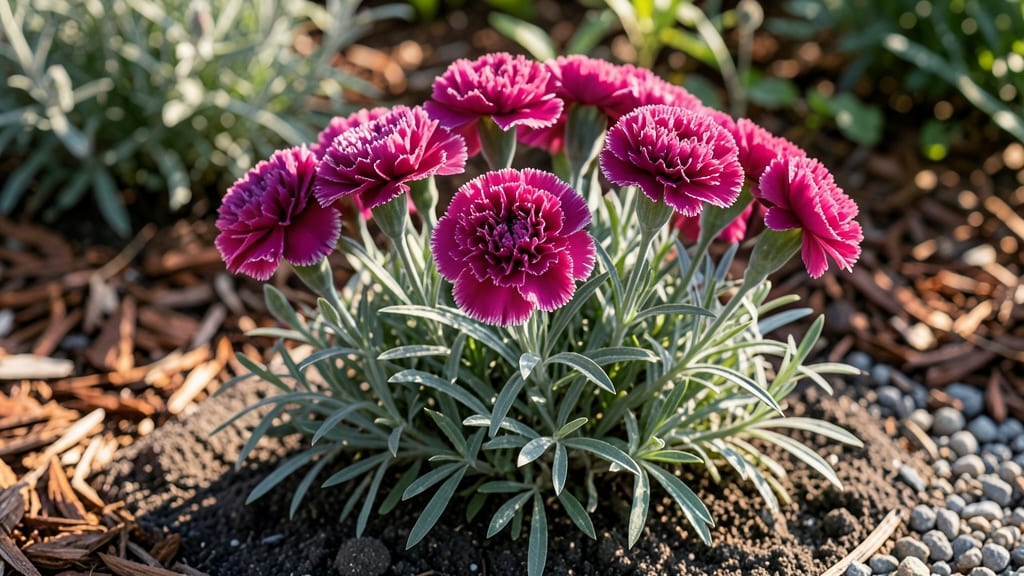
Carnations aren't true perennials but act like tender perennials in mild winters, where they retreat underground only to resprout when temperatures rise. In colder zones, they’re treated as annuals unless you take special steps to overwinter them.
This behavior comes down to their frost sensitivity—carnations can't handle freezing temperatures, which is why they die back in winter. 🌱 However, their roots often survive if protected, allowing them to bounce back when spring arrives.
In warmer climates like California or Florida, they'll naturally regrow year after year, while gardeners in cooler regions must provide extra insulation with mulch or containers to mimic these conditions.
What's interesting is how this compares to hardy perennials like lavender or peonies, which thrive through freeze-thaw cycles. Carnations are more like tropical plants that have adapted to survive seasonal dormancy rather than true cold-hardiness.
This makes them perfect for container gardening in colder areas, where you can simply move them indoors during winter and bring them back outside when temperatures warm up.
💡 In This Article
- Carnation Growth Cycle: Why They Die Back and Regrow
- How to Extend Carnations’ Lifespan as Perennial-Like Plants
Carnation growth cycle: why they die back and regrow
The carnation's dormancy cycle begins when temperatures drop below 40°F—their critical threshold for frost sensitivity. Unlike hardy perennials that develop specialized cells to protect against freezing, carnations rely on a rapid metabolic shutdown.
Their above-ground stems and leaves brown and crisp, but the root system often remains viable if protected.
This is why you'll see gardeners in mild climates like Zone 9 or warmer observing their carnations "disappear" in winter only to push new growth by March or April when soil temperatures reach 55°F.
What makes carnations unique is their secondary growth habit—they produce new shoots from the base rather than from a single crown like peonies. This multi-stemmed regrowth explains why even severely pruned plants can recover.
The roots contain meristematic cells that remain active in mild winters, allowing them to initiate new growth when conditions improve. In contrast, true perennials like lavender have woody stems that survive winter intact, while carnations are more akin to ginger or caladiums, which die back to rhizomes.
The key difference lies in their cold tolerance threshold. Carnations can withstand brief exposures to 30°F if dry, but prolonged freezing damages their cellular structure. This is why gardeners in Zone 7 or colder must take special precautions—without protection, the roots may fail to regenerate.
The plant's survival strategy is all about energy conservation: shutting down non-essential functions during cold periods while maintaining root viability for spring regrowth.
Here's what happens during regrowth: when soil temperatures stabilize above 50°F, the roots begin producing auxin hormones that stimulate bud formation. You'll notice tiny green shoots emerging from the soil surface within 2-3 weeks, often before the last frost date.
This rapid response is possible because carnations store carbohydrates in their roots during the growing season, providing energy for early regrowth. 🌱 In optimal conditions, a well-established carnation can produce 3-5 new stems from the same root system within a single growing season.
Comparing carnations to other dieback plants reveals their intermediate nature. While dahlias also die back to tubers, they require 60°F soil temperatures to regrow, and their tubers are more sensitive to rot.
Carnations, however, are more resilient in their root structure, making them easier to maintain as perennial-like plants in suitable climates. Their ability to regenerate from multiple points also explains why they often produce denser foliage in subsequent years compared to their first season.
Understanding this cycle helps explain why carnations thrive in Mediterranean climates with mild winters. In regions like Southern California or Spain, they naturally behave as perennials, while in Northern Europe, they're typically grown as annuals.
The transition between these behaviors depends entirely on winter temperature patterns and how well the roots can maintain their viability during dormancy.