
Plants
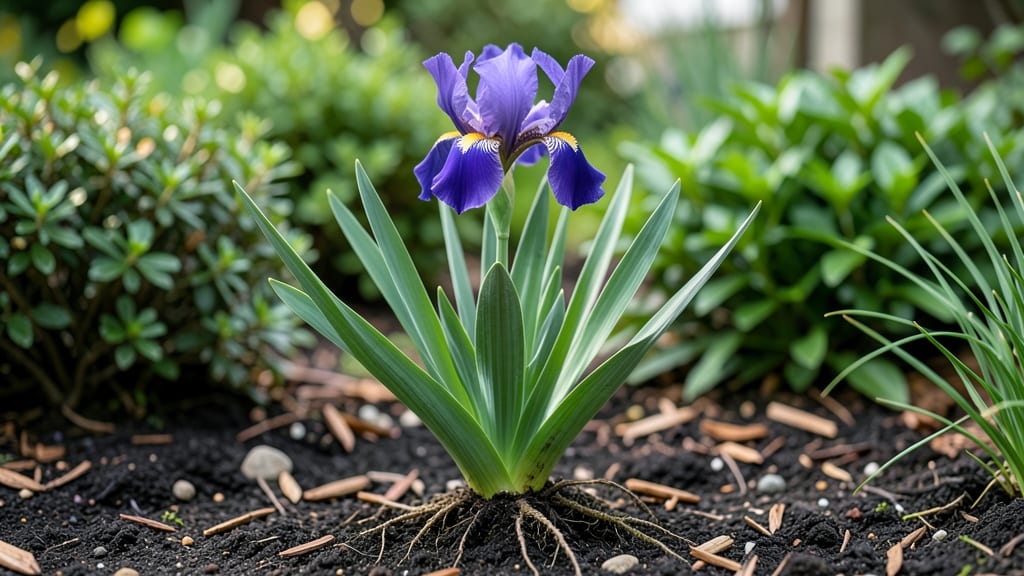
Dutch irises are perennials that return year after year, even though their leaves die back after blooming. These plants store energy in thick underground rhizomes, allowing them to regrow each spring in USDA zones 3-9 with proper winter care.
This dieback isn't a sign of death—it's a survival strategy. 🌱 Dutch irises evolved to store nutrients in their rhizomes during dormancy, much like how onions or garlic hibernate underground. The foliage yellowing signals the plant is redirecting energy to these storage organs, ensuring robust regrowth when temperatures rise.
Unlike annuals that complete their life cycle in one season, perennials like Dutch irises simply enter a temporary rest phase, making them low-maintenance choices for gardeners in colder climates.
What sets them apart from other perennials is their rhizomatous growth habit. These horizontal stems spread underground, creating a network that both stores nutrients and produces new shoots. This adaptation explains why Dutch irises often multiply over time—each rhizome section can potentially grow into a new plant.
The key to their longevity lies in maintaining this underground system through proper watering and soil conditions, especially during their dormant winter months.
💡 In This Article
- How Dutch Iris Rhizomes Survive Winter Dormancy
- Year-Round Care for Dutch Iris Perennials
How Dutch iris rhizomes survive winter dormancy
Dutch iris rhizomes act like nature's energy banks, storing carbohydrates and nutrients during dormancy. These thick, fleshy underground stems contain starches that convert to sugars when temperatures rise in spring.
The rhizome's outer layer is tough and waxy, protecting it from freezing and desiccation—similar to how a potato stores energy but remains dormant until conditions are right. 🌱 What's fascinating is how these rhizomes can survive temperatures as low as -30°F, thanks to their high sugar content acting as a natural antifreeze.
The foliage dieback you see after blooming isn't a sign of death—it's a strategic energy conservation mechanism. As daylight shortens in late summer, the plant senses this environmental cue and begins redirecting nutrients from leaves to rhizomes.
This process, called "senescence," is triggered by hormonal changes where chlorophyll breaks down (causing yellowing) and nutrients are transported through the plant's vascular system to storage organs. Studies show Dutch iris rhizomes can store enough energy to produce new shoots within just 2-3 weeks of spring's first warm spells.
Temperature plays a crucial role in breaking dormancy. Rhizomes need a period of cold exposure (called vernalization) to trigger regrowth, typically requiring 4-6 weeks below 40°F. This cold period helps synchronize the plant's internal clock with seasonal changes.
Once temperatures consistently stay above 50°F, the rhizomes begin metabolic activity, producing new shoots from growth points called "eyes" located along their length. This biological process explains why Dutch irises often emerge earlier than many other perennials in spring.
What most gardeners don't realize is how these rhizomes maintain their viability through careful water management. During dormancy, they need just enough moisture to prevent complete desiccation—typically 1 inch of water every 3-4 weeks—while avoiding waterlogged conditions that could cause rot.
The rhizome's structure allows it to absorb moisture through its surface even when dormant, making it remarkably resilient. This adaptation explains why Dutch irises can survive in both dry and moist soils, as long as they're not waterlogged.
Consider this comparison: While annuals complete their entire life cycle in one growing season, Dutch iris rhizomes can potentially live for 10-15 years or more. Each year's growth adds to the rhizome's size and nutrient storage capacity, creating a self-sustaining system.
The plant's ability to reproduce both sexually (through seeds) and asexually (through rhizome division) gives it remarkable adaptability. This dual reproduction strategy ensures the species can spread while maintaining genetic diversity.
The foliage dieback you observe after blooming serves multiple purposes beyond nutrient storage. It helps prevent disease by removing old, potentially infected plant material. The yellowing leaves also provide a visual cue that the plant is preparing for dormancy.
What's particularly interesting is how this process varies by climate—northern-grown Dutch irises may enter dormancy earlier than those in milder southern zones, demonstrating their adaptability across USDA zones 3-9.