
Orchid Care
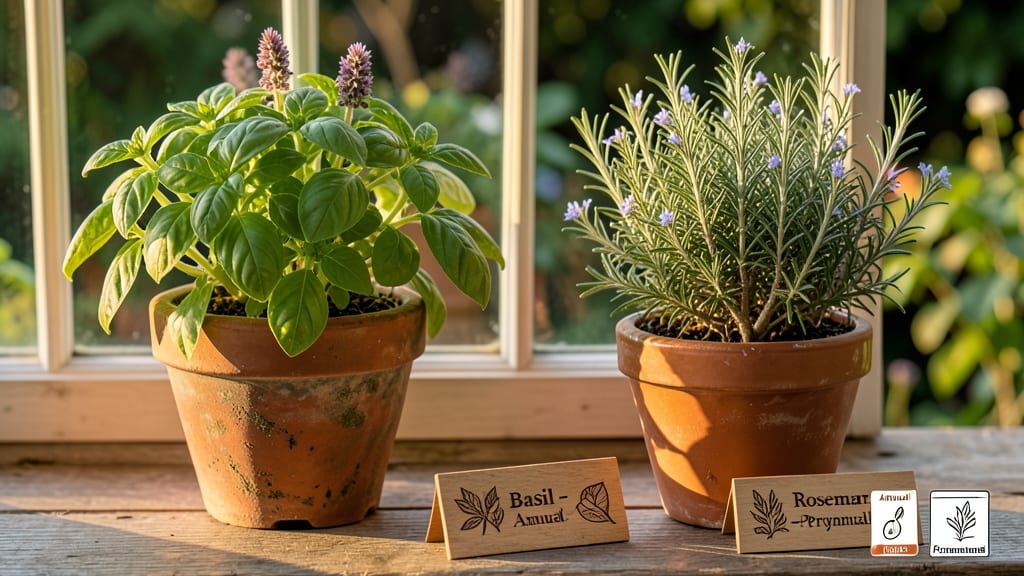
Whether herbs are annuals or perennials depends entirely on the plant: hardy varieties like rosemary and thyme return year after year, while tender types such as basil and cilantro complete their life cycle in a single growing season unless protected. Climate and cold tolerance determine their longevity.
Herbs don't follow a one-size-fits-all rule—it's all about their natural resilience. 🌱 Perennial herbs like oregano and sage develop deep root systems that survive winter dormancy, while annuals like dill or parsley lack this hardiness.
The key difference lies in their ability to withstand freezing temperatures: perennials regrow from their roots, while annuals die back completely when frost hits. Even biennials like parsley take two years to complete their cycle, showing how growth patterns vary widely across species.
For gardeners in colder climates, this distinction matters because it affects planting strategies. Tender annuals can be extended into second seasons through container transfers or greenhouse protection, while perennials simply need proper mulching to shield their roots.
Understanding these cycles helps you choose the right herbs for your growing conditions and maximize your harvest year after year.
💡 In This Article
- Why Some Herbs Die Back Annually While Others Survive
- How to Extend Herb Lifespans Beyond One Season
Why some herbs die back annually while others survive
The fundamental difference between annual and perennial herbs lies in their root systems and cold tolerance. Perennial herbs like rosemary and thyme develop extensive, woody root systems that can survive sub-freezing temperatures down to -10°F to -20°F, depending on the variety.
These roots store nutrients and energy, allowing the plant to regrow from the same base each spring. In contrast, annual herbs like basil and cilantro have shallow, fibrous roots that cannot withstand frost—they die when temperatures drop below 32°F, completing their life cycle in a single growing season.
Temperature triggers this biological switch. Most annual herbs originate from tropical or subtropical climates, where they evolved to thrive in warm conditions. When exposed to consistent temperatures below 50°F, their cellular structures break down, and they enter a state of irreversible dormancy.
Perennials, however, have adapted to temperate climates by producing specialized proteins that protect their cells from freezing damage. For example, oregano can tolerate down to -30°F with proper winter protection, while basil will bolt (flower and die) within days of frost exposure. 🌡️
Growth cycles also play a critical role. Biennial herbs like parsley take two years to complete their life cycle: they grow leaves in the first year, flower and set seed in the second, then die.
This two-stage process reflects their intermediate cold tolerance—they can survive light frosts but won't regrow from the same root system like true perennials.
The key takeaway is that a herb's classification isn't just about how long it lives, but how it responds to seasonal temperature shifts and its ability to store or regenerate energy reserves.
Even within the same genus, variations exist. For instance, dill is an annual, but its close relative, fennel, is a hardy perennial that thrives in USDA Zone 5 and below. This diversity means gardeners must research specific varieties to match their climate.
In colder regions, perennial herbs like lavender and sage will return year after year with minimal care, while annuals like chives or tarragon (which is technically a perennial in warmer zones) may need to be replanted annually unless overwintered indoors.
Another fascinating factor is how herbs handle dormancy. Perennial herbs enter a state of physiological dormancy during winter, where growth slows dramatically but roots remain alive. Annuals, however, lack this mechanism—their entire above-ground structure dies back, and only seeds (if any) survive.
This biological difference explains why perennial herbs can be divided and transplanted, while annuals must be grown from seed each season. 🌱
Understanding these mechanisms helps explain why some herbs thrive in your garden while others fail. For example, cilantro bolts and goes to seed quickly in hot weather, but its relative coriander (the dried seed form) is a biennial that can persist longer.
The same plant can behave differently depending on climate: parsley is biennial in cold climates but may act as an annual in warmer regions where it completes its cycle faster.