
Flowers
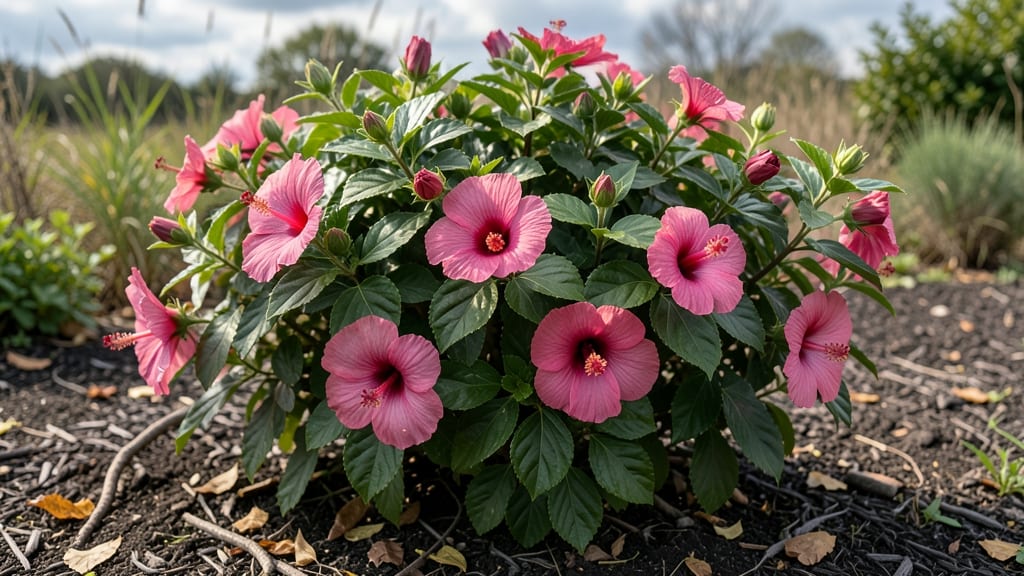
Hibiscus flowers are not true perennials in cold climates but behave as tender perennials, dying back to the ground in winter and regrowing from roots in warmer zones like 9-11. In colder regions, they must be dug up or mulched heavily to survive frost. Tropical hibiscus varieties are the most cold-sensitive, while hardy hibiscus (Hibiscus moscheutos) can endure USDA zones 4-9 with proper protection.
Hibiscus plants actually fall into a gray area when it comes to perennial status. 🌱 While they won't survive freezing temperatures in most regions, their root systems often persist underground, allowing them to bounce back each spring when conditions warm up.
This behavior explains why gardeners in zones 9-11 can treat them as perennials—they naturally regenerate from their roots after winter dormancy. The key difference lies in their cold tolerance: tropical varieties (like Hibiscus rosa-sinensis) need winter protection, while hardy hibiscus species can handle colder snaps with proper care.
Understanding this growth cycle helps explain why hibiscus plants often look dead in winter—they're not! Their above-ground growth dies back as a survival mechanism, but the roots remain alive and ready to sprout new shoots when temperatures rise.
This adaptability makes hibiscus a fascinating plant for gardeners willing to provide seasonal adjustments.
💡 In This Article
- Hibiscus Cold Hardiness by Species and Variety
- Winter Care Tips to Protect Hibiscus Plants
Hibiscus cold hardiness by species and variety
The cold tolerance of hibiscus varies dramatically between species. Tropical hibiscus (like Hibiscus rosa-sinensis) can't survive temperatures below 28°F—their delicate leaves and stems freeze solid, but their roots often remain viable if protected.
Hardy hibiscus (such as Hibiscus moscheutos, also called rose mallow) can withstand 10-15°F with proper care, thanks to thicker stems and deeper root systems that store energy for regrowth. 🌿
This difference comes down to their natural habitats: tropical hibiscus evolved in warm climates where frost never occurs, while hardy varieties developed in temperate zones with seasonal cold snaps.
The key mechanism is their dormancy cycle—when temperatures drop below 50°F, tropical hibiscus trigger a shutdown of leaf production, conserving energy in their roots until spring. Hardy hibiscus take this further, developing thicker bark-like stems that insulate their vascular system.
What most gardeners don't realize is that even within tropical hibiscus varieties, there's variation. Some modern hybrids (like 'Dwarf Red' or 'Lime Green') have slightly better cold tolerance (25°F for short periods), while traditional varieties may only handle 30°F.
The USDA zone breakdown reflects this: tropical hibiscus thrive in zones 10-11, while hardy hibiscus can survive zones 4-9 with winter protection.
Here's how the dieback process works scientifically: when temperatures drop below 32°F, cellular membranes in hibiscus leaves begin to rupture from ice crystal formation. The plant's survival strategy is to abscise (shed) these damaged leaves while preserving the root crown and basal buds.
This explains why you might see regrowth from the base even after a hard freeze—those protected buds contain meristematic cells that remain active.
Consider this comparison: a Hibiscus rosa-sinensis planted in zone 8 will need winter protection to survive, while a Hibiscus moscheutos in the same zone may only need a thick mulch layer.
The root systems of hardy varieties can extend 3-5 feet deep, allowing them to access water and nutrients even when surface soil freezes. Tropical hibiscus, however, typically have shallower roots (1-2 feet) that require insulation.
The most cold-resistant hibiscus actually belongs to the Hibiscus syriacus species (commonly called rose of Sharon), which can handle 0°F temperatures with proper mulching. This variety demonstrates how hibiscus have evolved different survival strategies across their global range—from tropical coastlines to temperate forests. 🌍